Savings Account Growth: How to Make Your Money Work Harder
When you put money in a savings account growth, the process of increasing your balance over time through interest and consistent deposits. Also known as compound interest accumulation, it’s not about how much you save—it’s about how fast it grows. Most people think their savings account is just a safe place to park cash. But if you’re not getting the right interest, you’re losing money every year to inflation. A typical bank account might pay 0.01% APY. A high-yield savings account? That’s often 4% or more. That’s 400 times more growth—and it’s free money you’re leaving on the table.
High-yield savings, a type of savings account that offers significantly higher interest rates than traditional banks. Also known as online savings accounts, these accounts are offered by digital banks and credit unions with lower overhead. They don’t have branches, so they pass the savings to you in the form of better rates. And unlike CDs, your money stays liquid—you can pull it out anytime without penalties. This makes them perfect for emergency fund, a cash reserve set aside for unexpected expenses like car repairs or medical bills. Also known as rainy day fund, it should cover three to six months of living costs. If your emergency fund is sitting in a regular savings account earning 0.05%, you’re falling behind. Inflation eats away at your purchasing power. With a high-yield account, your fund grows while it waits.
Compound interest, the process where you earn interest on both your original deposit and the interest you’ve already earned. Also known as interest on interest, it’s the secret engine behind long-term savings growth. It doesn’t matter if you start with $1,000 or $10,000. What matters is time and consistency. A $5,000 deposit at 4% APY grows to over $6,100 in three years—even if you never add another dollar. That’s not magic. That’s math. And it’s why people who start early, even with small amounts, end up ahead of those who wait and try to catch up with big lump sums later.
Interest rates change. The Fed moves them. Banks follow. That’s why checking your savings account’s APY every few months isn’t optional—it’s essential. If your bank drops its rate and you don’t move, you’re getting ripped off. Switching takes five minutes. The savings? Hundreds, sometimes thousands, over a few years. And it’s not about chasing the highest rate ever—just a rate that’s actually competitive right now.
You don’t need to be rich to benefit from smart savings growth. You just need to know where to put your money and how to keep it moving. The posts below show real examples of how people are growing their savings faster—whether they’re building an emergency fund, saving for a car, or just trying to beat inflation. You’ll see which banks are paying the most, how to automate your deposits, and why skipping a coffee a week can turn into $10,000 over a decade. No fluff. Just what works.
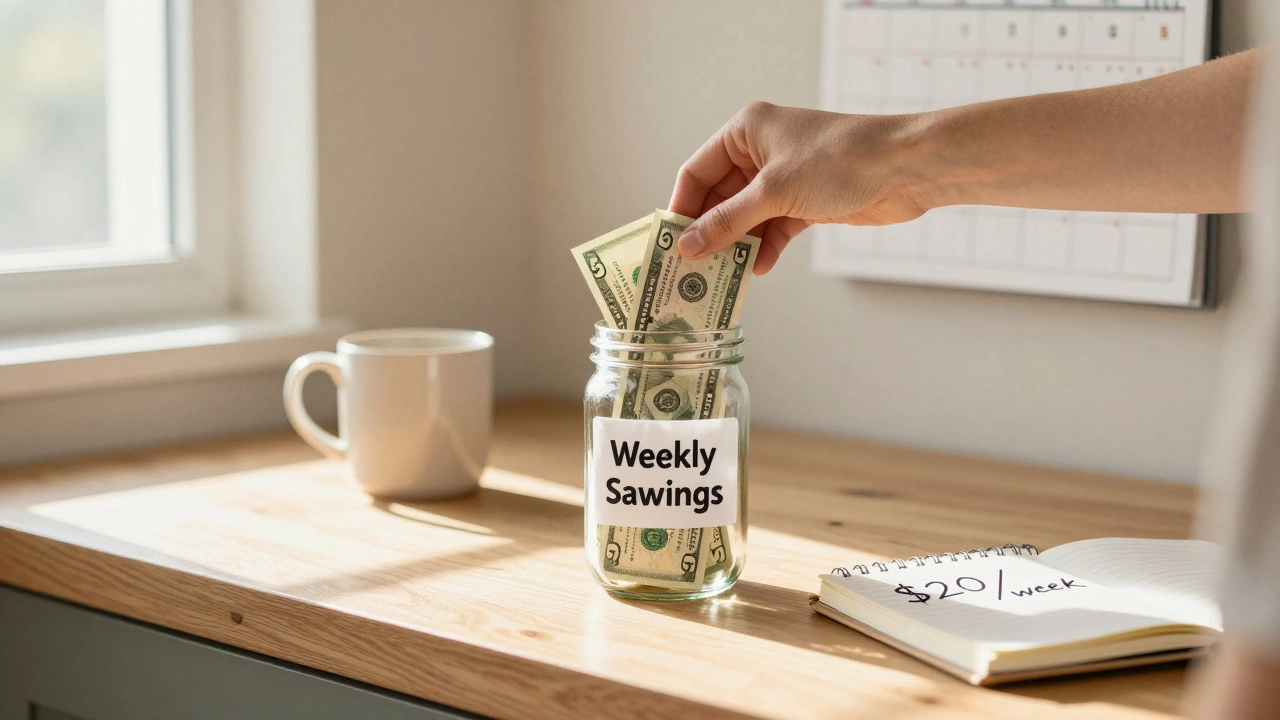
Saving $20 a week adds up to $1,040 in a year-without interest. With a decent savings account, you could earn an extra $18 or more. Learn how small, consistent savings build real financial security.
Read More