
Leftover Budget Classifier
Confused about what to call your leftover money? Answer three simple questions to determine the correct financial term and action plan for your unallocated funds.
Answer the questions to see how to label and handle your leftover budget.
Definition
Description goes here.
You check your bank account on the last day of the month. The bills are paid. The groceries are bought. You didn't overspend on that impulse buy you regretted in October. In fact, you have €150 left over. It feels good, doesn't it? But then a nagging question pops up: what is leftover budget called? Is it savings? Is it profit? Does it disappear if I don't move it?
The confusion isn't just semantic nitpicking. How you label this money changes how you treat it. If you call it "spare change," you'll likely spend it by Tuesday. If you call it "surplus" or "carryover," you might actually put it to work. In professional accounting, these terms have specific meanings. In personal finance, they often get mixed up, leading to leaky wallets.
Let's clear up the jargon. We will look at what leftover money is technically called, why the name matters for your financial psychology, and how to handle those unallocated funds so they don't vanish into thin air.
Surplus vs. Deficit: The Core Terminology
In strict financial terms, when your income exceeds your expenses, the remaining amount is called a budget surplus. This is the opposite of a deficit, where you've spent more than you earned. A surplus is the raw number showing you stayed within your limits. It’s a metric of performance for the period (usually a month).
However, most people don't stop there. They want to know what happens to that surplus. Do you keep it in checking? Move it to savings? Invest it? The act of moving that surplus forward into the next period is where other terms come into play.
Think of it like this: The surplus is the water collected in the bucket. What you do with that water determines its next identity. If you pour it into the next month's plan, it becomes something else entirely.
Carryover Funds: Moving Money Forward
Carryover funds refer to money from one budget period that is intentionally moved to the next. This is common in government budgets and corporate planning, but it applies perfectly to household finances too. When you decide that the €150 surplus from November should be used to pay for Christmas gifts in December, you are carrying it over.
Why does this distinction matter? Because carryover implies intent. It means you haven't just forgotten about the money; you've allocated it to a future need. Without this concept, people often treat every new month as a blank slate, wasting their previous month's efficiency gains.
| Term | Definition | Best Used For | Action Required |
|---|---|---|---|
| Budget Surplus | Income minus Expenses > 0 | Tracking monthly performance | Identify the amount |
| Carryover | Unspent funds moved to next period | Short-term goals (e.g., holiday fund) | Allocate to specific category |
| Rollover | Unused allowance in zero-based budgeting | Envelope systems / Zero-based apps | Automatically shifts to next month |
| Emergency Fund Contribution | Surplus directed to safety net | Building long-term security | Transfer to high-yield savings |
Rollover Budgets: The Zero-Based Approach
If you use a method like YNAB (You Need A Budget) or envelope budgeting, you're likely familiar with rollover budgeting. In this system, every euro has a job. If you allocate €200 for dining out and only spend €150, the remaining €50 doesn't just sit in a generic "leftover" pile. It rolls over into the next month's dining budget.
This creates a psychological buffer. You aren't punished for being frugal; you're rewarded with flexibility later. Maybe you skipped dinner out in November because you were busy, so now you have €50 extra for a nicer meal in December. This smooths out cash flow spikes. Instead of starving one month and feasting the next, you balance the load.
But beware the trap here. If you let non-essential categories roll over indefinitely, you might end up with a massive "fun money" stash while your rent payment still feels tight. Rollover works best when paired with regular reviews. Ask yourself: "Is this money better off rolling over, or should it jump ship to my investment account?"

Sinking Funds: The Strategic Use of Leftovers
Often, the smartest place for leftover budget isn't the next month's spending column. It's a sinking fund. These are dedicated savings accounts for predictable, irregular expenses. Think car insurance renewal, annual holidays, or replacing a laptop.
When you find a surplus, directing it into a sinking fund turns vague "extra cash" into concrete progress toward a goal. Let's say you have a €600 car insurance bill due in six months. That's €100 a month. If you save €150 this month, you can cover next month's allocation and start building a buffer. This prevents the dreaded "lumpy expense" shock that derails many budgets.
Unlike general savings, sinking funds have a deadline and a purpose. This makes them easier to protect from impulse buys. You wouldn't raid your holiday fund to buy new shoes, right? Labeling your leftovers as part of a specific sinking fund gives them armor against casual spending.
Psychological Traps: Why Naming Matters
Behavioral economics tells us that labeling affects behavior. If you view leftover money as "free money," you're statistically more likely to waste it. It feels unearned, even though it came from your hard work. This is known as mental accounting.
To counter this, rename your surplus. Call it "Future Freedom Cash." Call it "Debt Crusher Fuel." Give it a serious title. When you transfer that €150 into a separate savings account labeled "New Car Fund," you create friction between you and the spending. You have to actively decide to break the fund to spend the money.
Also, consider the "windfall" effect. People tend to blow away unexpected bonuses or tax refunds. Treat your monthly surplus like a bonus. Automate the transfer immediately after payday. If you see it in your main checking account, you'll spend it. Out of sight, out of mind-and safely saved.
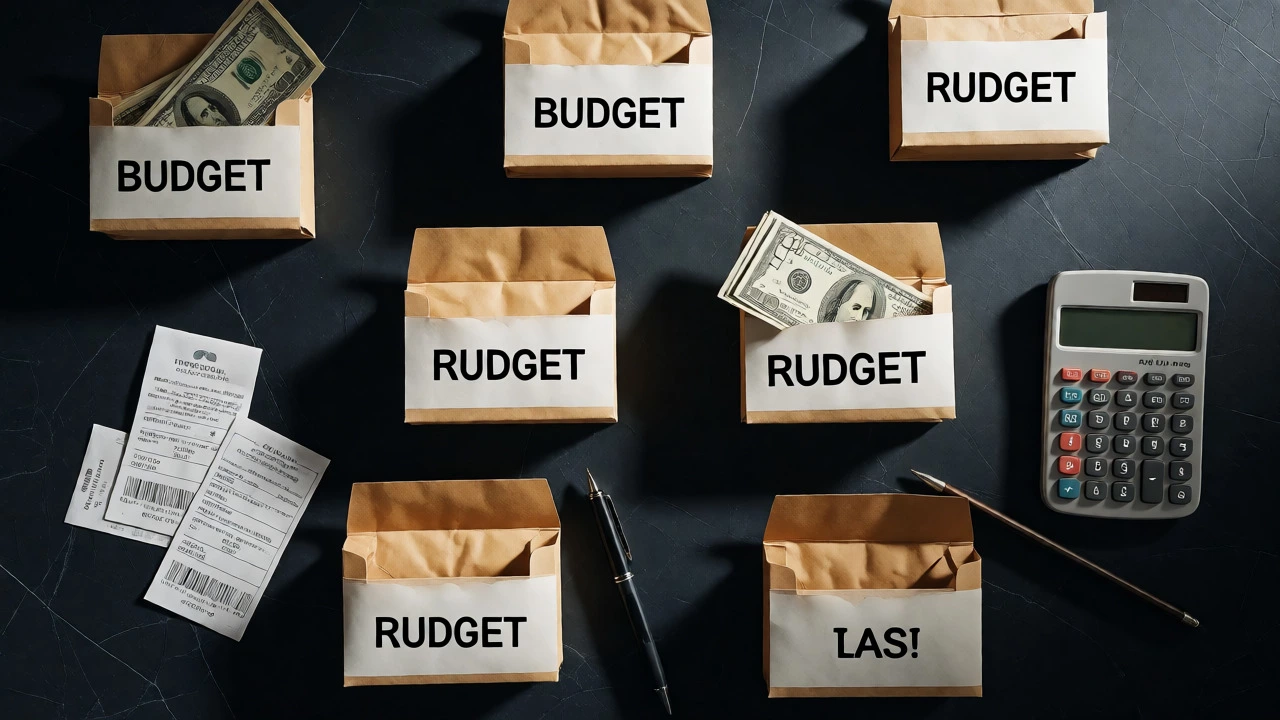
How to Handle Leftover Budgets: A Step-by-Step Guide
Don't let your hard-earned surplus evaporate. Follow this simple workflow at the end of each month:
- Calculate the Exact Surplus: Subtract all actual expenses from actual income. Don't guess. Use your bank statements or app data.
- Check Your Emergency Fund: Do you have 3-6 months of expenses saved? If not, direct 50-100% of the surplus here until you hit your target.
- Fund High-Priority Sinking Funds: Are there big bills coming up in the next 90 days? Fill those gaps first.
- Attack Debt: If you have high-interest debt (credit cards, personal loans), throw the remainder at the highest interest rate.
- Rollover or Invest: If steps 1-4 are covered, decide if the rest rolls over for flexible spending or goes into investments (stocks, index funds, pension).
This hierarchy ensures your money serves your most critical needs before it serves your whims.
Common Mistakes with Leftover Money
One major error is leaving surplus in the checking account. Banks pay negligible interest (often 0.01%). Meanwhile, inflation erodes its value. Another mistake is ignoring small surpluses. "It's only €20," you think. But €20 a month is €240 a year. That's a nice weekend trip or several months of utility bills.
Also, avoid lifestyle creep. As your income grows, your expenses tend to rise to match it. If you always spend exactly what you earn, you never build wealth. The surplus is your engine for growth. Protect it fiercely.
Is leftover budget considered savings?
Not automatically. Leftover budget is a surplus of cash flow. It only becomes savings once you deliberately move it into a savings vehicle (like a deposit account or investment). If it stays in your checking account, it remains liquid cash vulnerable to spending.
What is the difference between carryover and rollover?
In personal finance, they are often used interchangeably, but technically, rollover usually refers to automatic transfers within a specific budgeting system (like YNAB) where unused category funds shift to the next month. Carryover is a broader term for any unspent funds moved to a subsequent period, often requiring manual intervention or explicit decision-making.
Should I invest my leftover budget?
Only if you have an adequate emergency fund and no high-interest debt. Investing carries risk. If you lose the money, you lose the safety net. Once your short-term stability is secured, investing surplus funds is the best way to grow wealth over time.
How much leftover budget is normal?
There is no fixed number, but a healthy benchmark is saving at least 20% of your take-home pay. If you consistently have less than 5% leftover, you may need to cut expenses or increase income. Large fluctuations are normal, but a persistent near-zero surplus indicates a tight budget with little room for error.
Does leftover budget affect my credit score?
Indirectly, yes. Using surplus to pay down revolving debt (like credit cards) lowers your credit utilization ratio, which can boost your score. Leaving it in checking has no impact. Consistently generating a surplus allows you to manage debt more effectively, improving your overall credit profile.