Credit Card Cancellation Impact Calculator
Current Portfolio
Card to Close
Impact Summary
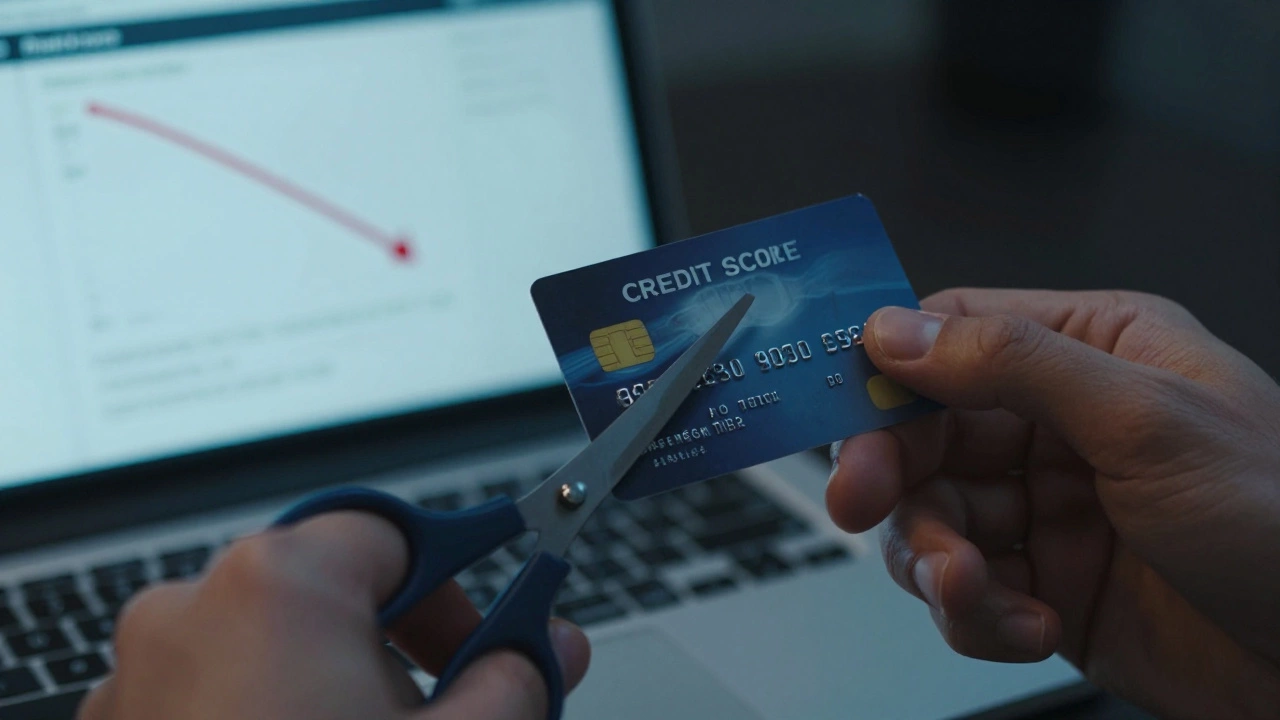
You just got that new credit card with the amazing travel rewards or cash back you’ve been dreaming of. It’s time to cut up the old one, right? Not so fast. Before you send that magnetic strip into the shredder, you need to understand how this decision interacts with your credit score. For many people, the fear is real: will closing an account tank my rating and ruin my chances for a mortgage or car loan later?
The short answer is yes, it *can* hurt your score, but it doesn’t have to. It depends entirely on the math behind your credit report. If you cancel the wrong card at the wrong time, you might see a temporary dip. If you do it strategically, you might not notice a thing. Let’s break down exactly what happens inside the algorithms used by FICO and VantageScore when you close an account.
The Two Main Ways Closing a Card Impacts Your Score
Your credit score isn't a single number pulled from thin air; it’s a calculation based on specific data points in your credit history. When you close a card, two major factors are affected immediately: your credit utilization ratio and the average age of your accounts. These two elements carry the most weight in standard scoring models.
First, let’s talk about utilization. This is the percentage of your available credit that you’re currently using. Lenders love low numbers here because it shows you aren’t relying too heavily on borrowed money. When you close a card, its credit limit disappears from your total available credit. If you still have balances on other cards, your utilization rate spikes. A spike means higher risk, which usually means a lower score.
Second, consider the age factor. Credit bureaus like Equifax, Experian, and TransUnion look at how long you’ve managed credit. Older accounts generally help your score because they provide a longer track record of reliability. Closing an old card stops that clock from ticking in your favor, potentially shortening your average account age over time.
Understanding Credit Utilization Ratio
This is the biggest immediate threat to your score when you cancel a card. Imagine you have three cards:
- Card A: $5,000 limit, $1,000 balance
- Card B: $5,000 limit, $0 balance
- Card C: $5,000 limit, $0 balance
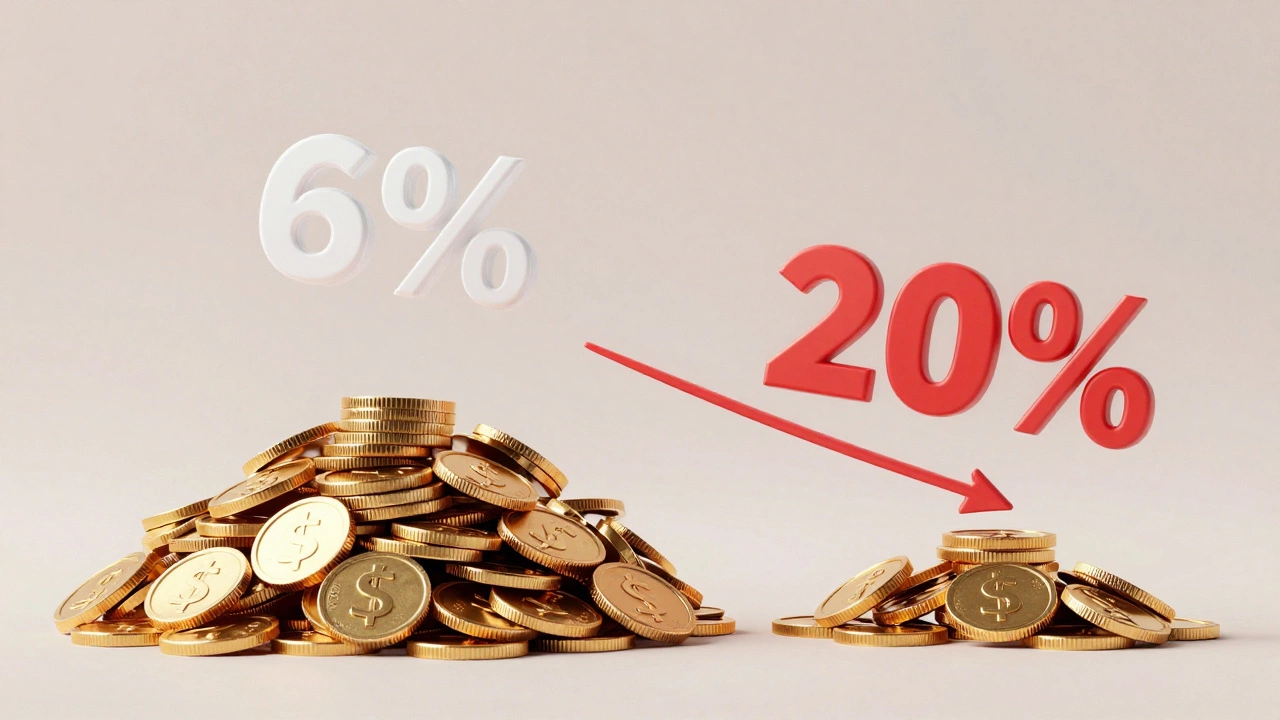
Your total available credit is $15,000. Your total debt is $1,000. Your utilization is 6.7% ($1,000 / $15,000). That’s a healthy number. Now, imagine you cancel Card B and Card C because you don’t use them. Your available credit drops to $5,000. Your debt stays at $1,000. Your utilization jumps to 20%. While 20% isn’t terrible, it’s significantly worse than 6.7%, and that drop can shave off several points from your score instantly.
If you’re planning to apply for a big loan soon-like a mortgage-lenders often want to see utilization below 10%. Closing cards right before applying can be a costly mistake. The rule of thumb is simple: keep your total available credit high relative to your total debt.
The Role of Average Account Age
Many people think that once you close a card, it vanishes from your credit report immediately. That’s not true. Closed accounts in good standing stay on your report for up to ten years. However, their impact changes over time.
In the FICO scoring model, closed positive accounts continue to contribute to the "length of credit history" factor for those ten years. But there’s a catch: they don’t get older. An account opened in 2015 will always be dated 2015. Meanwhile, your open accounts keep aging. Over time, the closed account becomes less significant compared to newer, active accounts. Eventually, as the oldest accounts fall off your report, your average age of accounts will decrease, which can negatively impact your score.
VantageScore, another popular model, treats closed accounts slightly differently. It may weigh them less heavily than open ones, but they still matter. The key takeaway? Don’t rush to close your oldest cards unless you have a very good reason. They are the anchors of your credit history.
When Is It Safe to Cancel a Card?
There are scenarios where cutting up a card makes perfect financial sense. Here are the green lights:
- High Annual Fees: If a card charges $300 a year and you’re not earning enough rewards to offset that cost, close it. The fee hurts your wallet more than the potential score dip hurts your future borrowing power.
- Temptation to Spend: If having the card leads to impulse buying and accumulating debt, closing it is a smart behavioral move. Paying interest on new purchases will damage your finances far more than a small score drop.
- Poor Customer Service or Hidden Fees: Some issuers add late fees or increase APRs arbitrarily. If the issuer is predatory, protect yourself first.
- Duplicate Rewards: If you have two identical cards from the same issuer offering the same 1% cash back, keeping both adds little value. You can close one without losing much diversity in your portfolio.
In these cases, the benefit outweighs the risk. Just make sure you pay off any remaining balance before calling the issuer.
How to Minimize Damage When Closing a Card
If you’ve decided you must close a card, follow these steps to soften the blow to your credit profile:
1. Pay Off the Balance First
Never close a card with a balance. Not only does this maximize your utilization ratio (since the limit goes away but the debt remains), but it also signals financial stress to lenders. Wait until your statement shows $0.
2. Check Your Total Available Credit
Before calling, calculate your current utilization. If closing this card will push your ratio above 30%, reconsider. You might want to request a credit limit increase on another existing card instead. This keeps your total available credit high without adding new hard inquiries.
3. Keep the Oldest Account Open
If you have multiple cards, prioritize closing the newest ones. Preserve the "veteran" accounts that give you depth in your credit history. Even if you rarely use them, put a small recurring charge (like a streaming service) on them and set up autopay to keep them active.
4. Ask About Soft Closure Options
Some issuers allow you to remove the physical card from your digital wallet or disable online purchases while keeping the account technically open. This reduces temptation without triggering the closure event on your credit report.

Comparison: Keeping vs. Closing a Card
| Factor | Keeping the Card | Closing the Card |
|---|---|---|
| Credit Utilization | Remains stable or improves if limit increases | Increases (bad) if limits drop |
| Average Account Age | Continues to grow positively | Stops growing; eventually falls off report |
| Annual Fees | You pay the fee | You save the fee |
| Reward Earnings | Continue to accrue points/cash back | Lost access to rewards |
| Spend Temptation | Higher risk of impulse buys | Lower risk of new debt |
Common Misconceptions About Canceling Cards
There’s a lot of bad advice floating around online. Let’s clear up two common myths.
Myth 1: "Closing a card removes negative marks."
False. If you have late payments or high balances on a card, closing it does not erase that history. The negative information stays on your report for seven years. In fact, closing it might make things worse by increasing your utilization ratio. Always focus on paying down debt and making on-time payments, not hiding behind closed accounts.
Myth 2: "I should close all cards except one to simplify my life."
Dangerous. Having only one card leaves you vulnerable. If that one account gets frozen due to suspected fraud, you’ll have no backup credit. Plus, concentrating all your spending on one card can lead to high utilization if you don’t manage the limit carefully. Diversity in your credit mix (different types of loans and cards) actually helps your score slightly.
What Happens After You Close?
Once you call the issuer and confirm the closure, the status updates to "closed by consumer" on your credit report. This label is neutral-it doesn’t look bad. It simply explains why the account is inactive. The account will remain visible for up to ten years if it was in good standing. If it had collections or charge-offs, it stays for seven years from the date of the last delinquency.
Monitor your credit reports in the months following the closure. Sometimes, issuers report the closure incorrectly, or there might be a lingering balance. Use free services provided by the major bureaus to check for errors. If you see a discrepancy, dispute it immediately. Accuracy matters more than strategy when mistakes happen.
Will closing a credit card affect my ability to get a mortgage?
It can, especially if it causes your credit utilization ratio to spike above 30%. Mortgage lenders look closely at your debt-to-income ratio and credit health. If closing a card lowers your score or increases your apparent debt load, it might delay approval or result in a higher interest rate. It’s best to avoid closing cards 6-12 months before applying for a major loan.
How long does a closed account stay on my credit report?
Positive closed accounts can stay on your credit report for up to 10 years. Negative accounts, such as those with late payments or charge-offs, typically remain for 7 years from the date of the first missed payment. During this time, they continue to influence your credit score, though their impact diminishes over time.
Should I close my card if I have a zero balance?
Not necessarily. If the card has no annual fee and a high credit limit, keeping it open helps your credit utilization ratio and maintains the age of your credit history. Only close it if the annual fee is high, you’re tempted to overspend, or the issuer has poor customer service.
Can I reopen a closed credit card account?
Sometimes. If you recently closed the account, you might be able to call the issuer and ask to reopen it. However, this is not guaranteed. The issuer may treat it as a new application, which could trigger a hard inquiry. Additionally, the original opening date may reset, hurting your average account age.
Does closing a card hurt my credit score immediately?
Yes, it can cause an immediate drop, primarily due to the increase in your credit utilization ratio. The impact on your average account age is slower but still significant over time. The size of the drop depends on your overall credit profile and how much of your total available credit was tied to the closed card.