
Personal Budget Planner
Your Income
Enter your total monthly net income (after tax).
Now enter your actual spending in the table below to compare against your plan.
Budget Breakdown
50/30/20 Rule| Category | Recommended Limit | Actual Spending | Status |
|---|---|---|---|
|
Enter your income to start planning. Based on Step 2 of our guide. Recommended Spending Categories for a Balanced Budget |
|||
Spending Visualization
Most people think budgeting means saying no to everything they enjoy. It doesn’t. The real problem isn’t your willpower; it’s usually a lack of clarity. When you don’t know where your money is going, you can’t control it. You end up stressed about bills, surprised by credit card statements, and stuck in a cycle of living paycheck to paycheck.
The good news? You don’t need a spreadsheet degree or an app subscription to fix this. You just need a system that works for your life. Whether you’re earning €2,000 or €6,000 a month, the logic remains the same. Here are the four concrete steps to build a budget that actually sticks.
Step 1: Track Every Single Euro
You cannot manage what you do not measure. This sounds obvious, but most people guess their monthly expenses. They think, “I probably spend around €300 on food,” when the bank statement says €450. That gap is where your savings disappear.
Expense tracking is the process of recording every financial transaction to understand spending habits. Without accurate data, any budget you create is just a fantasy.Start by pulling your last three months of bank and credit card statements. If you use cash, estimate based on receipts or ATM withdrawals. Categorize each transaction into buckets like Housing, Food, Transport, Utilities, Entertainment, and Debt Repayment.
Don’t judge yourself yet. Just look at the numbers. You might be shocked to see how much you spend on subscription services you forgot about or daily coffee runs. In Dublin, for example, a daily latte adds up to over €70 a month. That’s not a small amount. Once you see the truth, you can start making informed choices instead of guessing.
- Gather data: Download CSV files from your bank or take screenshots of your mobile banking app.
- Categorize: Group similar items together (e.g., groceries + dining out = Food).
- Calculate averages: Divide total spending per category by three to get a realistic monthly baseline.
This step takes about two hours. Do it once, and you’ll have a clear picture of your financial reality. No more assumptions.
Step 2: Set Realistic Limits
Now that you know where your money goes, it’s time to decide where it *should* go. This is where many budgets fail. People set limits too low (“I’ll only spend €50 on fun”) and abandon the plan within a week because it feels punishing.
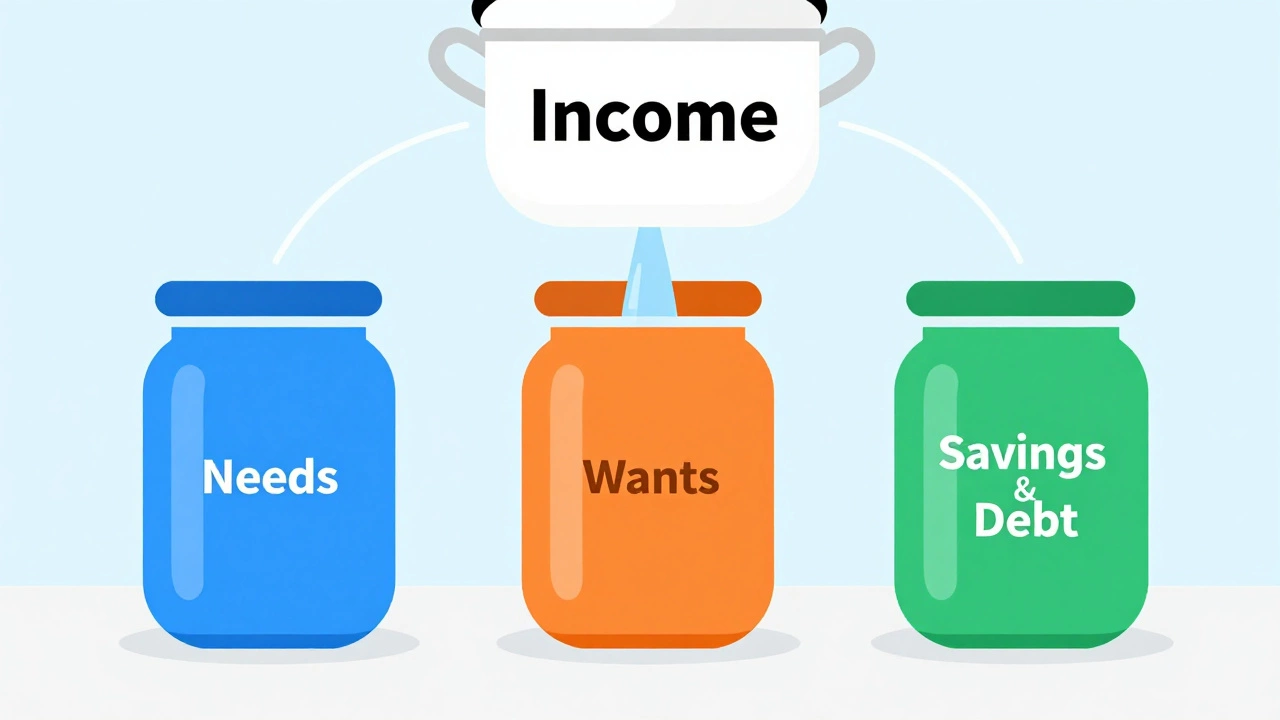
A better approach is the Zero-Based Budget, which is a method where every euro of income is assigned a job before the month begins. Your income minus your expenses equals zero. Not because you have no money left, but because you’ve planned for every penny-including savings, debt payments, and leisure.
| Category | Suggested % of Income | Examples |
|---|---|---|
| Needs | 50% | Rent/mortgage, utilities, groceries, transport, insurance |
| Wants | 30% | Dining out, hobbies, subscriptions, travel, entertainment |
| Savings & Debt | 20% | Emergency fund, retirement, student loans, credit card payoff |
These percentages aren’t laws. If you live in a high-cost area like central Dublin, your “Needs” might hit 60%. That’s okay. Adjust the other categories accordingly. The key is intentionality. Decide consciously how much you want to spend on Netflix versus saving for a holiday. Don’t let apps auto-renew while you ignore your emergency fund.
Pro tip: Start with one category you can easily reduce. Maybe it’s eating out twice a week instead of four times. Small wins build momentum.
Step 3: Automate What You Can
Willpower is a finite resource. Relying on it to save money every month is a recipe for failure. Instead, remove the decision-making process entirely.
Financial automation is setting up recurring transfers and payments to ensure bills are paid and savings grow without manual effort. It reduces stress and prevents missed payments.Set up automatic transfers from your checking account to your savings account on payday. Even €50 a month makes a difference. Over five years, that’s €3,000 plus interest. Most banks in Ireland allow you to schedule standing orders or direct debits through their online portals.
Also automate your bill payments. Rent, electricity, phone plans-make sure they’re paid automatically so you never face late fees. Keep enough buffer in your checking account to cover these outgoing transfers, then treat whatever remains as your “spendable” cash.
- Prioritize savings: Treat your future self like a creditor. Pay them first.
- Schedule bill payments: Align due dates with your paydays to avoid overdrafts.
- Use alerts: Set up notifications for large transactions or low balances to stay aware without micromanaging.
Automation turns budgeting from a chore into a background process. You still track your spending, but you don’t have to remember every detail.

Step 4: Review and Adjust Monthly
A budget isn’t a contract. Life changes. You get a bonus. Your car breaks down. You move apartments. If your budget doesn’t adapt, it becomes useless.
Once a month, sit down for 15 minutes and compare your actual spending against your plan. Did you overspend on groceries? Why? Was it inflation, or did you buy things you didn’t need? Did you underspend on entertainment? Great! Move that extra money to savings or treat yourself guilt-free.
This review is where you learn. You’ll notice patterns. Maybe you always spend more in December. Plan for that ahead of time. Maybe you’re consistently under-saving. Raise your automatic transfer amount by €10 next month. Tiny adjustments compound over time.
Ask yourself:
- Did I meet my savings goal?
- Were there unexpected expenses?
- Which categories felt restrictive?
- What can I improve next month?
Be honest. Be kind to yourself. Progress matters more than perfection.
Common Pitfalls to Avoid
Even with these four steps, people stumble. Here’s what to watch out for:
- Being too rigid: If you ban all non-essential spending, you’ll rebel. Allow room for joy.
- Ignoring irregular expenses: Car maintenance, gifts, annual insurance-save a little each month for these.
- Comparing yourself to others: Your budget should reflect your values, not someone else’s Instagram feed.
- Waiting for the “perfect” moment: Start now. Imperfect action beats perfect inaction.
Budgeting is a skill, not a talent. You get better with practice. The first month will feel awkward. The second will feel easier. By the third, it’ll feel natural.
How long does it take to see results from budgeting?
You’ll notice changes within one month. Most people cut unnecessary spending immediately, freeing up €100-€300. Real progress-like building an emergency fund or paying off debt-takes 3-6 months of consistent tracking and adjustment.
Do I need an app to budget effectively?
No. Pen and paper work fine. Apps like YNAB or Mint can help, but they’re tools, not magic solutions. The value comes from your attention, not the software. Choose whatever method keeps you engaged.
What if I earn variable income?
Base your budget on your lowest expected monthly income. Save any excess immediately. This protects you during lean months. Freelancers and gig workers should aim to keep 3-6 months of expenses in reserve.
Should I include debt repayment in my budget?
Yes. List minimum payments under “Needs.” Any extra payment toward principal goes under “Savings & Debt.” Prioritize high-interest debt first (avalanche method) or smallest balance first (snowball method), depending on your motivation style.
Can I budget with my partner if we have different incomes?
Absolutely. Combine incomes and expenses proportionally. One common method: each person contributes a percentage of their income to shared costs. Keep individual discretionary funds separate to maintain autonomy.