Small Savings Habits: How Tiny Changes Build Big Financial Wins
When we talk about small savings habits, consistent, low-effort financial behaviors that add up over time. Also known as micro-saving, it’s not about cutting out life—it’s about shifting how you think about money every day. You don’t need a windfall to start building wealth. You just need to stop ignoring the small stuff. That $5 lunch you skip? That’s $150 a month. That $20 you forget to spend on impulse buys? That’s $240 a year. Do that for five years? You’ve saved over $1,900—without ever feeling like you’re missing out.
automatic savings, setting up transfers that move money before you even see it. Also known as pay-yourself-first, it removes willpower from the equation. Most people who succeed with savings don’t rely on discipline—they rely on systems. A $25 weekly transfer from your checking to a separate account? That’s $1,300 a year, tax-free, growing quietly in the background. And when you pair that with a budgeting, tracking where your money goes to make smarter choices. Also known as spending awareness, it’s the foundation that makes small savings stick. You can’t save what you don’t measure. But you don’t need fancy apps or spreadsheets. Just ask yourself: Where does my money go each week? You’ll be surprised how often the answer is: nowhere useful.
People think financial security comes from big moves—getting a raise, hitting the lottery, or buying the right stock. But the real secret? It’s the daily choices. Skipping the subscription you never use. Paying with cash instead of card for small purchases. Keeping your gas tank half full to avoid price spikes. These aren’t sacrifices. They’re habits. And habits compound. One study from the University of California found that people who saved just $20 a week for ten years ended up with more than those who saved $100 a month for five years—because they started earlier and stayed consistent. That’s the power of small savings habits.
It’s not about being perfect. It’s about being present. You don’t need to save 20% of your income. You just need to save something, every single time you get paid. And when you do, you start to feel different—less anxious, more in control. That’s the real win. The money is just the side effect.
Below, you’ll find real stories and practical steps from people who turned tiny habits into real financial security. No fluff. No gimmicks. Just what works.
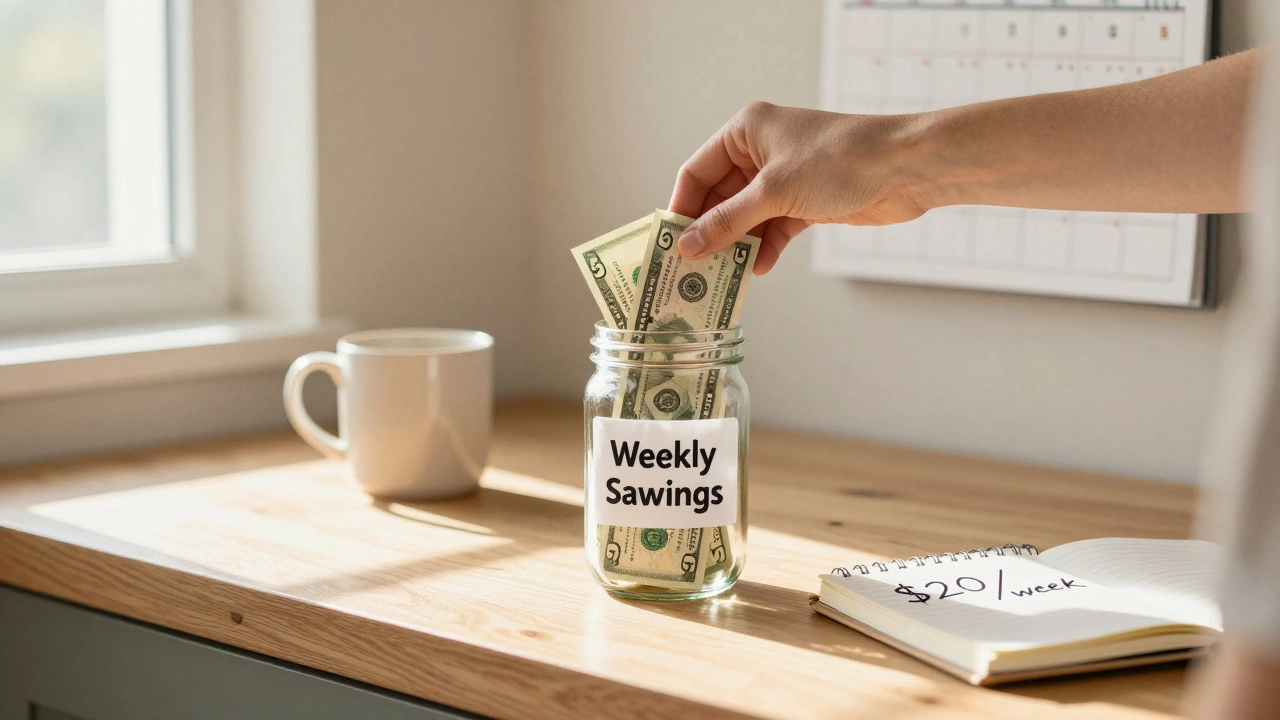
Saving $20 a week adds up to $1,040 in a year-without interest. With a decent savings account, you could earn an extra $18 or more. Learn how small, consistent savings build real financial security.
Read More