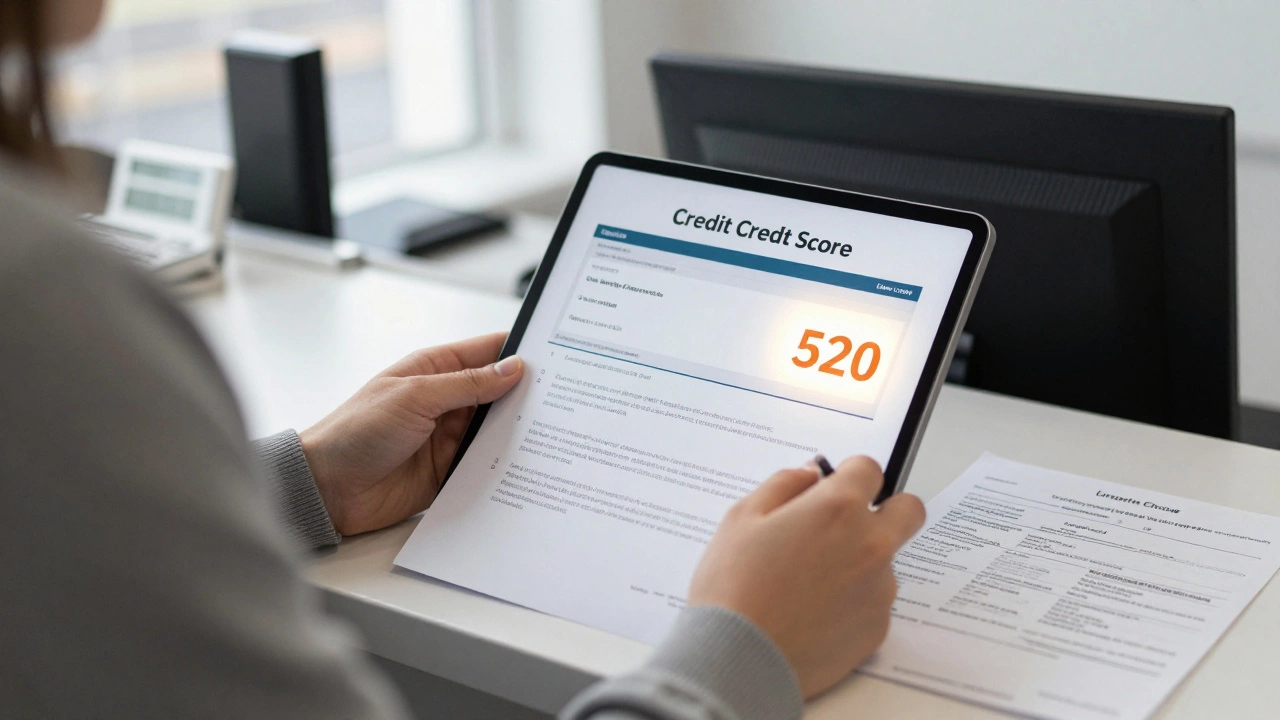
Credit Score Loan Calculator
See exactly how your credit score affects your loan costs. Based on current 2025 lending practices in Ireland, this calculator shows the real financial impact of different credit scores on your borrowing options.
Most people think you need a perfect credit score to get a loan. That’s not true. Even if your credit score is low, you can still borrow money. But how low is too low? And what kind of loan can you actually get with a credit score in the 500s? The answer isn’t simple - it depends on the lender, the type of loan, and your income. But here’s what actually happens in 2025 when you walk in with a credit score below 600.
There’s no single magic number
There’s no universal cutoff like "580 or higher" that all lenders use. Some payday lenders will give you money with a score as low as 500. Others, like credit unions or online lenders, might require 580 or even 620. The truth? Lenders don’t just look at your score. They look at your bank statements, your job history, and whether you’ve paid rent on time.
For example, a lender in Dublin might approve a €1,500 personal loan with a 520 credit score if you’ve been employed at the same company for two years and your bank account shows steady deposits every Friday. But if your income is irregular - say, you work freelance gigs - they’ll say no, even if your score is 610.
What credit scores do lenders actually use?
In Ireland, most lenders use the Credit Information Bureau (CIB) score, which runs from 0 to 1,000. A score below 500 is considered high risk. Between 500 and 650 is subprime. Above 650 is fair to good. But here’s the twist: some lenders don’t even look at your CIB score. They use alternative data.
Companies like Wonga, Moneybarn, and Funding Circle check things like:
- How long you’ve lived at your current address
- Whether you’ve paid utility bills on time
- Your mobile phone contract history
- Bank transaction patterns (like regular payments to a landlord or gym)
One lender in Cork told me they approved a loan for someone with a 480 score because they’d paid their phone bill for 18 months straight and had no overdrafts. That’s not a score-based decision - it’s a behavior-based one.
Types of loans available with bad credit
Not all loans are created equal. Here’s what’s actually available if your score is under 600:
- Secured personal loans: You put up something valuable - like a car or electronics - as collateral. Lenders are more willing to lend because they can take it back if you default. Minimum score: 450.
- Guarantor loans: Someone with good credit (like a parent or sibling) co-signs. Your score doesn’t matter as much. Minimum score: 400, but the guarantor must have a score over 700.
- Payday loans: Small, short-term loans (usually under €500). These are expensive - think 1,000% APR - and should only be used in emergencies. Minimum score: 400.
- Car finance with bad credit: Dealerships that specialize in subprime lending often approve loans even with scores below 500. But expect higher interest rates and bigger down payments.
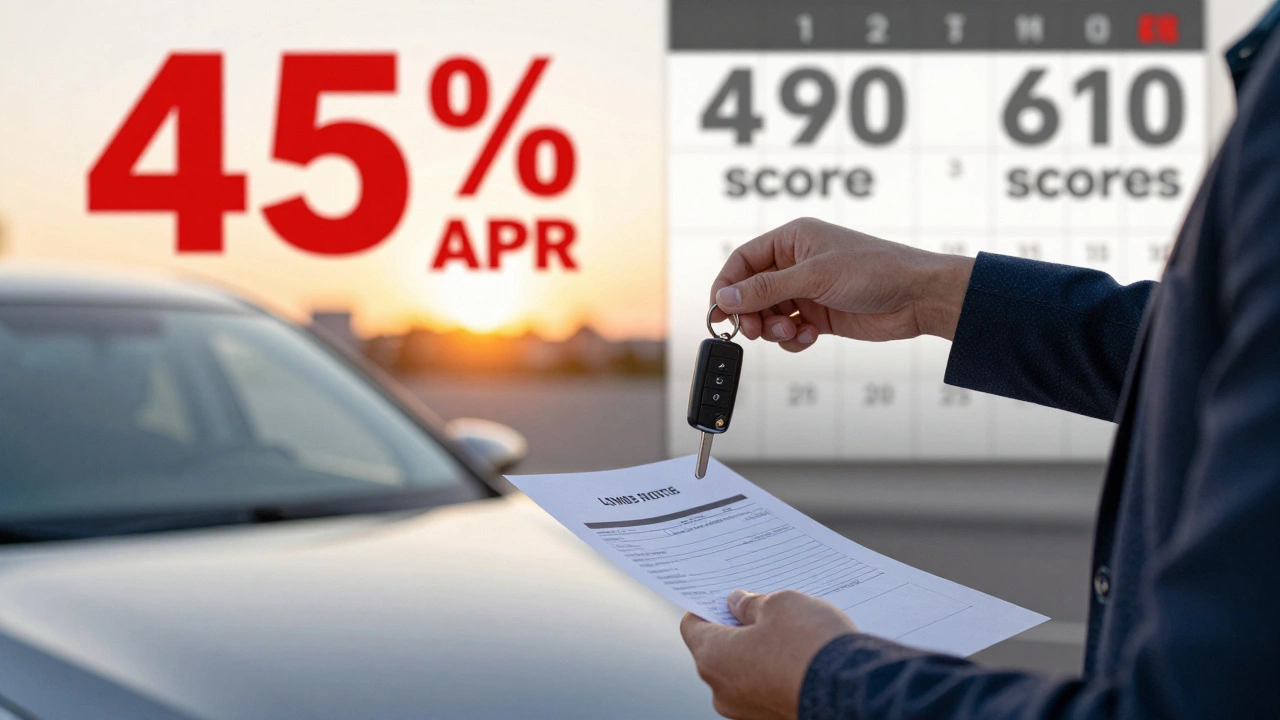
One woman in Limerick got a €7,000 car loan with a 490 score by putting down €2,000 and adding her brother as a guarantor. Her monthly payment? €240 for 36 months. That’s over 25% interest. But it got her to work.
Why interest rates jump when your score is low
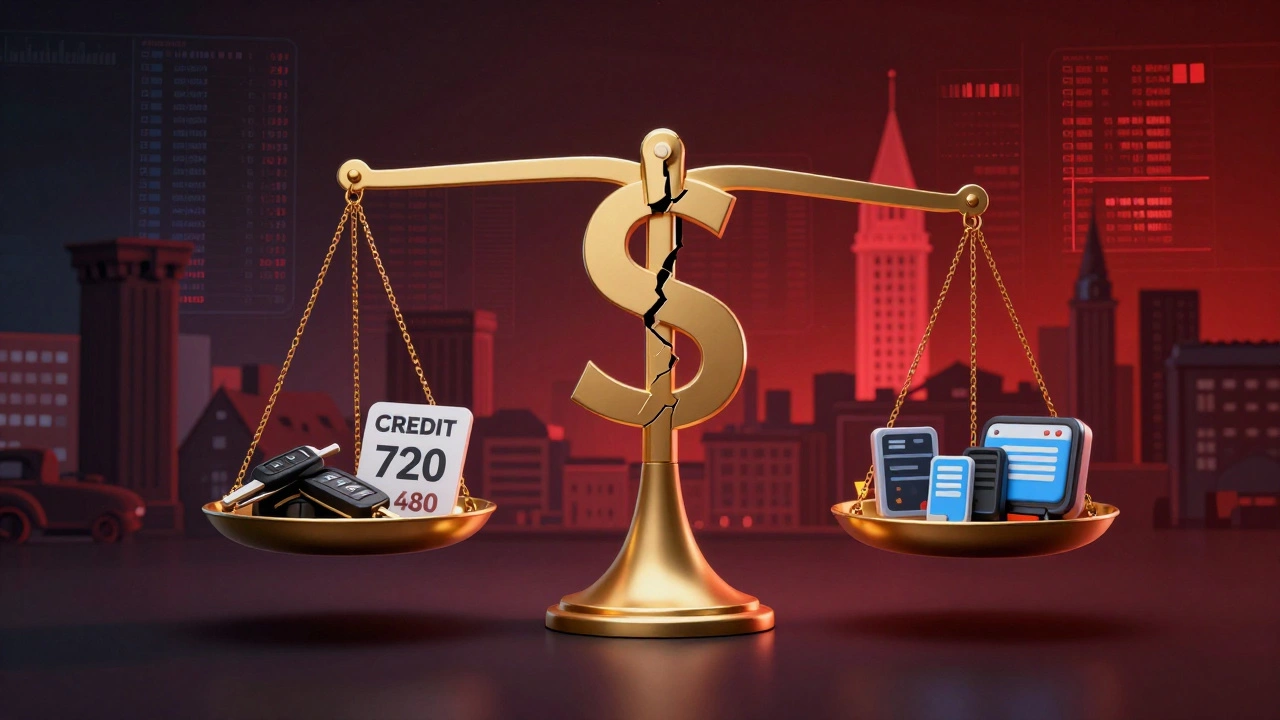
If your score is 750, you might get a personal loan at 6% APR. At 550? You’re looking at 25-35%. Why? Lenders assume you’re more likely to miss a payment. They build that risk into the price.
Here’s what that looks like in real money:
| Credit Score | APR | Monthly Payment | Total Repaid |
|---|---|---|---|
| 700+ | 6% | €152 | €5,472 |
| 600-650 | 18% | €185 | €6,660 |
| 500-550 | 32% | €238 | €8,568 |
| 400-499 | 45% | €295 | €10,620 |
That’s over €5,000 extra in interest just because your score dropped below 500. It’s not a penalty - it’s a business calculation. But it’s still a heavy cost.
What lenders won’t tell you
Most ads for "bad credit loans" make it sound easy. But there are traps.
- Hidden fees: Some lenders charge "administration fees" of €100-€300 upfront. That’s not interest - it’s just cash taken before you even get the money.
- Roll-over traps: Payday lenders may let you extend your loan if you can’t pay. But each extension adds more fees. One person I spoke with ended up paying €1,200 in fees on a €400 loan over six months.
- Loan sharks: Unlicensed lenders operate online and in phone calls. They threaten you, demand cash payments, and don’t report to the CIB. Stay away.
Always check if a lender is registered with the Central Bank of Ireland. If they’re not, walk away.
How to improve your chances - even with a low score
You don’t have to accept the worst deal offered. Here’s how to get better terms:
- Check your credit report for errors. In 2025, 1 in 5 Irish credit reports still have mistakes. Fixing one can raise your score by 50+ points.
- Apply for a guarantor loan. It’s the single best way to get lower rates with bad credit.
- Save a bigger down payment. Even €500 extra can cut your interest rate by 5-10%.
- Use a credit union. They’re more likely to look at your whole story, not just your score. Many offer "credit builder loans" - small loans designed to help you rebuild.
- Pay off small debts first. Even a €100 overdue bill can drag your score down. Clear it, and your score may jump.
One man in Galway raised his score from 470 to 610 in nine months by paying off three small debts, signing up for a credit union loan of €1,000, and paying it back on time every month. He then qualified for a 12% APR loan to fix his car.
What to do if you’re turned down
Getting rejected doesn’t mean you’re done. It means you need to adjust your approach.
- Wait 3-6 months before reapplying. Too many applications in a short time hurt your score.
- Ask the lender why you were denied. They’re required to tell you. Was it your income? Your debt-to-income ratio? Your address history?
- Try a different lender type. If a bank said no, try a credit union. If a payday lender said yes but the rates were insane, try a guarantor option.
- Consider non-loan help. Organizations like Credit Counselling Service or Money Advice and Budgeting Service (MABS) can help you negotiate with creditors or find emergency grants.
Bottom line: You can borrow with a low score - but it’s not free
The lowest credit score you can borrow with? Around 400 - if you’re willing to pay high interest, use a guarantor, or put up collateral. But borrowing with a score under 500 should be a last resort. It’s expensive. It’s risky. And it can trap you in a cycle of debt.
If you’re in this position, focus on rebuilding your score. Pay your bills on time. Keep your credit utilization under 30%. Use a credit builder loan. In 12-18 months, you’ll qualify for much better rates. And when you do, you’ll be glad you didn’t take the first bad deal that came your way.
What is the lowest credit score to get a personal loan in Ireland?
Some lenders, especially payday or secured loan providers, may approve personal loans with a credit score as low as 400. But these loans come with very high interest rates - often over 40% APR. Most reputable lenders require at least 500-550. Credit unions may approve applicants below 500 if they have a guarantor or steady income.
Can I get a loan with a credit score of 500?
Yes, but your options are limited. You’ll likely need a secured loan, a guarantor, or a car finance deal. Interest rates will be high - around 30-45%. You may also need to put down a large deposit. Check with credit unions first; they’re more flexible than banks.
Do all lenders use the same credit score?
No. Most Irish lenders use the Credit Information Bureau (CIB) score, which ranges from 0 to 1,000. But some use alternative data like rent payments, phone bills, or bank transaction history. A few online lenders don’t check your score at all - they focus on your income and spending habits.
How long does it take to improve a low credit score?
You can see improvements in 3-6 months if you pay all bills on time, reduce outstanding debts, and avoid new credit applications. Building a strong record with a credit builder loan can raise your score by 100+ points in a year. Consistency matters more than speed.
Are bad credit loans a good idea?
Only in emergencies. Bad credit loans often come with fees, high interest, and short terms that make them hard to repay. They can trap you in a cycle of debt. If you need money, explore guarantor loans, credit unions, or help from MABS before taking a high-cost loan.