Save $20 a Week: How Small Savings Build Big Financial Security
When you save $20 a week, a simple, repeatable financial habit that turns small actions into long-term security. It’s not about cutting out coffee—it’s about stacking small wins until they change your life. That’s $80 a month. $960 a year. Over $10,000 in a decade. And that’s just the cash you set aside. The real win? You’re training your brain to think like someone who controls money, not the other way around.
Budgeting, the practice of tracking and planning your income and expenses to meet financial goals isn’t about restriction. It’s about clarity. If you’re saving $20 a week, you’re already doing it right. You’re not waiting for a raise or a windfall. You’re starting where you are. And that’s the exact mindset behind the posts you’ll find here: real people fixing their money problems without fancy tools or perfect incomes. You don’t need to be rich to start. You just need to start.
Emergency fund, a cash reserve for unexpected costs like car repairs, medical bills, or job loss doesn’t have to be $10,000. It can start with $20 a week. That’s how most people build it—slow, steady, and without panic. The posts below show you how others turned $20 into $500, then $2,000, then enough to avoid high-interest debt when life threw them a curveball. And if you’re drowning in credit card balances or student loans, saving $20 a week isn’t a distraction—it’s your escape route. Every dollar you save is one less dollar you’ll owe later.
These aren’t theoretical tips. Every article here comes from real situations: someone who paid off $15,000 in debt by saving $20 a week while working two jobs. Someone who used that same habit to finally get a home equity loan approved. Someone who stopped worrying about their credit score because they finally had cash to fall back on. You’ll see how saving $20 a week connects to debt reduction, the process of systematically paying down money owed to improve financial health, to financial habits, consistent behaviors that shape long-term money outcomes, and even to bigger moves like remortgaging or choosing the right car loan.
There’s no magic here. No get-rich-quick trick. Just the quiet power of showing up, week after week. The posts below don’t tell you to save $500 a month. They show you how to start with $20—and why that’s more than enough to begin.
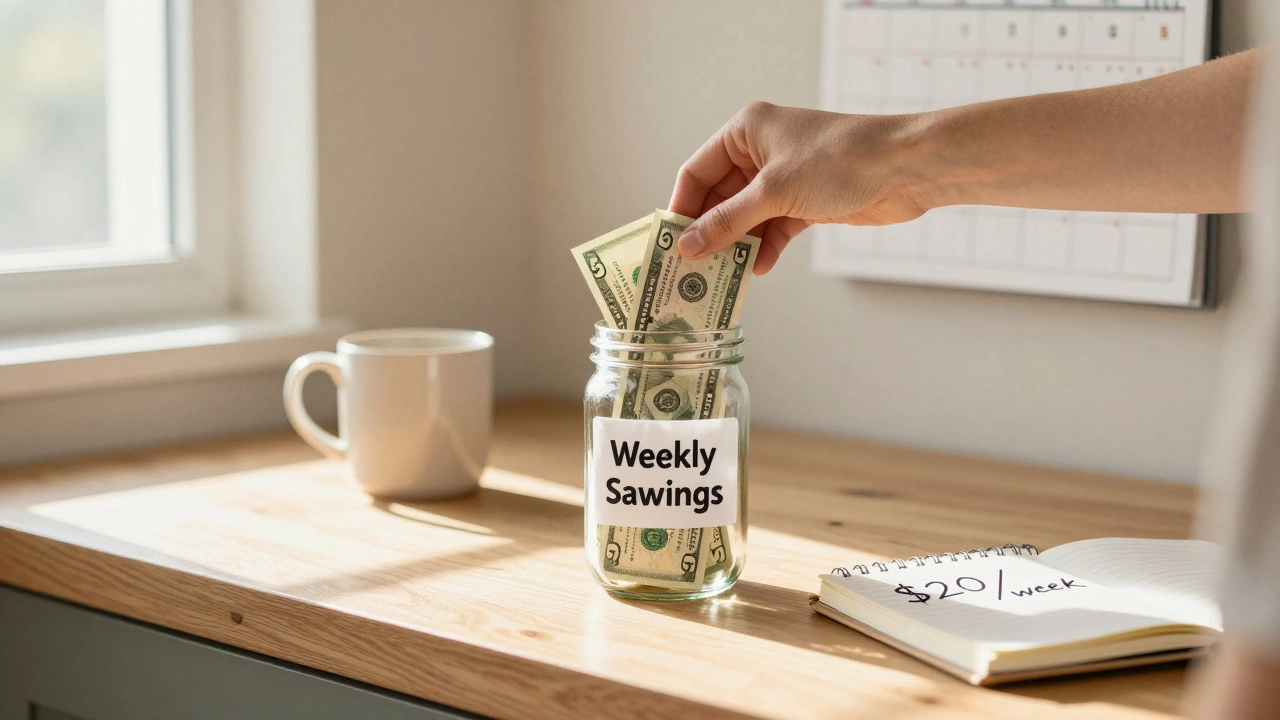
Saving $20 a week adds up to $1,040 in a year-without interest. With a decent savings account, you could earn an extra $18 or more. Learn how small, consistent savings build real financial security.
Read More