ISA vs. Savings Account Tax Calculator
Recommendation
Based on your inputs, the ISA provides a significant tax advantage over a standard savings account.
Standard Account Net
ISA Net
You’ve got some spare cash. You want it to grow, but you also want to keep it safe from market crashes. The classic dilemma: do you park it in a standard high-yield savings account, or do you wrap it in an Individual Savings Account (ISA)? It’s not just about which rate looks higher on the homepage. It’s about how much of that interest actually ends up in your pocket after HMRC takes its cut.
For most people in the UK right now, the answer leans heavily toward the ISA. But there are traps. If you don’t understand the annual allowance rules or confuse a Cash ISA with a Stocks and Shares ISA, you could accidentally waste your tax-free allowance or lock away money you might need for an emergency. Let’s break down exactly why one beats the other, when they’re equal, and how to set this up without making costly mistakes.
The Core Difference: Tax Efficiency
The fundamental reason an ISA exists is tax efficiency. When you put money into a standard savings account-whether it’s at a big high street bank or a smaller online challenger-you earn interest. That interest is technically taxable income. However, thanks to the Personal Savings Allowance introduced years ago, many of us pay zero tax on it anyway. Basic rate taxpayers can earn £1,000 in interest tax-free, while higher rate taxpayers get £500. Additional rate taxpayers get nothing.
An ISA changes the game completely. Any interest, dividend, or capital gain generated inside an ISA is entirely tax-free. There is no limit to how much interest you can earn. If you have £50,000 in a Cash ISA earning 4%, that’s £2,000 in pure profit. In a standard account, if you’re a higher-rate taxpayer, you’d owe tax on £1,500 of that interest. Over decades, that difference compounds significantly.
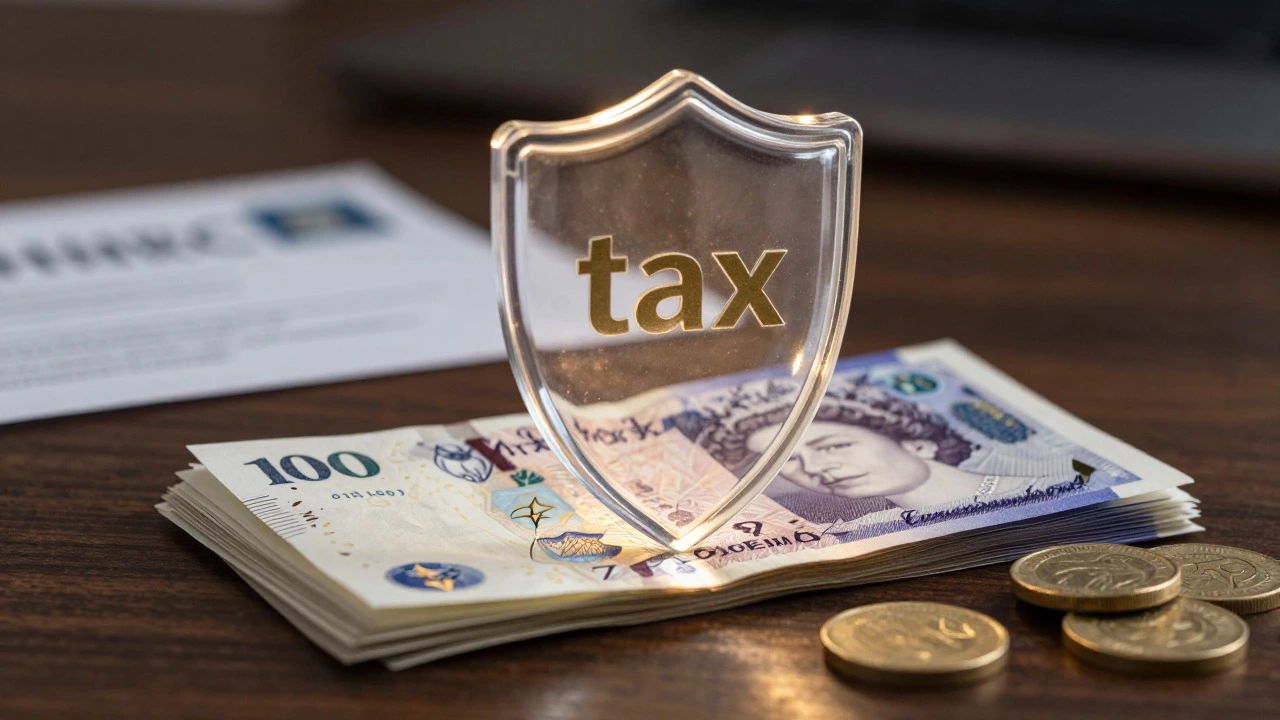
Think of the ISA as a shield. It protects your returns from HMRC. A standard savings account leaves your returns exposed, albeit partially covered by the Personal Savings Allowance. For anyone earning above £50,270 per year, the ISA isn’t just better; it’s essential for maximizing net returns.
Cash ISAs vs. Standard Savings Accounts: The Rate Game
Historically, Cash ISAs offered lower interest rates than standard fixed-term bonds or easy-access accounts. Banks used to charge a "premium" for the tax wrapper. That has changed dramatically since the Bank of England raised base rates in recent years. Today, the gap between top-tier Cash ISA rates and standard savings rates is negligible, often identical.
In 2026, you can find Cash ISAs offering competitive variable rates that match the best easy-access savings accounts. This means you get the same yield, plus the tax protection. However, if you look at Fixed-Rate Bonds, standard non-ISA bonds sometimes still edge out Cash ISAs by a fraction of a percentage point. Here is where you have to do the math. Is a 0.1% higher rate worth losing your tax-free status?
- If you are a basic rate taxpayer: Calculate if your total interest across all accounts exceeds £1,000. If it doesn’t, the tax benefit of the ISA is irrelevant. You might prefer the slightly higher rate of a standard bond.
- If you are a higher/additional rate taxpayer: The ISA almost always wins because every penny of interest is yours.
- If you are unsure of your future tax status: The ISA provides certainty. Your tax code won’t change the value of your savings.
Liquidity and Access: Emergency Funds
Safety and access matter just as much as returns. Most people keep their emergency fund in an easy-access savings account. Why? Because psychological barriers exist. Money in an ISA feels like "investment money." Money in a standard savings account feels like "spending money."
Cash ISAs are generally easy-access. You can withdraw funds whenever you want, just like a standard account. Some providers even allow you to switch your Cash ISA to another provider without breaking the tax wrapper, though this process is complex and requires using the Transfer Service, not withdrawing the cash yourself. If you withdraw the cash directly, you lose the ability to put that specific amount back into an ISA until the next tax year (April 6).
This is a critical distinction. With a standard savings account, you can withdraw £1,000 today and deposit £1,000 tomorrow with no consequences. With an ISA, that withdrawal burns your annual allowance for that tax year. If you use your ISA as a primary emergency fund, ensure you only withdraw what you truly need and never intend to replace within the current tax year.

The Annual Allowance Trap
The biggest risk with ISAs isn’t low rates; it’s wasting the allowance. For the 2026/27 tax year, the overall ISA allowance remains at £20,000. This is a lifetime cap per tax year, not per product. You can split this £20,000 between different types of ISAs, but you cannot exceed the total.
Common mistakes include:
- Double-dipping: Putting £20,000 into a Cash ISA and then trying to put another £20,000 into a Stocks and Shares ISA. Only the first £20,000 counts. The second contribution will be rejected or flagged by HMRC.
- Sub-accounting errors: Opening multiple Cash ISAs with different banks. You can only subscribe to one Cash ISA per tax year. You can hold old ones, but you can’t add new money to them unless you transfer the entire balance.
- Ignoring the deadline: The tax year ends on April 5. Unused allowance does not roll over. If you wait until December to save, you might miss the boat if life gets busy. Set up automatic payments early in the tax year.
If you accidentally over-contribute, you may face a tax charge of 20% plus interest on the excess amount. It’s a bureaucratic headache best avoided by tracking your contributions carefully.
Beyond Cash: Stocks and Shares ISAs
When people ask "Is an ISA better?", they often mean Cash ISAs. But the real power of the ISA wrapper lies in investing. A Stocks and Shares ISA allows you to hold equities, funds, and bonds. Historically, stocks have returned 7-9% annually over long periods, far outpacing inflation and savings account interest.
Without an ISA, you’d pay Capital Gains Tax on profits above your annual exempt amount (which has been shrinking) and Dividend Tax on payouts. Inside a Stocks and Shares ISA, all growth is tax-free forever. This makes it the superior vehicle for long-term wealth building, retirement planning, or saving for a house deposit five years down the line.
However, come with risk. Unlike a Cash ISA or standard savings account, your capital is not protected by the Financial Services Compensation Scheme (FSCS) against market loss. If the market crashes, your ISA value drops. Standard savings accounts guarantee your principal. So, for short-term goals (under 3 years), a Cash ISA or standard savings account is safer. For long-term goals (5+ years), a Stocks and Shares ISA is vastly more powerful.
| Feature | Cash ISA | Standard Savings Account | Stocks & Shares ISA |
|---|---|---|---|
| Tax on Interest/Gains | None | Subject to Personal Savings Allowance | None |
| Capital Protection | Yes (up to £85,000 via FSCS) | Yes (up to £85,000 via FSCS) | No (Market Risk Applies) |
| Typical Return Potential | Low (Matches Base Rate + Spread) | Low (Matches Base Rate + Spread) | Medium-High (Historically 7-9%) |
| Annual Contribution Limit | £20,000 (Shared Allowance) | Unlimited | £20,000 (Shared Allowance) |
| Best For | Tax-efficient short-term savings | Emergency funds / High earners with low interest | Long-term wealth building |
Who Should Stick With Standard Savings Accounts?
It’s not all ISAs. There are scenarios where a standard savings account is the smarter choice. First, if you have very little to save-say, under £1,000 a year-the administrative hassle of managing an ISA might not be worth it, especially if you’re a non-taxpayer. Second, if you need absolute flexibility and frequently move large sums in and out, the restriction on re-depositing withdrawn ISA funds can be annoying. Standard accounts have no such memory.
Also, consider inheritance. ISAs lose their tax-free status upon death. While spouses can inherit a "Dead Spouse’s Additional Permitted Subscription" (DSAPS) allowance, the rules are complex. Standard savings accounts pass directly to beneficiaries without these specific ISA constraints, though Inheritance Tax rules still apply to the estate as a whole. For most people, this nuance doesn’t outweigh the tax benefits, but it’s worth noting for those with significant estates.
How to Choose: A Decision Framework
To decide quickly, ask yourself three questions:
1. What is my tax bracket? If you pay Higher or Additional rate tax, max out your Cash ISA immediately. The tax savings are immediate and guaranteed.
2. When do I need the money? If it’s for an emergency fund or a holiday next year, use a Cash ISA or a standard easy-access account. If it’s for retirement or a child’s education in 10 years, use a Stocks and Shares ISA.
3. Have I already used my £20,000 allowance? If yes, and you still have money to save, open a standard savings account. You can’t squeeze more tax relief out of thin air.
Don’t forget to check the provider’s reputation. Look for banks regulated by the FCA and PRA. Ensure the Cash ISA is part of the FSCS scheme, which protects up to £85,000 per person, per authorized firm. If you have more than £85,000, spread it across two different banks.
Final Thoughts on Maximizing Your Savings
An ISA is structurally superior to a standard savings account for anyone who pays income tax and plans to hold the money for more than a few months. The combination of tax-free growth and competitive rates makes it the default choice for UK savers in 2026. However, it requires discipline. Treat your ISA allowance like a perishable good-use it before April 5, don’t withdraw unnecessarily, and choose the type (Cash vs. Stocks) based on your time horizon, not just fear of volatility.
Start by checking your current savings. Are you paying tax on interest you didn’t know was taxable? Switch those funds into a Cash ISA via transfer. Then, direct any new monthly savings into your ISA until you hit the £20,000 cap. Once capped, overflow into standard high-yield accounts. This layered approach ensures you’re always optimizing for both safety and tax efficiency.
Can I have both a Cash ISA and a standard savings account?
Yes, absolutely. You can hold unlimited standard savings accounts alongside your ISAs. The limitation only applies to how much you contribute to ISAs in a single tax year (£20,000). Many people use a standard account for daily spending and emergencies, and an ISA for longer-term, tax-efficient savings.
What happens if I withdraw money from my Cash ISA?
You can withdraw the money, but you lose the tax-free allowance for that specific amount for the current tax year. For example, if you put in £5,000 and withdraw £1,000, you can only add £15,000 more that year, not £20,000. The remaining £4,000 stays in the ISA tax-free, but the £1,000 you took out cannot be replaced within the same tax year.
Are Cash ISAs protected if the bank goes bust?
Yes. Like standard savings accounts, Cash ISAs held at authorized UK banks are protected by the Financial Services Compensation Scheme (FSCS) up to £85,000 per person, per banking license. If the bank fails, you will get your money back. Note that Stocks and Shares ISAs are not protected against market losses, only against provider failure for the assets themselves.
Do I need to declare my ISA interest on my Self Assessment tax return?
No. One of the main benefits of an ISA is that you do not need to report interest, dividends, or capital gains to HMRC. It is truly tax-free. However, you should keep records of your contributions to prove you stayed within the £20,000 annual limit if ever questioned.
Can I transfer my Cash ISA to another bank for a better rate?
Yes, but you must use the official ISA Transfer Service. Do not simply withdraw the cash and deposit it elsewhere, as this will count as a withdrawal and reduce your allowance. Contact the new provider, fill out a transfer form, and let them move the funds directly. This preserves your tax status and your annual allowance.