Buffett's Rule Calculator: The Cost of Losses
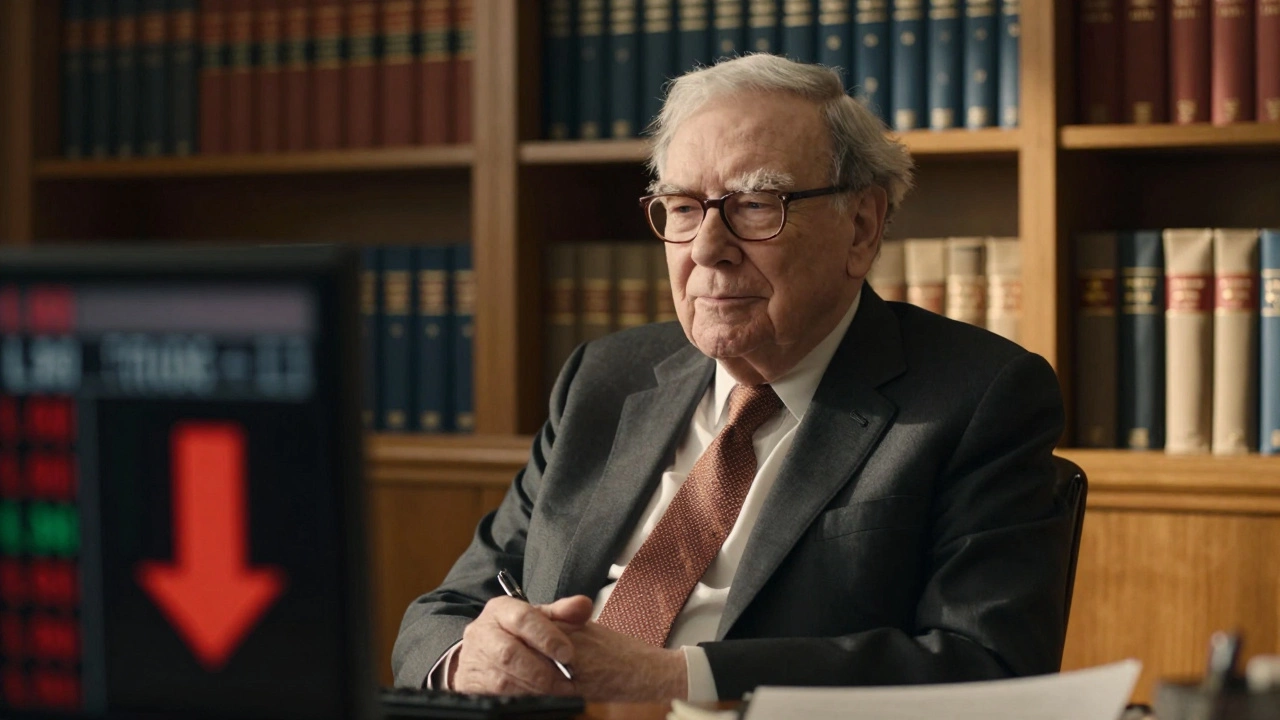
Warren Buffett's first rule is to never lose money. This calculator demonstrates why capital preservation is critical by showing the mathematical difficulty of recovering from losses.
You’ve probably heard the quote: “Rule No. 1: Never lose money. Rule No. 2: Never forget Rule No. 1.” It sounds simple enough, right? Just don’t lose your cash. But if it were that easy, everyone would be a billionaire by now. The truth is, this famous advice from Warren Buffett, the Oracle of Omaha and CEO of Berkshire Hathaway, is often misunderstood. It doesn’t mean you should play it so safe that you earn zero returns. It means something much deeper about how you think about risk.
The Origin of the Rule
Buffett didn’t invent this idea out of thin air. He learned it from his mentor, Benjamin Graham, the father of value investing. In Graham’s classic book, The Intelligent Investor, he emphasized that protecting your principal is more important than chasing high yields. Buffett took this lesson to heart and made it the cornerstone of his entire investment philosophy.
Think of it like driving a car. You can drive fast, but if you crash, you’re not going anywhere. Buffett’s rule is about avoiding the crash entirely. It’s not about speed; it’s about staying on the road long enough to reach your destination.
What “Never Lose Money” Actually Means
Let’s clear up the biggest misconception first. Buffett isn’t saying you’ll never see your portfolio dip in value. Markets go down. That’s normal. What he means is that you should never make an investment where there is a significant chance of losing your original capital permanently.
This is called capital preservation. It’s the idea that your first job as an investor is to keep what you have. Your second job is to grow it. If you lose half your money, you need a 100% gain just to get back to where you started. That math works against you. A 50% loss requires a 100% recovery. A 90% loss requires a 900% recovery. See the problem?
Buffett avoids investments with asymmetric downside risk. He looks for situations where the potential upside is large, but the downside is limited. This is why he loves companies with strong moats-competitive advantages that protect them from rivals.
The Margin of Safety Concept
To follow Buffett’s rule, you need a margin of safety. This is another concept borrowed from Benjamin Graham. It means buying an asset for less than its intrinsic value. If you buy a stock worth $100 for $70, you have a $30 cushion. If your analysis was slightly wrong, or if the market turns sour, you’re still protected.
Imagine buying a house. If the market says it’s worth €300,000, but you buy it for €250,000, you have built-in equity. That’s your margin of safety. In stocks, this means looking at fundamentals like earnings, cash flow, and assets, rather than just following the crowd.
| Approach | Risk Level | Capital Preservation Focus | Typical Outcome |
|---|---|---|---|
| Speculative Trading | High | Low | Unpredictable, high volatility |
| Trend Following | Medium | Medium | Dependent on market momentum |
| Value Investing (Buffett Style) | Low to Medium | High | Steady growth over time |
Why Most Investors Fail to Follow This Rule
So, if the rule is so smart, why do so many people lose money? Because human psychology is wired against it. We love excitement. We hate boredom. Investing according to Buffett’s rule is boring. It involves reading annual reports, analyzing balance sheets, and waiting years for results.
Most investors are driven by fear and greed. When stocks are rising, they buy at the top because they don’t want to miss out (FOMO). When stocks fall, they panic sell because they’re afraid of losing more. This behavior violates Rule No. 1 every time. Buffett stays calm. He waits for others to make mistakes, then he steps in.
Consider the dot-com bubble of the late 1990s. While everyone was buying internet startups with no profits, Buffett sat on the sidelines. He said he didn’t understand the business models. People called him outdated. Then the bubble burst, and billions vanished. Buffett’s cash was ready to buy quality companies at discounted prices during the aftermath.

How to Apply Buffett’s Rule Today
You don’t need millions of euros to start applying these principles. Here’s how you can incorporate Buffett’s mindset into your own investing strategy:
- Understand What You Buy: Don’t invest in companies you don’t understand. If you can’t explain how they make money in simple terms, skip it. Buffett sticks to businesses with predictable earnings, like insurance, consumer goods, and utilities.
- Focus on Quality: Look for companies with a competitive advantage (a moat). This could be a strong brand, high switching costs for customers, or network effects. Apple, Coca-Cola, and See’s Candies are examples Buffett has cited.
- Check the Financial Health: Avoid companies with too much debt. High interest payments eat into profits and increase the risk of bankruptcy. Look for consistent free cash flow.
- Buy When Others Are Fearful: Market downturns are opportunities, not disasters. If a great company’s stock drops due to temporary bad news, it might be a chance to buy at a discount.
- Hold for the Long Term: Frequent trading increases costs and taxes. Buffett holds stocks for decades. Time allows compounding to work its magic.
The Role of Diversification vs. Concentration
Buffett’s approach challenges the traditional wisdom of diversification. Most financial advisors tell you to spread your money across hundreds of stocks. Buffett disagrees. He believes that if you truly understand a business and have a margin of safety, you don’t need extreme diversification. In fact, he thinks too much diversification dilutes your returns.
However, this is advanced territory. For most regular investors, a diversified index fund is a safer way to follow the spirit of Rule No. 1. By owning the whole market, you eliminate the risk of any single company failing. You still avoid permanent loss of capital over the long run, while keeping fees low.
Common Pitfalls to Avoid
Even with good intentions, investors make mistakes. Here are some traps that violate Buffett’s rule:
- Chasing Hot Tips: Buying stocks because a friend or social media influencer recommends them is gambling, not investing. You haven’t done the work to assess the risk.
- Leverage: Borrowing money to invest amplifies both gains and losses. One bad move can wipe you out. Buffett rarely uses debt for investments.
- Ignoring Valuation: Even a great company can be a bad investment if you pay too much for it. Paying a high price reduces your margin of safety.
- Panic Selling: Selling during a market dip locks in your losses. Remember, paper losses aren’t real until you sell. If the company’s fundamentals haven’t changed, hold on.

Real-World Example: The American Express Incident
One of Buffett’s most famous moves illustrates his rule perfectly. In 1963, American Express faced a crisis involving contaminated food in their frozen orange juice cartons. Their stock plummeted from $90 to $35. Many investors panicked and sold.
Buffett analyzed the situation. He realized that while the reputation hit was severe, American Express still dominated the traveler’s check market and had a loyal customer base for its charge cards. The core business was intact. He invested $22 million (a huge sum for him then) into the stock. Over the next decade, that investment grew significantly. He didn’t lose money because he bought a quality asset at a deep discount when fear drove the price down.
Is This Rule Still Relevant in 2026?
Absolutely. In fact, it’s more relevant than ever. With the rise of meme stocks, crypto speculation, and AI-driven trading bots, markets are more volatile than ever. Emotional decision-making leads to bigger losses. Buffett’s emphasis on discipline, patience, and fundamental analysis cuts through the noise.
In a world of instant gratification, waiting for the right pitch is a superpower. As Buffett himself said, “Price is what you pay. Value is what you get.” Stick to that mantra, and you’ll be ahead of most investors.
Final Thoughts on Capital Preservation
Warren Buffett’s rule to never lose money isn’t about being timid. It’s about being smart. It’s about recognizing that wealth building is a marathon, not a sprint. By prioritizing capital preservation, using a margin of safety, and sticking to what you understand, you position yourself for long-term success. You won’t get rich overnight, but you’ll likely stay rich for life.
Did Warren Buffett really say "never lose money"?
Yes, he did. It is widely attributed to him and appears in many interviews and shareholder letters. He emphasizes it as the most critical rule in investing, followed immediately by not forgetting the first rule.
Can I follow Buffett's rule if I only have a small amount of money?
Absolutely. The principles apply regardless of account size. You can start by investing in low-cost index funds, which offer diversification and reduce the risk of individual company failure. The mindset of patience and avoiding speculative bets is free to adopt.
What is the difference between a paper loss and a realized loss?
A paper loss occurs when the value of your investment drops below what you paid, but you haven't sold it yet. A realized loss happens when you sell the asset at a lower price than you bought it. Buffett advises holding through paper losses if the underlying business remains strong, avoiding the realization of permanent capital loss.
How does the margin of safety protect me?
The margin of safety provides a buffer against errors in analysis or unexpected market events. By buying an asset below its intrinsic value, you ensure that even if your estimate is slightly off or conditions worsen, you are less likely to lose your initial capital permanently.
Should I avoid all cryptocurrency based on Buffett's rule?
Buffett has historically criticized cryptocurrencies, calling them non-productive assets that generate nothing. From his perspective, they lack intrinsic value and cash flows, making them difficult to value and thus violating the margin of safety principle. Whether you agree is up to you, but his rule suggests caution with highly speculative assets.
Does Buffett use technical analysis?
No. Buffett focuses on fundamental analysis, looking at financial statements, management quality, and competitive advantages. He ignores short-term price charts and technical indicators, believing they do not reflect the true value of a business.
How long should I hold an investment to follow this rule?
There is no fixed time frame, but Buffett favors long-term holdings, often decades. The longer you hold, the more time compounding has to work, and the less impact transaction costs and taxes have on your returns. However, you should always monitor the fundamentals of the company.
What is a "moat" in investing?
A moat refers to a sustainable competitive advantage that protects a company from competitors. Examples include strong brands (like Coca-Cola), high switching costs (like enterprise software), or network effects (like Visa). Moats help ensure stable earnings and protect capital over time.