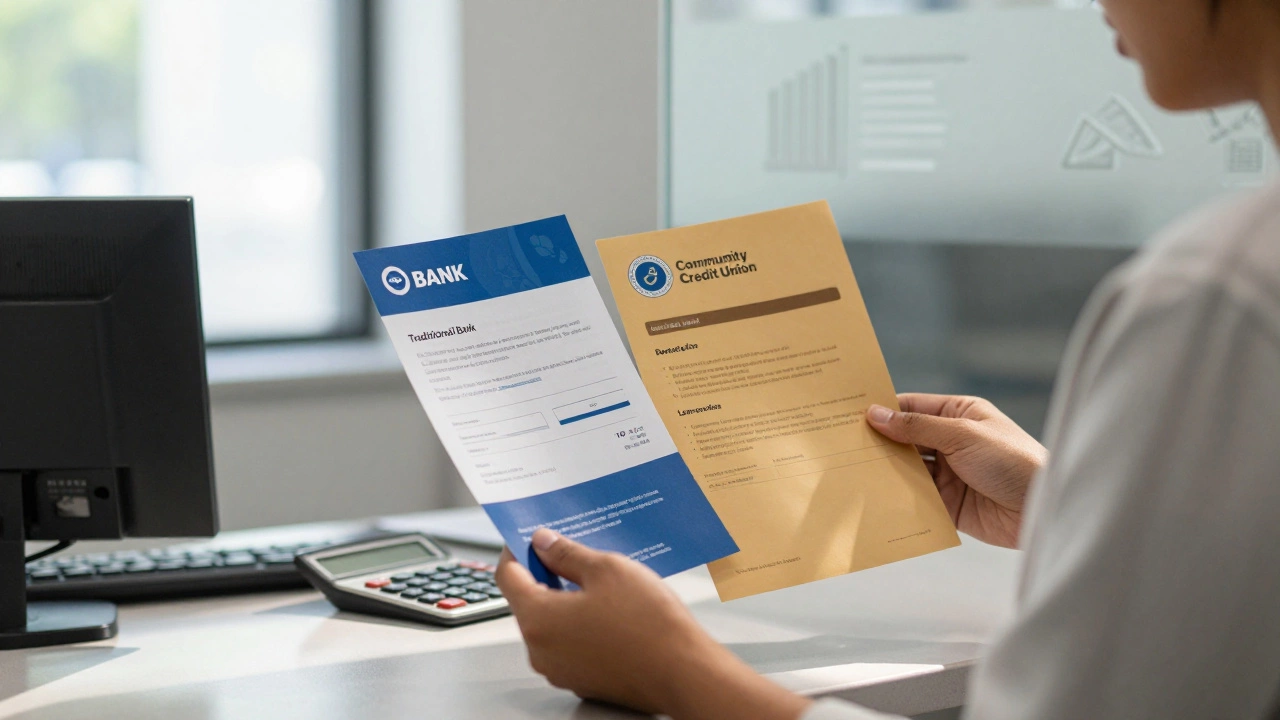
True Cost Calculator: Bank vs. Credit Union
Why use this: Headline interest rates are often deceptive. This tool helps you compare lenders by including hidden costs like arrangement fees, revealing which loan is actually cheaper over time.
Step 1: Your Loan Details
Option A (e.g. Big Bank)
Option B (e.g. Credit Union)
You might think walking into a branch guarantees the lowest price tag, but the reality is messier. While banks offer stability, they don't always hold the monopoly on low rates anymore. In fact, depending on your credit history and how you repay, a traditional Personal LoanA lump sum of money borrowed from a financial institution with fixed monthly payments from a local credit union could cost you significantly less over the full term.
The market has shifted rapidly since 2023. Digital lenders are aggressive, and community-based institutions are fighting back. If you are standing at the counter today wondering if the big bank is the right move, you need to look past the headline interest rate and dig into the Annual Percentage Rate of Charge (APRC). That figure tells the real story of what you will actually pay back.
Decoding the Real Cost of Borrowing
When a bank hands you a brochure, they will highlight the interest rate first. That number alone is deceptive. It doesn't account for setup costs, insurance premiums tied to the loan, or administrative charges. To get an accurate picture, you must focus on the APRC. This metric includes the interest plus all mandatory costs associated with the borrowing.
| Cost Component | Includes in Interest Rate? | Includes in APRC? |
|---|---|---|
| Base Interest | Yes | Yes |
| Arrangement Fee | No | Yes |
| Insurance Premium | No | Only if mandatory |
| Processing Charges | No | Yes |
If you ignore the arrangement fee, you might accept a 6% interest loan from Bank A while missing a 6.5% loan from a Credit Union that has zero admin fees. Over a three-year period, that difference in upfront costs changes the total repayment amount.
Banks Versus Credit Unions
In Ireland, Credit Unions remain a formidable force. Unlike large commercial banks driven by shareholder profit, these societies operate on a cooperative model. For their members, this structure often translates to competitive rates. However, eligibility is the barrier. You cannot just walk into a random Credit Union; you must belong to a specific occupational group or geographical area they serve.
A Credit UnionA member-owned financial cooperative providing savings and loan services typically takes a closer look at your character and ability to repay rather than just relying on rigid scoring algorithms. If you have been overlooked by mainstream banks due to a short credit history or a past blip in your record, a Credit Union is often a safer route that isn't necessarily more expensive.
That said, banks do win on volume. Their operational costs are distributed across millions of customers, allowing them to sometimes underwrite very low-risk applicants with rock-bottom rates. If your income is high, your credit score is pristine, and you already hold a current account with the bank, their internal "relationship bonus" might beat a standalone competitor.
The Trap of Variable Rates
Many consumers sign up for a loan without reading the terms regarding rate adjustments. Fixed rates lock in your payment for the duration of the agreement. With variable rates, the lender can adjust the interest rate based on the European Central Bank's benchmarks or their own cost of funds.
If you take out a five-year loan with a variable rate during a period of economic uncertainty, you face unpredictability. Your budget becomes a moving target. Conversely, a Fixed Rate LoanA loan where the interest percentage remains unchanged for the agreed period requires paying attention to inflation risks. Sometimes fixed rates start higher to compensate the lender for future volatility. Knowing your tolerance for risk is crucial here. Do you want sleep-at-night certainty, or do you want to gamble that rates will fall soon?

Hidden Fees That Spike the Balance
The most common complaint from borrowers involves surprise charges that appear halfway through the term. Arrangement fees are standard, but watch out for early settlement charges. If you sell your house and find extra cash to pay off your personal loan six months early, many banks penalize this action.
This penalty covers the interest income the bank loses when you exit early. Some lenders charge up to one month's interest or a flat percentage of the outstanding balance. Before signing, ask specifically: "What is the Early Repayment Charge?" A cheaper loan that traps your money until the end might actually cost you more if you intend to clear the debt quickly with windfalls or inheritance.
How Credit Scores Influence Pricing
Your credit rating acts as a proxy for risk. Banks use automated systems to assess your file. High scores unlock tier-one pricing. If you have a missed payment on a mobile contract from two years ago, that flag pushes you into a higher risk category immediately. Online lenders often step in for these rejected applications, but they charge significantly higher rates to cover the perceived risk.
To determine if a bank is truly cheaper for you, run a soft search check. This won't damage your file. Once you know your score band, you can see if banks in your bracket are offering deals comparable to specialist lenders. Often, the gap narrows significantly if you have been banking with the same institution for years. Loyalty discounts exist but rarely require asking for them-you might have to call the branch manager.

Comparing Loan Structures
Different loan products suit different needs. An overdraft, for example, seems cheap until you realize it compounds daily. It is flexible, but the interest stack grows fast.
- Personal Loans: Fixed repayment schedule, lump sum disbursement.
- Home Equity Loans: Secured against property, lower rates, high risk of losing home.
- Overdrafts: Flexible access, high daily interest accumulation.
- Payday Loans: Extremely high APRC, should be avoided entirely.
For long-term borrowing, a structured Personal Loan almost always beats an overdraft. The discipline comes built-in with a set end date. When comparing options, do not forget to factor in the term length. A 6% loan spread over ten years costs much more in total interest than a 7% loan paid off in two years.
Navigating the Digital Application Process
Online lenders have stripped away the bureaucracy. Applications can be approved in minutes compared to days at a branch. While this convenience is valuable, rushing through digital forms increases the chance of error. Ensure your income verification documents match what you declare. Discrepancies lead to fraud checks, delaying funding and potentially flagging your application as suspicious.
Using a broker can also help. Financial intermediaries have access to rates not listed on public websites. They may negotiate a better APRC by leveraging their volume of business with specific lenders. While there is usually a fee involved, this is negligible compared to saving even a few basis points over the life of a large loan.
Frequently Asked Questions
Are bank loans always better than credit union loans?
Not necessarily. Banks tend to offer better rates to customers with excellent credit and existing accounts. Credit Unions often offer competitive rates and are more willing to overlook minor credit blemishes, especially for members within their community.
What is the difference between interest rate and APRC?
The interest rate is the cost of borrowing the principal amount. The APRC includes the interest plus all mandatory fees like administration charges and insurance premiums, giving a true reflection of the total cost.
Can I repay my loan early without penalties?
You can usually repay early, but some lenders charge an Early Repayment Penalty. This fee compensates them for lost interest income. Always check the loan contract terms before settling early.
Does having a job affect my loan approval chances?
Yes, proof of continuous employment and stable income is key. Lenders prefer permanent contracts. Self-employed applicants may need to provide tax returns covering longer periods to prove stability.
Is a variable rate loan cheaper?
It depends on the economic climate. If central bank rates drop, your payments decrease. However, if rates rise, your monthly payments increase. Fixed rates offer protection against rising inflation costs.