
Emergency Fund Calculator
Find your ideal emergency fund target based on your household type and essential monthly expenses.
Your Emergency Fund Target
Why this matters: This is your financial safety net for job loss, medical emergencies, or unexpected repairs.
Keeping too little cash in your savings account leaves you vulnerable. Keeping too much means you’re losing out on better returns elsewhere. The real question isn’t just savings account balance-it’s about matching your cash reserves to your life, your income, and your risks.
Start with the 3-month rule
Most financial advisors agree: you need enough cash to cover three to six months of essential living expenses. That’s not your entire budget. It’s the bare minimum: rent or mortgage, utilities, groceries, insurance, basic transportation, and essential healthcare. In Dublin, the average monthly cost for a single person living outside the city centre is around €1,800. Multiply that by three, and you’re looking at €5,400. Six months? €10,800.This isn’t magic. It’s insurance. Life doesn’t ask if you’re ready before it throws you a layoff, a broken car, or a sudden medical bill. A 2023 survey by the Central Bank of Ireland found that 41% of households couldn’t cover an unexpected €2,000 expense without borrowing. That’s not a financial setback-it’s a crisis waiting to happen.
Adjust for your situation
The 3- to 6-month rule is a starting point, not a rule carved in stone. If you’re single, self-employed, or work in a volatile industry like hospitality or freelance tech, lean toward six months. If you’re part of a dual-income household with stable jobs, three months might be enough. But if one of you works in construction or seasonal retail, you’re still at risk. Don’t assume stability just because you have two paychecks.What about debt? If you have high-interest credit card debt, you might be tempted to dump your savings into paying it off. But don’t do it. Keep your emergency fund intact. Instead, pay off the debt while still building your cash buffer. You can do both. Start with €1,000 as a starter buffer, then gradually grow it while making extra debt payments.
Where to keep it
Not all savings accounts are the same. In Ireland, the best options right now offer between 4.5% and 5.25% AER (Annual Equivalent Rate). That’s not just pocket change-it’s real growth. For example, €10,000 at 5% AER earns €500 in a year. That’s more than most people make from side gigs.Look for accounts with:
- No withdrawal penalties
- Instant or next-day access
- High interest rates (compare on Moneywise or Consumer Choice Centre)
- No minimum balance requirements
Avoid accounts that lock your money for 6 months or more. Your emergency fund isn’t an investment-it’s a lifeline. If you can’t pull it out when you need it, it’s useless.
What not to do
Don’t keep your emergency fund in your everyday checking account. It’s too easy to spend. You’ll think, “I’ll just use this for the new shoes,” and suddenly you’re down to €300.Don’t hide cash under your mattress. Inflation eats away at physical cash. A €10,000 stash today will only buy what €9,500 bought last year. That’s a 5% loss in buying power if inflation stays at 5%.
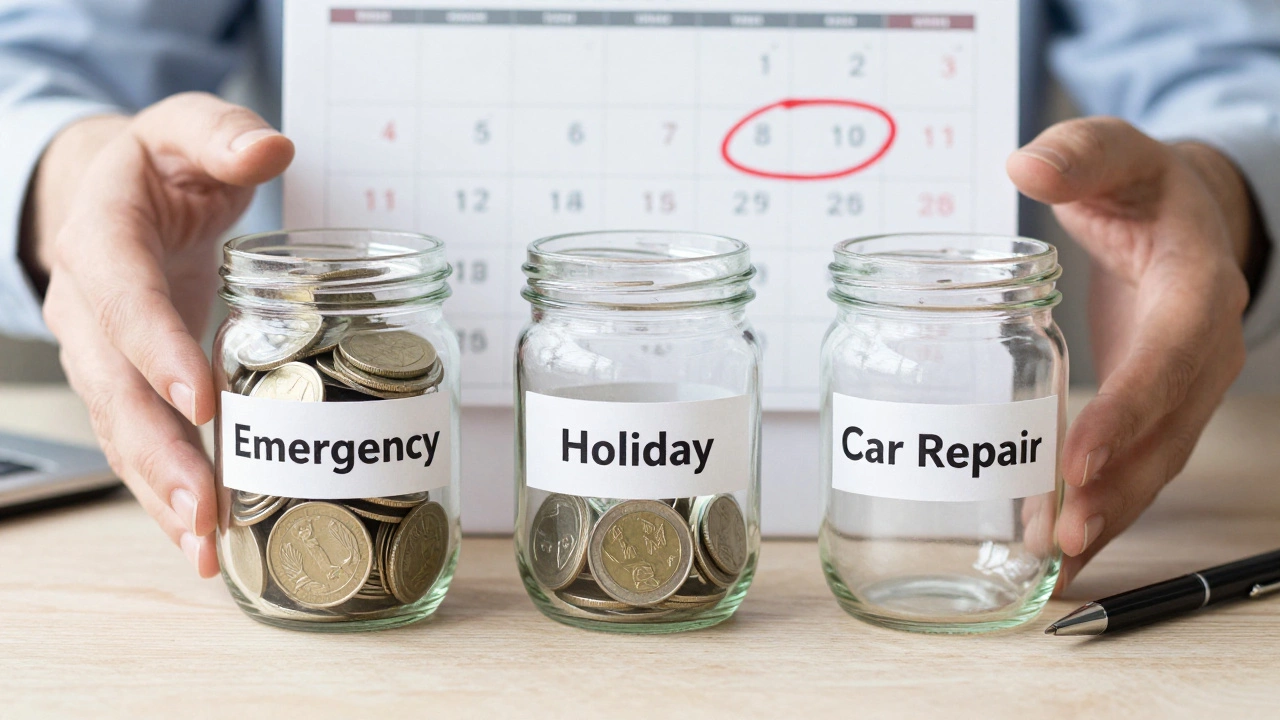
And don’t confuse this fund with your holiday savings or your car repair fund. Those are goals. This is your safety net. Mix them up, and you’ll end up broke when something serious happens.
How to build it slowly
If €10,000 feels impossible, start small. Automate it. Set up a direct debit to transfer €100 or €200 every payday into a separate savings account. Name it something like “Emergency Cash” so it feels real. Even €50 a week adds up to €2,600 a year. In two years, you’ve got a solid buffer.Use windfalls wisely. Tax refunds, bonuses, or even €50 from selling old clothes? Put it all in. One woman in Cork paid off her student loan and still managed to add €3,000 to her emergency fund by redirecting her monthly student loan payment into savings. She didn’t need the extra money-she just stopped paying it.
When you use it
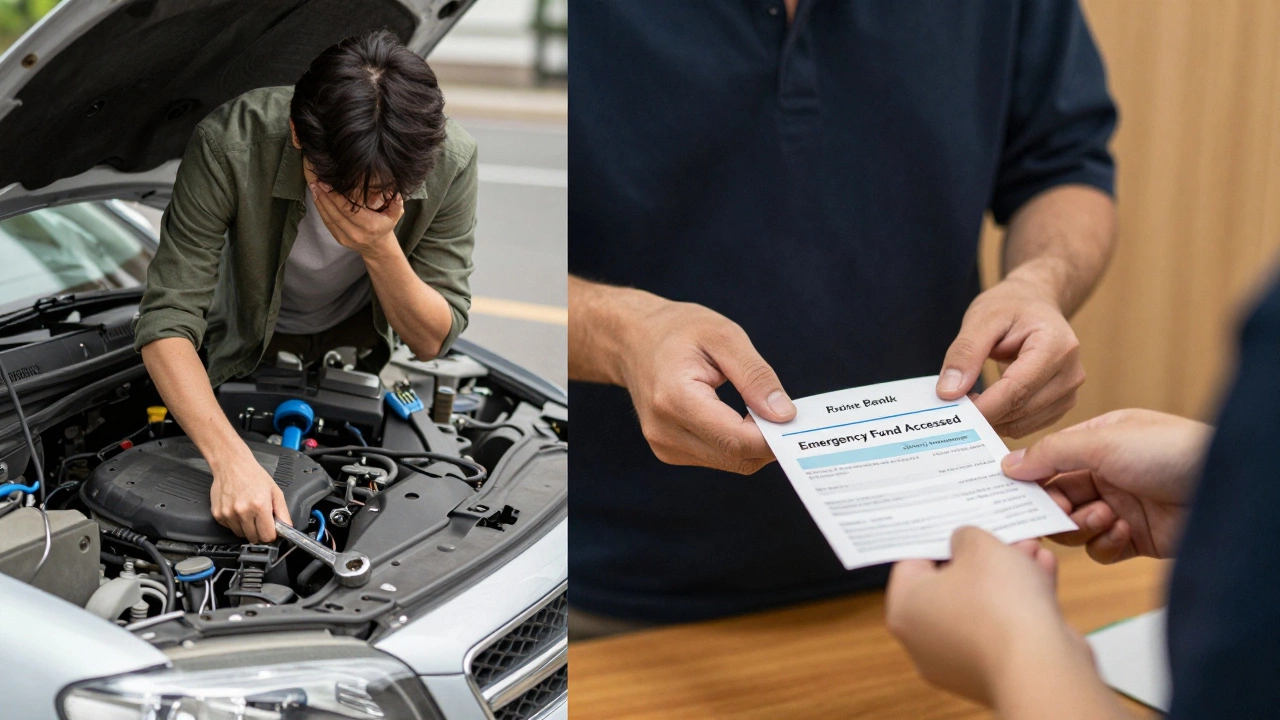
Use your emergency fund for true emergencies: job loss, urgent medical bills, major home repairs, or essential car fixes. Not for a vacation. Not for a new phone. Not for a spontaneous weekend trip.When you do use it, replace the money as soon as you can. Even if it’s just €50 a month. Treat it like a debt you owe yourself. Your future self will thank you.
What about interest rates?
Interest rates in Ireland are still high compared to the last decade. That’s good news for savers. But rates can drop. If you lock into a fixed-rate account, you might miss out later. Stick with variable-rate accounts that adjust with the market. They’re more flexible, and right now, they’re paying more.Also, watch out for accounts that advertise “bonus interest.” These often expire after 12 months. You might start with 6%, then drop to 1.5%. That’s not a savings account-that’s a trap.
Revisit it every year
Your expenses change. Your income changes. Your family size changes. So should your emergency fund.Once a year, sit down and recalculate:
- What are your essential monthly costs now?
- Have you moved? Got a raise? Had a baby?
- Are your insurance premiums higher?
Then adjust your target. If your rent went up by €200, your emergency fund should too. Don’t wait for a crisis to realize you’re underprepared.
Final number: What should you aim for?
There’s no universal answer. But here’s a practical guideline based on common Irish household profiles:| Household Type | Monthly Essential Costs | Recommended Cash Reserve |
|---|---|---|
| Single person, no dependents | €1,500-€2,000 | €4,500-€12,000 |
| Couple, no children | €2,500-€3,200 | €7,500-€19,200 |
| Family with 1-2 children | €3,500-€4,500 | €10,500-€27,000 |
| Self-employed or freelance | Variable | At least 6 months’ average income |
Remember: this isn’t about being rich. It’s about being safe. The goal isn’t to impress anyone. It’s to sleep better at night knowing you won’t be one missed paycheck away from panic.
What if you can’t reach the target yet?
Start with €1,000. That’s your first milestone. Then €2,000. Then €5,000. Every step forward reduces stress. You don’t need to hit €10,000 tomorrow. You just need to start.And if you’ve already got your fund? Great. Now, look at your high-interest debt. Or maybe you’re ready to invest the rest. But never touch this money unless it’s a real emergency. Not even for a “once-in-a-lifetime” sale.