
Payday Loan Trap Calculator
Avoid the Payday Loan Trap
Payday loans often seem like a quick fix but can become a dangerous debt spiral. Enter your loan details below to see exactly how much you'd pay and how quickly your debt can grow.
Real Alternative Options
While this calculator shows the danger of payday loans, remember you have better options. Consider:
- Asking friends or family for help
- Selling unused items
- Using employer early wage access
- Seeking help from local nonprofits (call 211)
If you're staring at an unexpected bill, a car repair, or a medical expense and your bank account is empty - and the bank just said no to your loan application - you're not alone. Thousands of people face this every month. Credit scores drop, incomes shift, and life doesn’t wait for perfect timing. But just because you can’t get a loan doesn’t mean you’re out of options. There are real, practical ways to get money when traditional lenders say no.
Tap into your network - not just your wallet
People often feel embarrassed asking friends or family for help. But cash shortages are more common than you think. A 2024 survey by the Federal Reserve found that nearly 40% of U.S. adults couldn’t cover a $400 emergency without borrowing. That’s not failure - it’s reality.Start with a clear, honest conversation. Say something like: “I’m short on cash right now for [specific expense], and I need $X to cover it. I can pay you back by [specific date] with [specific plan].” Write it down. Even if it’s informal, putting terms in writing protects both sides. People are more willing to help when they know you’re serious and have a plan.
Some platforms like Zelle, Cash App, or PayPal make it easy to send money instantly. No paperwork. No credit check. Just trust and a promise.
Sell what you don’t need
Your garage is probably full of things you haven’t touched in a year. That old gaming console, designer coat, or unused power tools? They’re cash waiting to happen.Facebook Marketplace, eBay, and OfferUp let you list items in minutes. Local buyers often pay cash on pickup. You don’t need to be a pro seller. Take a clear photo, write a simple description, and set a fair price. One person I spoke to sold five boxes of books, a treadmill, and an old TV for $1,200 in under a week. That covered their entire car repair bill.
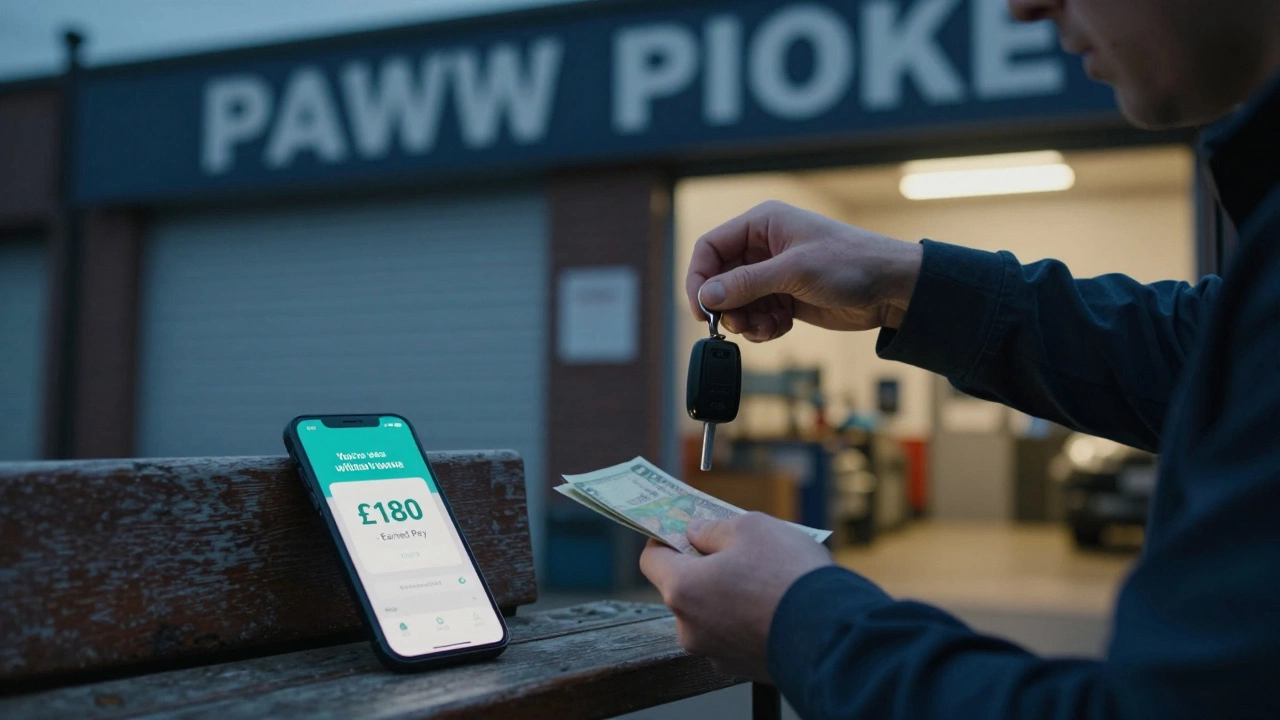
Don’t overlook smaller items: collectible coins, vintage records, or even unused gift cards. Pawn shops will give you cash on the spot for electronics, jewelry, or tools - but be careful. They pay less than market value. Only use them if you need cash now and can’t wait.
Get paid faster for work you’re already doing
If you freelance, drive for Uber, do odd jobs, or have a side hustle, you can often get paid the same day. Apps like Uber, DoorDash, and TaskRabbit let you cash out earnings instantly for a small fee - usually $1 to $2 per withdrawal. That’s better than waiting days for a bank transfer.Some employers offer early wage access through apps like PayActiv or Even. If your company partners with one of these, you can get up to 50% of your earned pay before payday. No credit check. No debt. Just access to money you’ve already earned.
Even if you don’t have a side gig, consider quick tasks: dog walking, yard work, tutoring, or cleaning. Post on Nextdoor or local Facebook groups. People pay cash for help with chores they don’t have time for.
Use a credit card - carefully
If you have a credit card with available credit, this might be your fastest option. But only if you can pay it off quickly. Credit cards aren’t loans - they’re revolving debt. If you can’t pay the full balance in 30 days, you’ll pay interest.Here’s how to use it smartly:
- Only charge what you absolutely need - not more.
- Pay the full balance by the due date to avoid interest.
- Don’t use it for daily expenses - just emergencies.
Some cards offer 0% intro APR for 12 to 21 months. If you qualify, you can use that window to pay off the balance slowly without interest. But read the fine print. If you miss a payment, the rate can jump to 25% or higher.
If you don’t have a card, don’t apply for one now. New applications hurt your credit score, and you’re likely to get denied anyway.
Ask for help from nonprofits and community programs
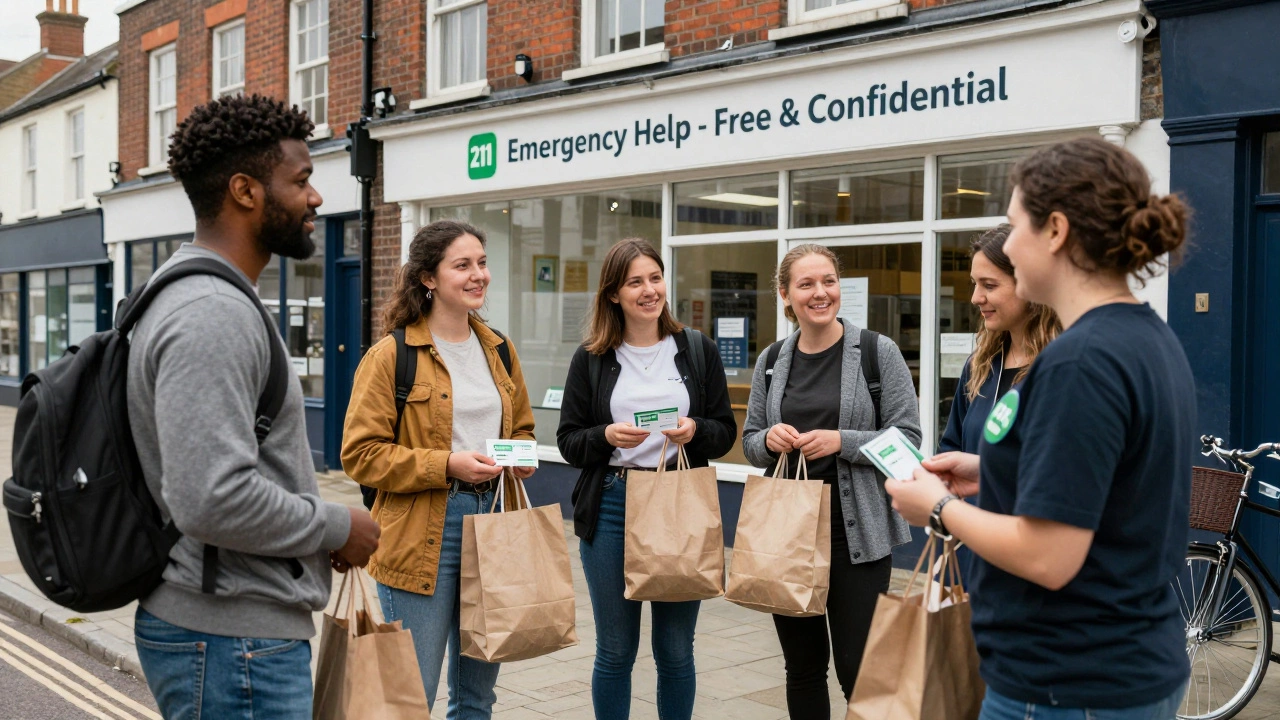
You don’t have to go it alone. Many local organizations exist just to help people in short-term crises.United Way (211.org) connects people to food banks, utility assistance, rent help, and transportation aid. Call 211 - it’s free and confidential. They’ll tell you what’s available in your area.
Religious groups, charities like the Salvation Army, and local community centers often have emergency funds. Some help with utility bills. Others give grocery vouchers or gas cards. You don’t need to prove you’re “deserving.” You just need to ask.
Government programs like LIHEAP (Low Income Home Energy Assistance Program) or SNAP (food stamps) aren’t loans - they’re benefits. Apply online or at your local social services office. Approval can take days, but the money is real and doesn’t need to be paid back.
Consider a cash advance from your employer
Some companies - especially in retail, healthcare, and hospitality - offer small, no-interest advances on future paychecks. It’s not a loan. It’s just getting your own money early.Ask your manager or HR department if this is an option. You might need to fill out a simple form. The amount is usually capped at $200 to $500. You’ll pay it back in one or two pay periods. No credit check. No fee. Just a quick way to bridge a gap.
Avoid payday loans and title loans - they trap people
Payday lenders promise $500 today for a fee of $75. Sounds easy. But if you can’t repay in two weeks, you roll it over - and now you owe $650. Then $800. Then $1,000. The average payday loan borrower ends up paying $500 in fees just to repay a $300 loan.Car title loans are even worse. You hand over your car title as collateral. If you miss a payment, they take your car. No court order. No warning. You lose your ride, your job, and your independence.
These aren’t solutions. They’re traps. And they’re designed to keep you paying forever.
Build a small emergency fund - even if it’s slow
Once you get through this crisis, start building a buffer. Even $20 a week adds up. Open a separate savings account - just for emergencies. Set up an automatic transfer. Don’t touch it unless it’s a true emergency.Why? Because next time, you won’t have to scramble. You won’t have to beg, sell, or borrow. You’ll have your own safety net.
It’s not about being rich. It’s about being prepared. One person I talked to started with $5 a week. In 18 months, she had $460. When her fridge broke, she paid for it without stress.
What to do next
1. Write down your exact need - how much do you need, and for what? 2. Check what you can sell - list three items you can part with. 3. Call 211 - ask about local emergency aid. 4. Ask your employer - do they offer early pay? 5. Reach out to one person - a friend, family member, or neighbor.You don’t need a perfect credit score to survive a financial emergency. You need a plan, some courage, and the willingness to ask for help. The system isn’t built for people in crisis - but people are. Use them.