
High-Yield Savings Alternatives Calculator
Input Parameters
Summary Analysis
| Account Type | Pre-Tax Earnings | After-Tax Earnings | Total Value |
|---|
Enter your savings details to see which account type maximizes your returns.
Keeping your cash in a standard savings account feels safe. It is familiar. You open it, you deposit money, and the bank gives you a tiny bit of interest. But if you are looking at your balance right now and wondering why it isn’t growing faster, you aren't alone. With inflation rates fluctuating and banks adjusting their strategies, the old "park your money here" mentality is leaving money on the table.
You might be asking yourself: what account is better than savings? The answer depends entirely on what you need that money for. Are you saving for an emergency fund that needs to be available tomorrow? Or are you parking cash for a house down payment three years from now? Different goals require different financial vehicles. Let’s break down the options that outperform traditional savings accounts without necessarily exposing you to wild market risks.
The High-Yield Savings Account (HYSA)
Before we jump into complex instruments, let's look at the most direct upgrade: the High-Yield Savings Account. If you are currently using a big brick-and-mortar bank with branches on every corner, you are likely earning less than 0.5% Annual Percentage Yield (APY). Online banks don't have the overhead costs of physical locations, so they pass those savings to you in the form of higher interest rates.
This is the best option for your emergency fund. Why? Because liquidity is king when your car breaks down or you lose your job. You need the money now, not in thirty days. An HYSA keeps your cash safe (insured up to $250,000 by the FDIC) but makes it work harder than a checking account. It is the same safety net, just with a thicker cushion.
Money Market Accounts (MMAs)
If you want something that sits between a savings account and a checking account, look at Money Market Accounts. These are often confused with Money Market Funds (which are investment products), but MMAs are bank deposits. They usually require a higher minimum balance-sometimes $10,000 or more-but they reward you with check-writing privileges and debit card access.
Think of this as your "active" savings bucket. Maybe you are saving for a wedding or a vacation. You want the interest to accrue, but you also want to pay the venue directly from the account. An MMA allows that flexibility. The interest rates are competitive with HYSAs, often matching them closely. The trade-off is the barrier to entry; if you can't meet the minimum balance, you'll get hit with monthly fees that eat your gains.
Certificates of Deposit (CDs)
Now, let's talk about locking things up. Certificates of Deposit are the classic tool for beating savings accounts if you know exactly when you will need the money. You agree to leave a lump sum with the bank for a set term-3 months, 6 months, 1 year, 5 years. In exchange, the bank guarantees you a fixed interest rate.
Why is this better than a savings account? Because rates are locked. If interest rates drop next year, your CD still pays the high rate you signed up for today. This predictability is powerful for budgeting. However, the downside is obvious: if you need that money early, you pay a penalty. Use CDs for goals with hard deadlines, like a tuition bill due in eighteen months.
Treasury Bills and Bonds
If you want to go beyond the banking system, consider U.S. Treasury securities. Specifically, Treasury Bills (T-Bills) are short-term government debt obligations maturing in one year or less. They are considered risk-free because they are backed by the full faith and credit of the U.S. government.
Here is the kicker: T-Bill interest is exempt from state and local income taxes. If you live in a high-tax state like California or New York, this tax advantage can make the effective yield much higher than a taxable savings account or CD. You buy these directly through TreasuryDirect.gov or via a brokerage. They are slightly less liquid than a savings account-you have to sell them on the secondary market if you need cash before maturity-but for amounts over $10,000, the tax savings and competitive yields make them a serious contender.
Short-Term Bond ETFs
For those willing to take a tiny step into the investment world, Short-Term Bond Exchange-Traded Funds (ETFs) offer another alternative. Unlike individual bonds, ETFs trade like stocks. You buy shares of a fund that holds a basket of short-term corporate or government bonds.
This option provides diversification. Instead of relying on one bank or one bond issuer, you own a slice of hundreds. The yields can be attractive, often higher than CDs. But remember: this is an investment. Your principal is not guaranteed. If interest rates rise sharply, the value of existing bonds drops, and your ETF share price could decline temporarily. This is better suited for investors who understand basic market mechanics and can tolerate minor fluctuations in value.
Comparison Table: Choosing the Right Vehicle
| Account Type | Liquidity | Risk Level | Typical APY (2026) | Best For |
|---|---|---|---|---|
| Traditional Savings | High | Low (FDIC) | 0.01% - 0.5% | Habit building |
| High-Yield Savings | High | Low (FDIC) | 4.0% - 5.0% | Emergency funds |
| Money Market Account | Medium-High | Low (FDIC) | 4.0% - 5.0% | Active savings with checks |
| Certificate of Deposit | Low | Low (FDIC) | 4.5% - 5.5% | Fixed-term goals |
| Treasury Bills | Medium | Very Low (Govt) | Varies (Tax-Free State) | Tax-efficient parking |
| Bond ETFs | High (Trading Hours) | Medium (Market) | Varies | Diversified income |
Strategic Allocation: Don't Put All Eggs in One Basket
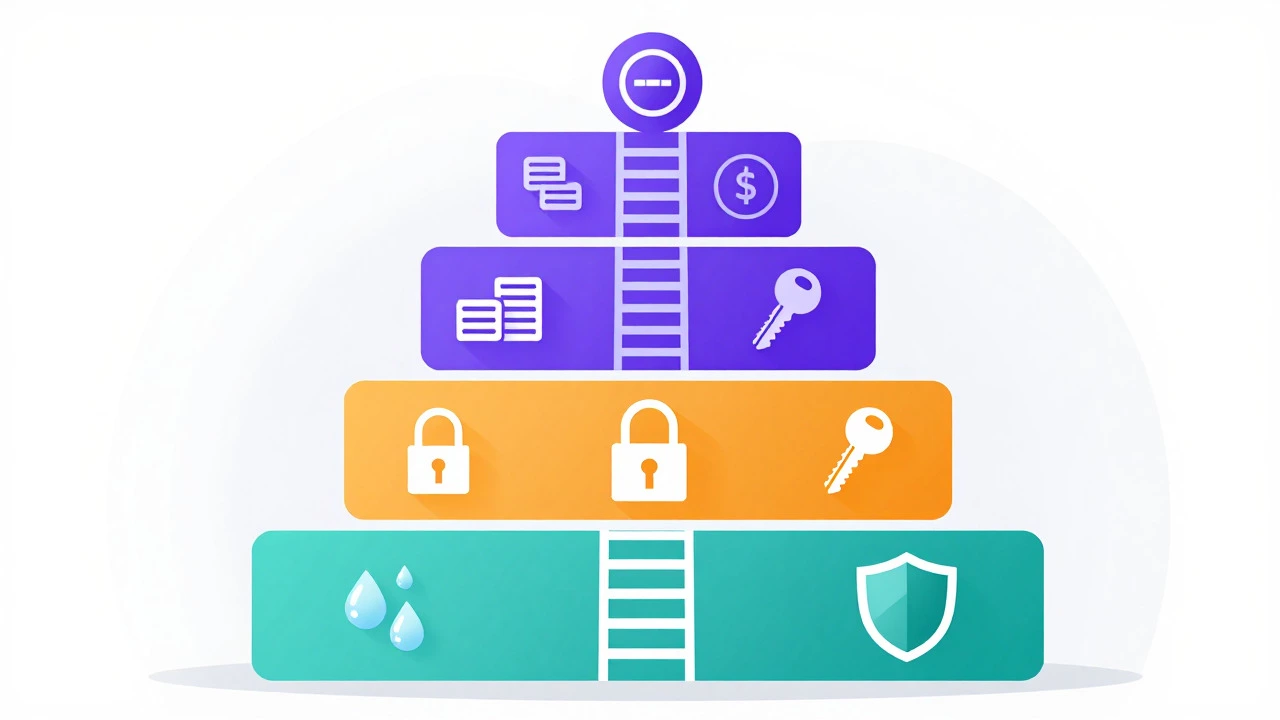
The smartest move isn't to pick just one. It's to layer them. Think of your cash management like a pyramid. At the base, keep 3-6 months of expenses in a High-Yield Savings Account. This is your safety net. Above that, place your near-term goals (1-3 years) in Certificates of Deposit or Treasury Bills to lock in rates. If you have a larger sum sitting idle, consider splitting it between a Money Market Account for accessibility and a ladder of CDs for growth.
Remember, "better" is subjective. A CD is better than a savings account only if you don't need the money until the term ends. A HYSA is better if you need instant access. Assess your timeline first, then choose the vehicle that matches that timeline. Stop letting your money sleep. Wake it up with the right account structure.
Is a High-Yield Savings Account safer than a regular savings account?
Yes, equally safe. Both are insured by the FDIC (Federal Deposit Insurance Corporation) up to $250,000 per depositor, per institution. The difference lies in the interest rate, not the security of your principal.
Can I lose money in a Money Market Account?
If it is a bank-based Money Market Account (MMA), no, your principal is FDIC-insured. However, if you invest in a Money Market Fund (an investment product sold by brokerages), there is a small risk of loss, though it is historically very rare for short-term funds.
What happens if I withdraw from a CD early?
You will face an early withdrawal penalty. This is typically a forfeiture of a specific number of months' worth of interest (e.g., 6 months' interest for a 1-year CD). In some cases, if you haven't earned enough interest yet, the bank may dip into your principal.
Are Treasury Bills taxed?
Treasury Bill interest is subject to federal income tax but is exempt from state and local income taxes. This makes them particularly advantageous for residents of high-tax states.
Do I need a large amount of money to open these accounts?
Most High-Yield Savings Accounts and CDs have low or no minimum opening deposits. Money Market Accounts often require higher minimums, such as $1,000 to $10,000, to avoid monthly maintenance fees or to qualify for the advertised interest rate.