ISA Inflation Trap Calculator
| Metric | Value |
|---|---|
| Nominal Interest Earned | £0 |
| Inflation Cost | £0 |
| Real Yield (Cash ISA) | 0% |
| Purchasing Power Change | £0 |
| Projected Stock ISA Value (1yr) | £0 |
| Stock vs Cash Difference | £0 |
You check your bank app. The balance looks smaller than you expected. You remember putting in thousands over the last few years. Now, with inflation still biting and headlines screaming about market volatility, a nagging question pops up: are ISA losing money? It is a fair fear. When prices rise faster than your savings grow, you feel like you are losing ground. But the reality of Individual Savings Accounts (ISAs) in 2026 is more nuanced than a simple yes or no.
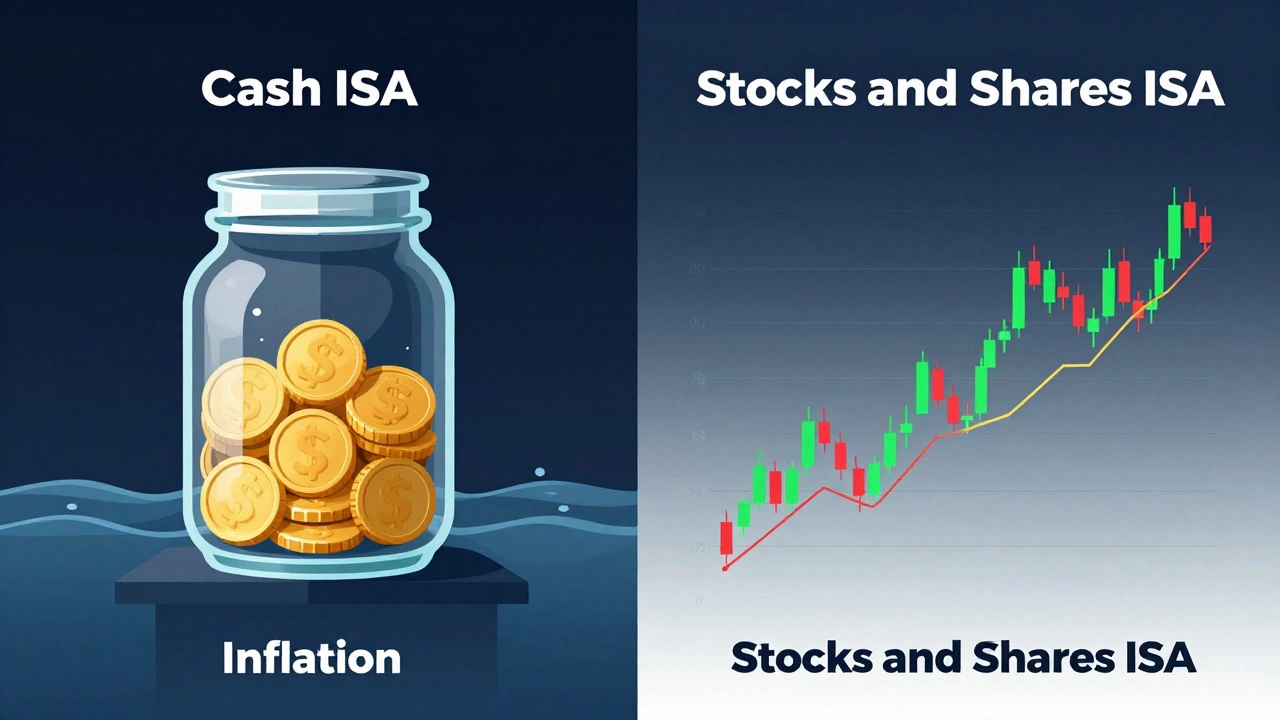
First, let’s clear up the grammar and the concept. An ISA itself does not lose money unless the underlying assets drop in value. A Cash ISA is a tax-free savings account where your principal is protected by government schemes will not drop below what you put in, provided the bank is solvent. However, if the interest rate is lower than inflation, your purchasing power shrinks. That is a real loss. On the other hand, a Stocks and Shares ISA is a wrapper that holds investments like shares and funds, which can fluctuate in value can definitely show a red number on a bad day. Understanding this difference is crucial before you panic or pull out your cash.
The Inflation Trap: Why Cash ISAs Feel Like They Are Losing Value
In 2026, the economic landscape has settled somewhat compared to the turbulent years of 2022-2024, but it remains tricky. Interest rates have stabilized, but they haven’t crashed back to zero. For many people, the problem isn’t that their Cash ISA balance is decreasing numerically. It is that it isn’t growing fast enough to keep up with the cost of living.
Let’s look at the math. If you have £10,000 in a Cash ISA earning 3% interest, you gain £300 a year. Sounds okay, right? But if inflation runs at 4%, the price of groceries, energy, and rent rises by £400 worth of value. You are effectively losing £100 in purchasing power every year. This is known as negative real yield. Many savers fall into this trap because they prioritize safety over growth. They park their money in high-street bank ISAs for security, unaware that inflation is quietly eating away at their future buying power.
To combat this, you need to look beyond standard savings accounts. Fixed-term bonds within an ISA structure can offer slightly higher rates, locking your money away for one, two, or five years. This guarantees a return, shielding you from sudden rate cuts. However, even these fixed rates struggle to beat high inflation consistently. The key takeaway here is that while your nominal balance stays safe, your real wealth may be stagnating if you rely solely on low-yield cash products.
Market Volatility: The Real Risk in Stocks and Shares ISAs
If you moved your money into a Stocks and Shares ISA to escape the inflation trap, you might be facing a different kind of anxiety. These accounts hold assets like equities, bonds, and property funds. Unlike cash, these assets do not have a guaranteed value. They go up and down based on global events, corporate earnings, and investor sentiment.
In early 2026, markets experienced some correction after several years of tech-driven growth. If you invested heavily in a single sector, such as artificial intelligence stocks, and that sector cooled off, your ISA value could have dropped significantly. This is not the ISA failing; it is the nature of investing. Short-term losses are normal. The danger comes when investors see a dip and sell everything at once, crystallizing those losses forever.
Consider the difference between a global index fund and a speculative stock. A global index fund tracks hundreds or thousands of companies. If one fails, others compensate. Over decades, these funds have historically returned around 7-9% annually, adjusted for inflation. Speculative stocks might double in a year or crash by 50%. If your ISA is full of risky, individual picks, you are gambling, not saving. Diversification is the only free lunch in finance. By spreading your investment across different asset classes-shares, bonds, and perhaps some gold or property-you reduce the chance of total loss.
Tax Efficiency: The Hidden Gain Most People Ignore
When asking if ISAs are losing money, most people forget the biggest benefit: tax efficiency. Outside an ISA, you pay Capital Gains Tax on profits from selling shares, and Income Tax on dividends and interest. In 2026, the personal allowance for Capital Gains Tax remains tight, meaning many middle-income earners pay 10% or 18% on their investment profits.
An ISA shields all this from the taxman. Every penny of growth, dividend, or interest is yours to keep. This compounding effect is massive over time. Let’s say you invest £10,000 a year for 20 years. Without an ISA, taxes might shave off 15-20% of your returns. With an ISA, that money stays in the pot, generating more money. Even if the market is flat for a few years, the tax shield preserves your capital better than a taxable account would. So, while the headline number might look stagnant, the net value relative to a taxable alternative is actually gaining.
This is especially true for higher-rate taxpayers. If you earn enough to pay 40% income tax, keeping your savings in a regular account means you lose nearly half your interest to HMRC. In an ISA, you keep 100%. This structural advantage often outweighs short-term market dips. It is a long-game strategy, not a get-rich-quick scheme.
Types of ISAs and Their Risk Profiles in 2026
Not all ISAs are created equal. Your experience depends entirely on which type you chose. Here is how the main types perform in the current climate:
| ISA Type | Risk Level | Potential Loss? | Best For |
|---|---|---|---|
| Cash ISA | Very Low | No (nominal), Yes (real) | Emergency funds, short-term goals |
| Stocks and Shares ISA | Medium to High | Yes (market volatility) | Long-term growth, retirement |
| Lifetime ISA (LISA) | Medium to High | Yes (if invested in stocks) | First home or retirement (under 40) |
| Innovative Finance ISA | High | Yes (borrower default) | P2P lending enthusiasts |
The Lifetime ISA is an ISA for first-time home buyers or retirement, offering a 25% government bonus adds another layer. If you hold it in cash, you are safe but missing out on growth. If you hold it in stocks, you risk losing the bonus if you withdraw early for non-approved reasons. The penalty is steep: you lose the bonus plus a 5% charge on the total withdrawal. This makes LISAs particularly dangerous if you need quick access to cash.
Innovative Finance ISAs are accounts that allow peer-to-peer lending or crowdfunding investments carry the highest risk. You are lending money to individuals or businesses. If they default, you lose your capital. In 2026, with tighter credit conditions, default rates have risen slightly. These ISAs are not for the faint-hearted and should only represent a small slice of your portfolio.

How to Stop Losing Money: Practical Steps
If you feel your ISA is underperforming, don’t just close it. Take action. First, review your asset allocation. Are you 100% in cash? If so, consider moving a portion into a diversified Stocks and Shares ISA. Use a robo-advisor or a low-cost index fund provider. Look for funds with low tracking errors and expense ratios below 0.2%. Fees eat returns just as much as bad investments do.
Second, maximize your allowance. In 2026, the annual ISA allowance remains at £20,000. If you are not using it, you are leaving free money on the table. You can split this between different types, but you cannot exceed the limit in any single category per person. Spousal allowances mean couples can save £40,000 tax-free each year. That is significant capital working for you.
Third, avoid emotional trading. Checking your ISA balance daily leads to impulsive decisions. Markets correct themselves. If you believe in the long-term growth of the economy, ignore the noise. Set up monthly direct debits to invest regularly, regardless of whether the market is up or down. This is called dollar-cost averaging, and it smooths out your entry price over time.
Finally, check your fees. Some ISA providers charge platform fees, transaction fees, or custody charges. These can drag down your performance by 1-2% annually. Switch to a provider that offers free trading on major indices or has no ongoing platform fees for basic accounts. Small savings compound into large gains.
Common Mistakes That Drain ISA Value
Beyond market forces, human error is a major cause of perceived losses. One common mistake is withdrawing funds prematurely. Once you take money out of a Cash ISA, you lose the tax-free status on that amount for the rest of the tax year. You cannot put it back in without reducing your remaining allowance. This breaks the compounding cycle.
Another error is chasing past performance. Just because a specific fund did well in 2025 doesn’t mean it will win in 2026. High-performing funds often become expensive and risky. Stick to broad, diversified funds. Avoid concentrated bets on single companies or sectors unless you fully understand the risks.
Also, beware of “guaranteed” high returns. If a Cash ISA offers 8% interest in a world where banks pay 3%, something is wrong. It might be a scam or a highly restricted product. Always check if the provider is authorized by the Financial Conduct Authority (FCA) and covered by the Financial Services Compensation Scheme (FSCS). The FSCS protects up to £85,000 per person per bank. If your ISA is spread across multiple providers, ensure none exceed this limit.
Can I lose my initial deposit in a Cash ISA?
No, you cannot lose your initial deposit in a Cash ISA held with a reputable bank. The money is protected by the Financial Services Compensation Scheme (FSCS) up to £85,000 per person, per institution. However, if inflation is higher than the interest rate, your money loses purchasing power, which is a form of real loss.
Why is my Stocks and Shares ISA showing a loss?
Stocks and Shares ISAs hold investments like shares and funds, which fluctuate in value. Market downturns, company failures, or global events can cause temporary losses. This is normal volatility. Unless you sell during a dip, the loss is only on paper. Historically, markets tend to recover and grow over long periods.
What is the ISA allowance for 2026?
The annual ISA allowance for the 2026/2027 tax year remains at £20,000. You can split this amount between different types of ISAs, such as Cash and Stocks and Shares, but you cannot contribute more than £20,000 in total across all ISAs in one tax year.
Is it too late to start an ISA if I am older?
It is never too late to start saving. While the Lifetime ISA is only available for those aged 18-39, you can open a Stocks and Shares ISA or Cash ISA at any age. Even starting later allows your money to grow tax-free, which is beneficial for retirement or legacy planning.
How do I protect my ISA from high fees?
Choose low-cost providers. Look for platforms with no annual management fees or very low fund expense ratios (below 0.2%). Avoid brokers that charge per trade if you invest frequently. Compare fee structures carefully, as high fees can erode your returns significantly over time.