
Pay Yourself First Calculator
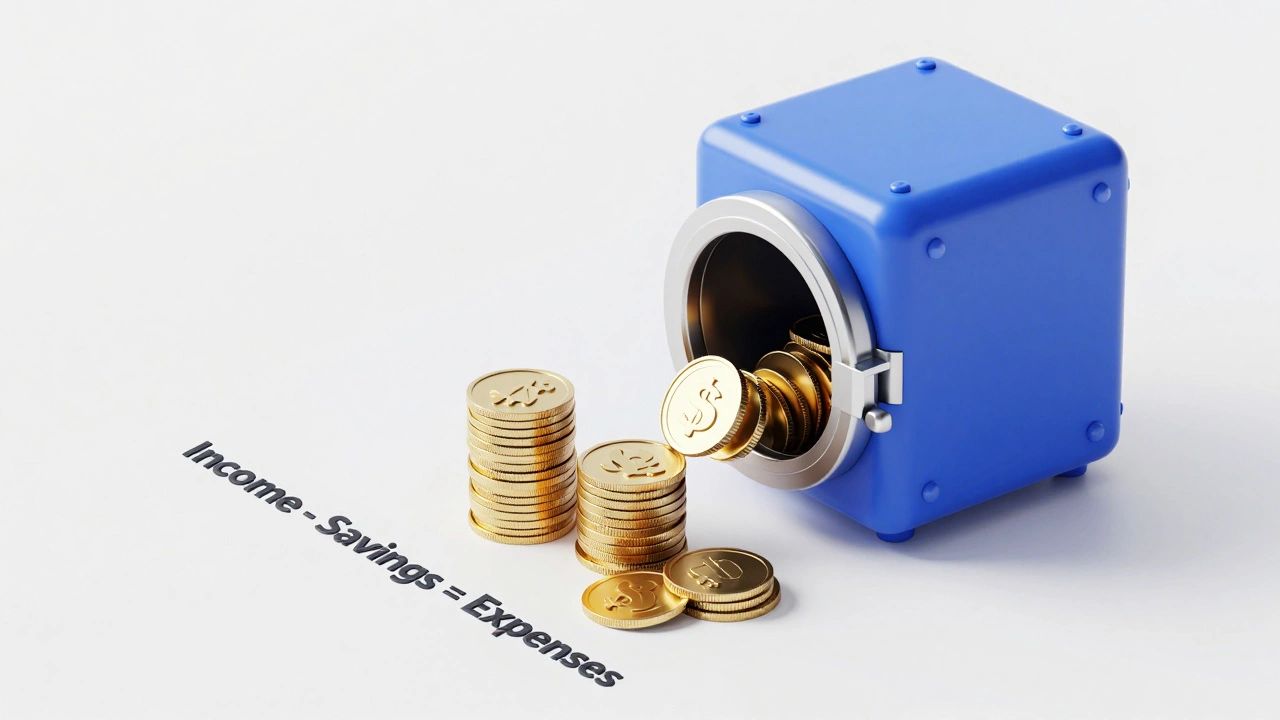
Flip the Equation: Income − Savings = Expenses
Your New Monthly Blueprint
Quick Takeaways for Your Wallet
- Prioritize your future self over current impulses.
- Automate the process to remove human error and temptation.
- Start with a manageable percentage, even if it is just 1% or 5%.
- Focus on consistency rather than the specific amount.
Why Most Budgets Fail
Traditional budgeting often follows a simple math equation: Income - Expenses = Savings. This looks logical on paper, but it fails in the real world because of a psychological quirk called Parkinson's Law. This law suggests that work expands to fill the time available for its completion. In financial terms, your spending expands to fill the amount of money you have available.
If you see €2,000 in your bank account on payday, your brain perceives that as your "spending power." Even if you intend to save €200, the presence of that money makes you more likely to buy a slightly more expensive pair of shoes or order takeout three times a week. By the time the 30th of the month hits, that €200 has vanished into a dozen small, forgettable purchases.
The fix is to change the equation to: Income - Savings = Expenses. When you remove the savings first, you create an artificial scarcity. You might only see €1,800 in your spending account, which forces you to be more mindful about your daily choices without feeling like you're living in total deprivation.
How to Set Up a 'Pay Yourself First' System
You don't need a complex spreadsheet or a degree in accounting to make this work. The goal is to make the process invisible. The more decisions you have to make every month, the more likely you are to skip a payment.
- Define Your Goal: Decide what this money is for. Is it an Emergency Fund a stash of money set aside to cover unexpected financial shocks? A house deposit? A holiday? Giving the money a name makes it harder to spend.
- Pick Your Percentage: Don't aim for a number that makes you miserable. If you've never saved before, start with 5%. Once you realize you can live on 95% of your income, bump it up to 10%.
- Automate the Transfer: This is the most critical step. Set up a standing order or an automatic transfer from your main current account to a separate Savings Account an interest-bearing deposit account held at a bank. Set this to trigger on the same day your salary hits your account.
- Hide the Money: If you can see your savings balance every time you check your balance for coffee money, you'll be tempted to "borrow" from it. Use a different bank or an account that isn't linked to your primary banking app's home screen.
Comparing Budgeting Methods
While paying yourself first is the golden rule, it works best when paired with a structure for the remaining money. Depending on your personality, some methods work better than others.
| Method | Core Concept | Best For... | Main Drawback |
|---|---|---|---|
| 50/30/20 Rule | 50% Needs, 30% Wants, 20% Savings | Beginners who want simplicity | Too rigid for high-cost cities |
| Zero-Based Budgeting | Every euro is assigned a job | People with irregular income | Very time-consuming to maintain |
| Envelope System | Cash in physical envelopes | Chronic overspenders | Inconvenient for online shopping |
The Psychology of Financial Momentum
There is a massive mental shift that happens when you see your savings grow consistently. When you save at the end of the month, you feel like you're losing something (money you could have spent). When you pay yourself first, you're gaining something (security and freedom).
Think of it as buying your future freedom. Every €100 you move into a Index Fund a mutual fund designed to mimic the performance of a specific stock market index or a high-yield account is a payment toward a future where you don't have to stress about a car breakdown or a job loss. This creates a positive feedback loop: the more you save, the more you enjoy the process, and the more likely you are to increase your contributions.

Common Pitfalls and How to Avoid Them
Even with the best rule in the world, things can go wrong. Here is how to handle the most common budget breakers.
The "Emergency" Temptation: You'll eventually hit a month where an unexpected bill arrives, and you'll be tempted to skip your savings transfer. Resist this. If you consistently skip your savings for "emergencies," then those aren't emergencies-they are just poorly planned expenses. If the crisis is truly dire, use your already established emergency fund, but keep the habit of paying yourself first intact.
The Lifestyle Creep: As you get raises or bonuses, the instinct is to upgrade your lifestyle-a nicer car, a bigger apartment, more expensive dinners. This is Lifestyle Inflation. To combat this, commit to saving 50% of every pay raise. You still get to enjoy some of the extra money, but your wealth grows at an accelerated pace.
Ignoring Small Leaks: While paying yourself first handles the big picture, small daily leaks can still make your remaining budget feel tight. A €4 coffee every day is €120 a month. You don't need to cut out everything you love, but periodically audit your Subscription Services recurring payments for software, streaming, or memberships to ensure you aren't paying for things you no longer use.
Scaling Your Strategy for the Future
Once you've mastered the habit of paying yourself first, you can move from basic saving to strategic wealth building. This means diversifying where your "first payment" goes. Instead of just a bank account, you might split your savings into three buckets:
- Short-term (Liquid): Cash for the next 3-6 months of expenses.
- Medium-term (Growth): Money for a home or a business venture, perhaps in lower-risk bonds.
- Long-term (Wealth): Retirement accounts or equity investments that you won't touch for decades.
By diversifying, you protect yourself from inflation and ensure that your money is working as hard for you as you worked to earn it. The rule remains the same regardless of the amount: the priority is always the future you, not the present impulse.
What if I can't afford to save anything right now?
The rule still applies, even if the amount is tiny. Start with a symbolic amount, like €5 or €10 per paycheck. The goal isn't the dollar amount initially; it's the habit of prioritizing your savings. Once you prove to yourself that you can live without that small amount, you can look for ways to cut expenses or increase income to save more.
Should I pay off debt before paying myself first?
This is a common debate. Generally, you should maintain a small "starter" emergency fund (e.g., €1,000) first so you don't go deeper into debt when a crisis hits. After that, if you have high-interest debt (like credit cards with 20% APR), prioritize aggressive repayment. However, continuing to save a small amount alongside debt repayment helps maintain the psychological habit of saving.
Where is the best place to put my 'Pay Yourself First' money?
For an emergency fund, use a High-Yield Savings Account (HYSA) where the money is safe and accessible. For long-term wealth, consider tax-advantaged retirement accounts or low-cost index funds. The key is to match the account type to the timeline of when you'll need the money.
Does this mean I shouldn't spend money on things I enjoy?
Not at all. In fact, it makes spending more enjoyable because the money left in your account is "guilt-free." Since you've already secured your future, you can spend the remaining balance on hobbies, dining, and entertainment without worrying if you're sabotaging your long-term goals.
How do I handle irregular income with this rule?
If you're a freelancer or contractor, use a percentage instead of a flat amount. Decide that 20% of every single payment you receive goes immediately to savings. This ensures that in high-earning months you save more, and in lean months the burden is smaller but the habit remains.