
Remortgage Savings Calculator
Option A: Product Transfer (Stay)
Option B: Full Remortgage (Switch)
Cost Comparison
Best for those prioritizing time and simplicity. No credit checks or paperwork.
Best for those prioritizing cost. Requires full application and valuation.
The Big Dilemma: Stay or Go?
You're staring at your mortgage statement and realizing your fixed-rate deal is about to expire. Suddenly, you're facing the dreaded Standard Variable Rate (SVR), which usually feels like a financial punch to the gut. You have two real choices: ask your current bank for a better deal or pack your bags and move to a different lender. While staying put seems easier, it might actually be costing you thousands of euros or pounds over the next few years. The real question isn't just about the interest rate, but how much effort you're willing to put in to save a specific amount of money.
Key Takeaways for Your Decision
- Product Transfers: Faster and easier, no new credit checks, but might not be the cheapest.
- Remortgaging (Switching): More paperwork and potential fees, but often unlocks significantly lower rates.
- The SVR Trap: Never stay on your lender's default rate for long; it's almost always the most expensive option.
- Equity Matters: Your Loan-to-Value (LTV) ratio is the biggest driver of the rates you'll be offered.
The Fast Track: Product Transfers
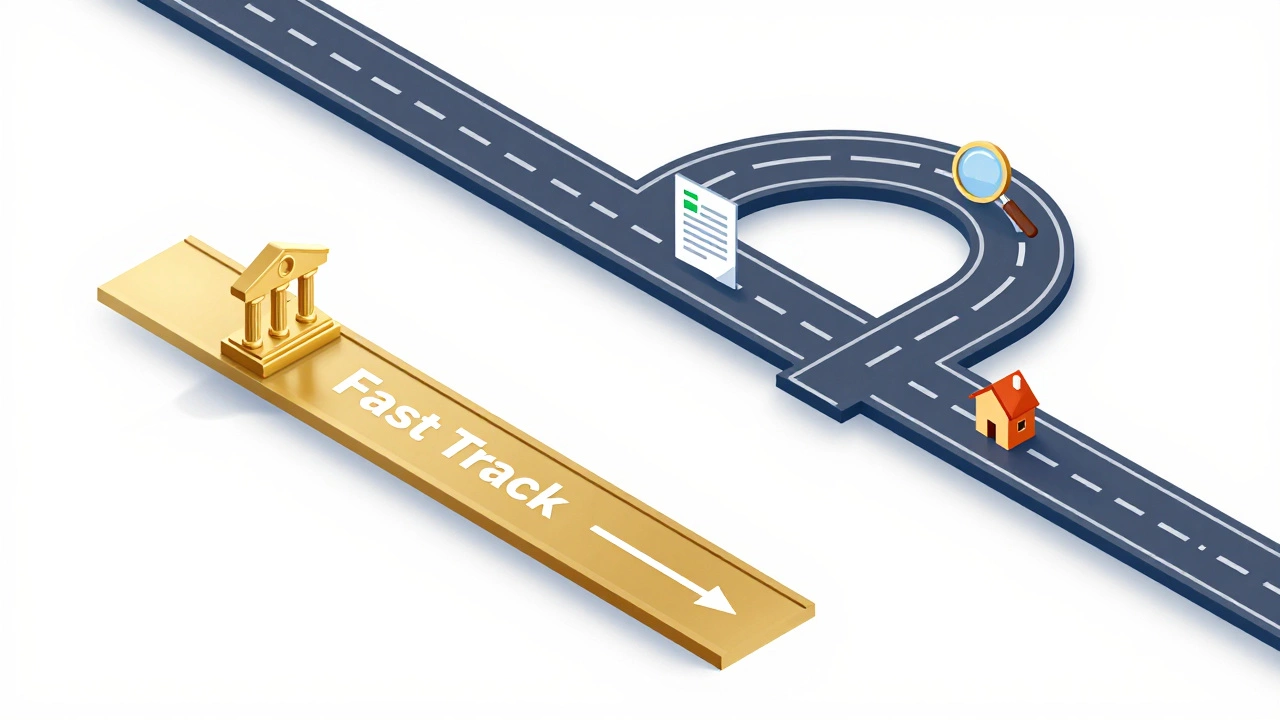
When you stay with your current provider, you're usually looking at a Product Transfer is a process where a borrower moves from one mortgage deal to another with the same lender without a full application. Think of it as an internal upgrade. Because the bank already knows you, they don't usually ask for your last three months of payslips or a fresh credit check. You just tick a box or click a button in your banking app, and you're locked in for another two to five years.
This is the gold standard for people who are time-poor or perhaps have had a slight change in their financial circumstances-like a gap in employment-that might make a new application stressful. However, the downside is that banks know you're lazy (or busy), and they might not offer you their absolute lowest "teaser" rate that they use to lure in new customers from the street.
The Deep Dive: Switching Lenders
True Remortgaging is the act of replacing an existing mortgage with a new one, often from a different lender, to secure better terms. This is a full-blown application. You'll need to prove your income, provide bank statements, and the new lender will value your home. It's a bit of a headache, but the reward is often a much lower interest rate.
If the market has shifted since you first took out your loan, your current lender might be out of touch with the competitive rates offered by challengers. By shopping around, you're essentially putting your debt up for auction to see who wants it most. In 2026, with digital mortgage applications becoming nearly instant, the "hassle factor" is lower than it was a decade ago, making the switch more attractive than ever.
Comparing the Two Paths
To decide, you need to look at the hard numbers. It's not just about the percentage rate; it's about the total cost of ownership over the term of the loan. You have to factor in the exit fees from your old bank and the arrangement fees at the new one.
| Feature | Product Transfer (Stay) | Full Remortgage (Switch) |
|---|---|---|
| Paperwork | Minimal to None | Extensive (Income/ID) |
| Credit Check | Usually not required | Full hard search |
| Potential Rate | Competitive | Often the Lowest Available |
| Speed | Very Fast (Days) | Slower (Weeks) |
| Valuation | Rarely needed | Almost always required |
The Role of Loan-to-Value (LTV)
Whether you stay or go, your Loan-to-Value (LTV) is the ratio of the outstanding mortgage balance to the current appraised value of the property. This is the single most important number in your remortgage journey. If your house has gone up in value, or you've paid off a chunk of the principal, your LTV drops. For example, if you owe 200k on a house now worth 400k, your LTV is 50%.
Lenders love low LTVs because they represent lower risk. If you've dropped from an 80% LTV to a 60% LTV, you've entered a new pricing bracket. Your current lender might offer you a decent rate, but a new lender might see that 60% LTV and offer an aggressive rate to win your business. Always check your home's current market value before talking to any lender; you might be eligible for a much better deal than you think.
Hidden Costs and Pitfalls
Don't let a low interest rate blind you to the fees. An arrangement fee (or booking fee) can range from zero to several thousand euros. If a new lender offers a rate that is 0.1% lower but charges a 2,000 euro fee, while your current lender offers a slightly higher rate with no fee, you might actually be better off staying put-especially if you plan to move house in a couple of years.
Then there are Early Repayment Charges (ERCs). If you try to switch before your current fixed term ends, your bank will charge you a penalty that can be thousands. This is why timing is everything. You should start looking at your options about three to six months before your current deal expires. Most lenders allow you to lock in a new rate early, so you can avoid the SVR entirely while you wait for the official switch date.

When to Use a Professional
Doing this yourself via a comparison website is fine for simple cases. But if you're self-employed, have a complex income, or are dealing with a very high property value, a Mortgage Broker is a lifesaver. A broker has access to "intermediary-only" deals that you won't find on the public website of any bank. They can run the numbers across 20 different lenders in an afternoon, which is far more efficient than you filling out ten different application forms.
The trade-off is that some brokers charge a fee, though many are paid by the lender (commission). Even with a fee, the amount they save you by finding a niche lender often outweighs the cost of their service. They also act as a buffer, handling the solicitors and the valuations so you don't have to spend your weekends chasing paperwork.
Decision Tree: What Should You Do?
If you're still unsure, ask yourself these three questions:
- Is my credit score perfect? If yes, you have the leverage to switch and get the best market rate. If no, a product transfer is safer.
- How much equity do I have? If your LTV has dropped significantly, the market will likely reward you more than your current lender will.
- How much do I value my time? If saving an extra 50 euros a month isn't worth five hours of paperwork, just stay put.
Can I switch lenders if I'm currently in a fixed-term deal?
Yes, you can, but it's usually a bad idea due to Early Repayment Charges (ERCs). These penalties are designed to stop you from leaving early and can be a significant percentage of your outstanding loan. Check your original mortgage contract to see how much the exit fee would be before making a move.
Does remortgaging affect my credit score?
A product transfer with your existing lender usually doesn't involve a hard credit check. However, switching to a new lender always involves a "hard search," which can cause a small, temporary dip in your credit score. As long as you aren't applying for multiple loans at once, this isn't a major concern for most people.
What is the Standard Variable Rate (SVR) and why is it dangerous?
The SVR is the default interest rate your lender puts you on once your fixed deal ends. It is not fixed, meaning it can go up or down based on the bank's whims and the central bank's base rate. It is almost always significantly higher than any fixed-rate deal available on the market, effectively acting as a "lazy tax" for people who forget to remortgage.
How long does the remortgaging process actually take?
A product transfer can be completed in a few days. A full remortgage with a new lender typically takes between four to eight weeks. This includes the time for the application, the property valuation, and the legal work performed by solicitors to transfer the charge on the property.
Should I always choose the lowest possible interest rate?
Not necessarily. You must look at the "Total Cost." A very low rate might come with a high arrangement fee (e.g., 2,000 euros). If you only plan to stay in the house for two years, a slightly higher rate with no fee might actually leave more money in your pocket at the end of the term.
Next Steps: Your Action Plan
If you're within six months of your deal ending, start by logging into your current lender's portal to see what "loyalty" rates they are offering. Once you have that number, go to a comparison site or call a broker to see what the wider market is offering for your specific LTV. If the difference in monthly payments is more than 30-50 euros, the paperwork of switching is usually worth the effort. If the difference is negligible, the simplicity of a product transfer wins every time.