
Debt Relief Impact Calculator
How Debt Relief Affects Your Credit
This calculator estimates how different debt relief options will impact your credit score and how long it takes to recover. Based on your situation, we'll show you the least damaging path forward.
When you’re drowning in credit card bills, medical debt, or payday loans, debt relief sounds like a lifeline. But everyone asks the same thing: Does debt relief hurt your credit? The answer isn’t yes or no-it’s "it depends." And if you don’t understand how it works, you could make your situation worse instead of better.
How Debt Relief Actually Works
Debt relief isn’t one thing. It’s a group of options, each with different effects on your credit. The most common types are debt settlement, debt management plans (DMPs), and debt consolidation loans. They all aim to reduce what you owe, but they do it in very different ways.
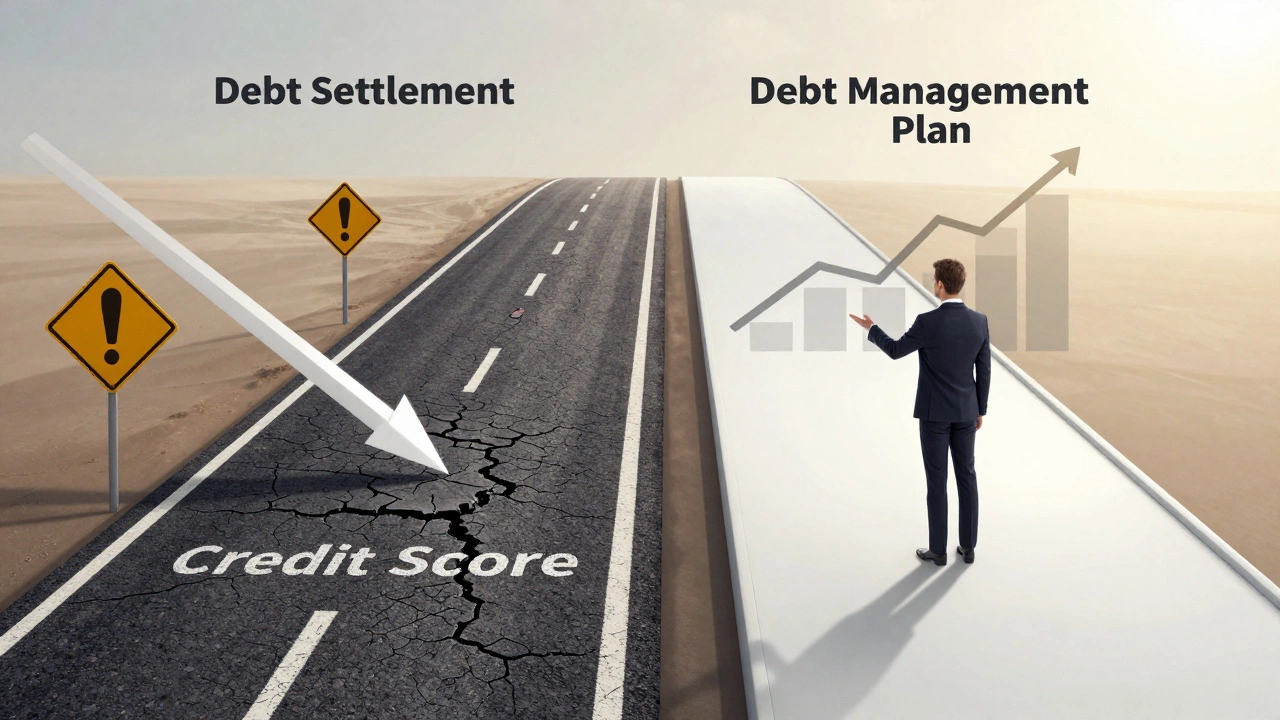
Debt settlement means you stop paying your creditors and negotiate to pay less than you owe-often 30% to 60% of the balance. Creditors agree because they’d rather get some money than nothing. But while you’re saving up to make that offer, your accounts go delinquent. That’s where the credit damage starts.
Debt management plans, usually run through nonprofit credit counseling agencies, work differently. You keep paying your full balance, but the agency negotiates lower interest rates and waives fees. You make one monthly payment to them, and they distribute it to your creditors. Your accounts stay open and current, which makes this the least damaging option.
Debt consolidation loans are simple: you take out a new loan to pay off your old debts. If you qualify for a lower interest rate, you save money and simplify payments. But if you use a secured loan-like a home equity loan-you’re putting your house at risk. And if you keep racking up new debt after consolidating, you’ll end up deeper in trouble.
How Each Option Affects Your Credit Score
Your credit score is built on five things: payment history (35%), amounts owed (30%), length of credit history (15%), new credit (10%), and credit mix (10%). Debt relief affects all of these, but not equally.
With debt settlement, your accounts are reported as "settled for less than the full balance" or "charged off." That’s a red flag to lenders. It’s the same as missing payments for months. A single settled account can drop your score by 100 points or more. And that mark stays on your credit report for seven years from the date the account first went delinquent.
Debt management plans don’t show up as negative marks on your report. But some credit scoring models, like FICO 8, may treat enrollment in a DMP as a risk factor. Lenders might see you as someone who couldn’t manage debt on your own. It’s not a direct hit like a late payment, but it can make it harder to get approved for new credit while you’re in the plan.
Debt consolidation loans are different. If you qualify for a personal loan and pay it on time, your score can actually improve over time. You’re replacing multiple high-interest accounts with one clean installment loan. That helps your credit mix and lowers your credit utilization ratio-two big factors in your score. But if you apply for multiple loans or credit cards in a short time, hard inquiries can ding your score temporarily.
Real-Life Example: Two People, Two Outcomes
Sarah had $28,000 in credit card debt. She enrolled in a debt management plan through a nonprofit agency. Her interest rates dropped from 22% to 8%. She paid $550 a month for five years. Her accounts stayed current. Her credit score dropped 40 points at first-mostly because she closed some cards-but it climbed back to 720 within two years after finishing the plan.
Mark had $35,000 in debt and chose debt settlement. He stopped paying for 14 months while saving for offers. His accounts went to collections. He settled two cards for 40% of what he owed. But three others were sold to collectors and sued him. His score fell to 510. It took him six years to get back to 680-even after paying off the settlement.
The difference? Sarah kept her accounts current. Mark let them go bad. That’s the line between damage and disaster.
What Happens to Your Credit Report?
Your credit report tells lenders exactly what happened. Here’s how each option shows up:
- Debt settlement: Accounts show as "settled," "charged off," or "paid for less than full balance." This is negative.
- Debt management plan: May show as "in DMP" or "counseling advised." Not negative, but may trigger lender scrutiny.
- Debt consolidation loan: Shows as a new installment loan. Old accounts show as "paid in full." This looks clean.
- Bankruptcy: Not technically debt relief, but often confused with it. Chapter 7 stays on your report for 10 years. Chapter 13 stays for 7 years.
Even after you pay off a settled account, the negative history doesn’t disappear. It just ages. After seven years, it falls off automatically. But during that time, lenders see it. Some won’t approve you for a mortgage, car loan, or even a new credit card.
When Debt Relief Might Be Worth the Hit
Not everyone can afford to pay their debts. If you’re being harassed by collectors, seeing your savings vanish on minimum payments, or at risk of wage garnishment, debt relief might be your only escape.
Here’s when it makes sense:
- You’ve tried budgeting and cutting expenses for 6+ months and still can’t make progress.
- Your total debt is more than half your annual income.
- You’re missing payments regularly or getting calls from collectors.
- You’re considering bankruptcy but want to avoid it.
If you’re still making payments on time, even if they’re small, debt relief is probably not your best move. You’re better off sticking with a debt snowball or avalanche method.
How to Minimize Credit Damage
If you’re going ahead with debt relief, here’s how to limit the damage:
- Choose a debt management plan over settlement if you can afford the payments.
- Work only with nonprofit credit counseling agencies. Avoid companies that charge upfront fees.
- Don’t close accounts unless you have to. Keeping old accounts open helps your credit history.
- Keep making payments on any debts not included in the plan. Missing those will hurt even more.
- After completing your plan, start rebuilding credit with a secured credit card or small installment loan.
And never, ever stop paying your bills without a plan. That’s how you end up in court.
Alternatives to Debt Relief
Before you choose debt relief, ask yourself: is there another way?
- Balance transfer credit card: Move high-interest debt to a 0% intro APR card. You have 12 to 21 months to pay it off. No credit damage if you pay on time.
- Personal loan: If you have decent credit (650+), you can get a loan at 8-12% interest. Pay off cards, lower monthly payments, and rebuild credit.
- Debt snowball: Pay off smallest balances first for quick wins. Motivation helps you stick with it.
- Debt avalanche: Pay off highest-interest debt first. Saves the most money over time.
These alternatives don’t hurt your credit. They fix the problem without the stigma.

What to Watch Out For
Scams are everywhere in debt relief. Watch for these red flags:
- Companies that ask for money before they do any work.
- Promises to "erase" your debt or fix your credit in 30 days.
- Pressure to stop paying your creditors.
- Claims they’re affiliated with the government or your bank.
Legitimate agencies are nonprofit, licensed, and transparent. You can check them with the Consumer Financial Protection Bureau (CFPB) or your local consumer protection office.
Rebuilding Credit After Debt Relief
Yes, your credit can recover. It just takes time and discipline.
Start with these steps:
- Get a secured credit card. Deposit $200-$500. Use it for one small purchase each month and pay it off in full.
- Apply for a credit-builder loan. These are designed for people rebuilding credit.
- Keep your credit utilization below 30%. Ideally under 10%.
- Check your credit report every six months. Dispute any errors.
- Don’t open new accounts unless you need them.
Most people see their score climb back into the good range (670+) within 18 to 24 months after finishing a debt plan. The key is consistency-not speed.
Does debt relief always hurt your credit?
Not always. Debt management plans and consolidation loans can have little to no negative impact if you stay current on payments. Debt settlement and bankruptcy do hurt your credit, often severely. The method you choose makes all the difference.
How long does debt relief stay on my credit report?
Settled accounts and charge-offs stay for seven years from the date they first became delinquent. Debt management plans may show as "in counseling" but don’t have a fixed timeline-they disappear once you complete the plan. Consolidation loans appear as paid accounts and can help your credit over time.
Can I get a mortgage after debt relief?
Yes, but you’ll need to wait. Most lenders require 2 to 4 years after a debt settlement before you qualify for a mortgage. With a debt management plan or consolidation loan, you might qualify sooner-especially if your credit score has recovered. Lenders care more about your recent payment history than past settlements.
Is debt consolidation better than debt settlement?
Generally, yes. Debt consolidation lets you pay your full balance while lowering interest and simplifying payments. It doesn’t harm your credit like settlement does. Settlement reduces what you owe but damages your credit score and may trigger tax bills on forgiven debt. Consolidation is the cleaner option-if you qualify.
Will debt relief stop collection calls?
It depends. With a debt management plan, creditors usually stop calls because they’re working with the agency. With debt settlement, calls may continue until you’ve saved enough to make an offer. Once you settle, collectors must stop. But until then, you’re still vulnerable to lawsuits or wage garnishment.
Final Thought: It’s Not About Avoiding Damage-It’s About Choosing the Least Harm
There’s no magic fix for debt. But if you’re stuck, debt relief can give you a path forward. The key is knowing which option causes the least damage-and then sticking to a plan that rebuilds your credit after. Don’t let fear of credit damage keep you trapped in a cycle of high payments and late fees. Sometimes, the cost of doing nothing is higher than the cost of taking action.