Debt Consolidation Eligibility Checker
Recommended Path:
Enter your details and click analyze to see which consolidation method fits your profile.
You're staring at four different monthly payments, three different interest rates, and a growing sense of dread every time you open your banking app. You've heard that consolidating your debt-rolling everything into one single payment-is the way out. But then you hit the wall: do you actually have the credit score required to make it happen?
The short answer is that there is no single magic number. However, the debt consolidation credit score you need depends entirely on which tool you use. If you're chasing a 0% interest balance transfer card, you'll need a stellar score. If you're looking for a basic personal loan, you might get by with a fair score. The real question isn't just "Can I qualify?" but "Will the new rate actually be lower than what I'm paying now?" because if it isn't, you're just moving debt around without saving a penny.
| Method | Typical Score Needed | Difficulty to Qualify | Best For... |
|---|---|---|---|
| Balance Transfer Card | 670 - 850 (Good to Excellent) | Hard | Small to medium high-interest debt |
| Unsecured Personal Loan | 600 - 750 (Fair to Very Good) | Moderate | Large balances, fixed repayment terms |
| Home Equity Loan (HELOC) | 620+ (Fair to Good) | Moderate | Homeowners with significant equity |
| Debt Management Plan | No minimum (Any score) | Easy | Those with poor credit or severe debt |
The Gold Standard: Using Balance Transfer Cards
If you have a credit score in the "Good" or "Excellent" range (typically 670 or higher), you're in the driver's seat. Balance Transfer Credit Cards is a financial tool that allows users to move high-interest debt from one card to another, usually with a 0% introductory APR for a set period.
Why do you need such a high score here? Because the banks are taking a huge risk. They are letting you borrow thousands of dollars at 0% interest for 12 to 21 months. If your score is below 670, you'll likely find that the "offers" you get have very low limits-maybe $2,000 when you actually need $15,000-or the introductory rates aren't actually 0%.
A common trap is the transfer fee. Most cards charge between 3% and 5% just to move the money. If you move $10,000, you're adding $300 to your debt immediately. It's still a win if your current cards are charging 24% APR, but you have to do the math first.
The Middle Ground: Unsecured Personal Loans
For those with a "Fair" score (roughly 600 to 660), a Personal Loan is often the most realistic path. This is an unsecured loan, meaning you don't put your house or car on the line. The lender looks at your score to determine your interest rate.
Here is the cold truth: you can get a loan with a 600 score, but the interest rate might be 18%. If your current credit cards are at 15%, consolidating is a mistake. To make this move make sense, you want a rate that is at least 3-5% lower than your weighted average interest rate across all debts.
Lenders also look at your Debt-to-Income ratio (DTI). Even if your score is 700, if 60% of your monthly income is already going to debt, they might reject you. They want to see that you have enough "breathing room" in your budget to handle one more monthly payment, even if it replaces others.
Leveraging Your Assets: Home Equity Loans
If you own a home, you have a different tool in the shed. Home Equity Loans are loans where the borrower uses the equity in their home as collateral to secure a lower interest rate. Because the bank can take your house if you don't pay, they are often more lenient with the credit score than they would be for an unsecured loan.
Typically, a score of 620 is enough to get your foot in the door. The rates are significantly lower than credit cards, sometimes cutting your interest in half. But there is a massive catch: you are turning unsecured debt (credit cards) into secured debt (your home). If you lose your job and can't pay, you aren't just dealing with a collection agency-you're risking foreclosure.
When Your Score is Too Low: Debt Management Plans
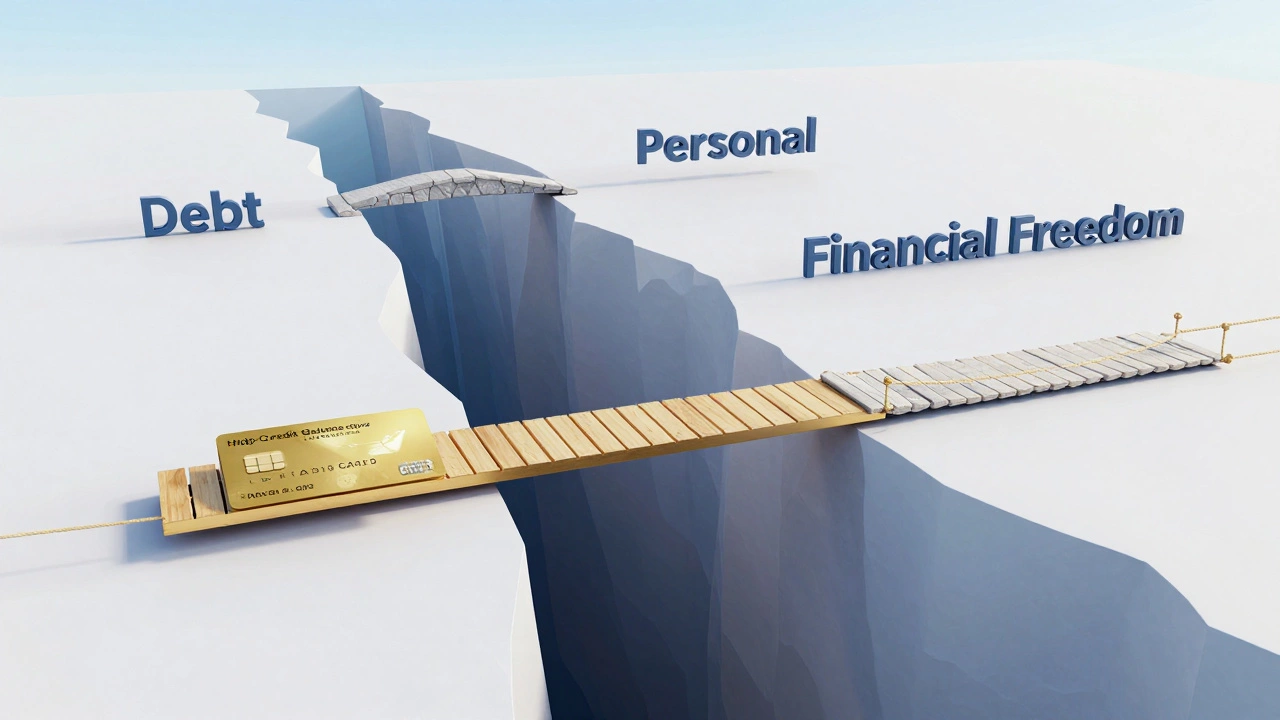
What if your score is in the 500s? At this point, traditional loans and cards are off the table. You can't "consolidate" in the traditional sense because no one will lend to you at a lower rate. This is where a Debt Management Plan (DMP) comes in.
A DMP isn't a loan. Instead, you work with a non-profit credit counseling agency. They negotiate with your creditors to lower your interest rates and combine your debts into one monthly payment that you pay to the agency, and they distribute it to your creditors.
The trade-off is that you usually have to close all the credit accounts included in the plan. Your credit score might actually dip temporarily because your available credit drops, but the long-term benefit is that you actually pay off the principal rather than just treading water with interest.
How to Boost Your Score Before Applying
If you're just a few points shy of a better loan rate, don't apply yet. Every "hard inquiry" on your credit report can ding your score by a few points. Instead, try these specific moves for 30 to 60 days:
- Lower your utilization: If you have one card that is 95% full and another that is 20% full, move a small amount of money to the emptier card. High utilization on a single card looks riskier to lenders than a moderate balance across several.
- Fix reporting errors: Check your reports for any late payments that weren't actually late. A single corrected "30-day late" mark can jump a score by 20 points.
- Avoid new credit: Stop applying for store cards or small "buy now, pay later" loans. Lenders want to see stability, not a desperate search for more credit.
Avoiding the Consolidation Trap
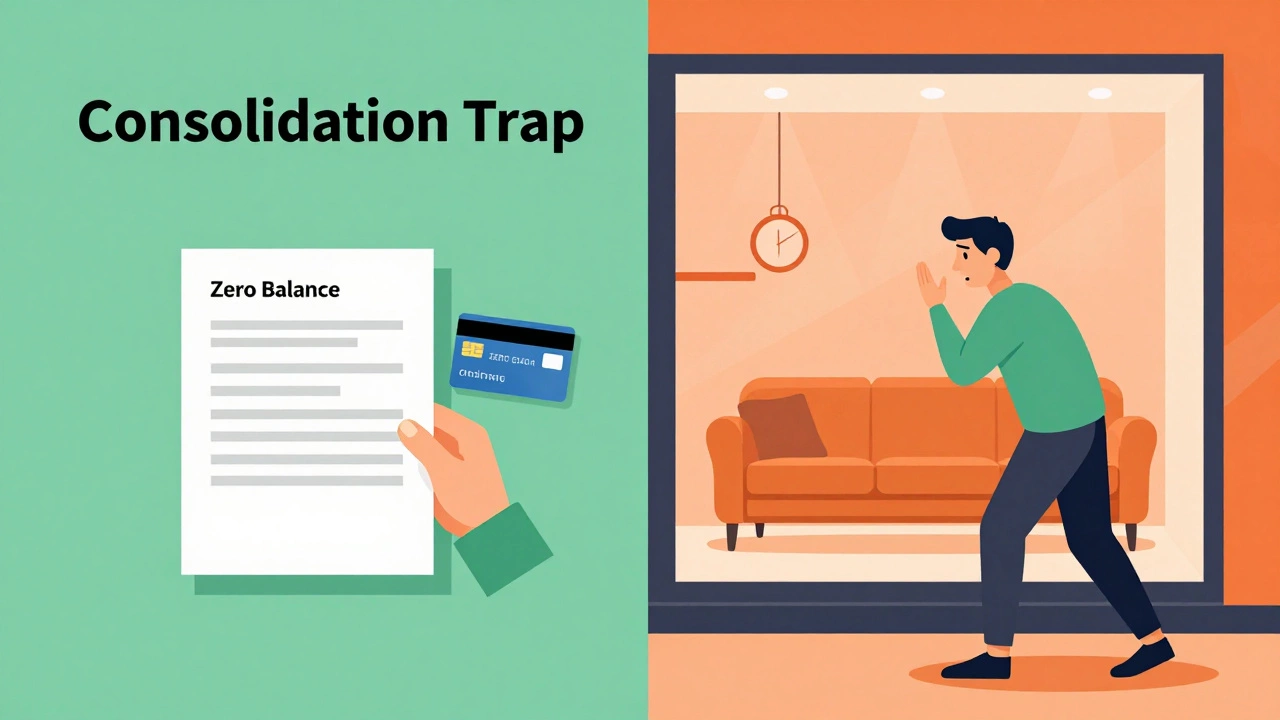
The biggest danger of debt consolidation isn't the credit score-it's the psychology. Imagine you move $10,000 of credit card debt into a personal loan. Suddenly, your credit card balances are zero. You feel a sense of relief, and the temptation is huge: "I have $10,000 of available credit again! I can afford that new sofa."
This is how people end up with a personal loan AND maxed-out credit cards. This "double-dipping" is the fastest way to financial ruin. To avoid this, you must address the spending habit that caused the debt in the first place. Consolidation is a tool to fix the cost of the debt, not the amount of the debt.
Will consolidating my debt increase my credit score?
In the short term, it might drop slightly due to the hard credit check. However, in the long term, it usually helps. By moving credit card debt (revolving) to a personal loan (installment), you lower your credit utilization ratio, which is a huge factor in your score. As you consistently make the lower single payment, your payment history improves, pushing your score upward.
Can I consolidate debt with a 500 credit score?
Traditional consolidation loans and 0% cards are almost impossible with a 500 score. Your best options are a Debt Management Plan (DMP) through a non-profit counselor or, in extreme cases, debt settlement. Avoid "predatory' lenders who claim they don't check credit but charge 30% or higher interest, as these often make the debt problem worse.
Is a balance transfer better than a personal loan?
It depends on the amount. For smaller debts (under $5,000) that you can pay off within 12-18 months, a balance transfer is superior because of the 0% interest. For larger debts ($10,000+) that will take years to pay off, a personal loan is better because it provides a structured repayment schedule and won't suddenly jump to a 25% interest rate after the promo period ends.
Do I need a co-signer if my score is too low?
Yes, a co-signer with excellent credit can help you qualify for a personal loan you wouldn't get on your own. This allows you to access a much lower interest rate. However, be warned: the co-signer is 100% legally responsible for the loan if you miss a payment. It can put a significant strain on personal relationships if things go wrong.
Does debt consolidation remove the debt from my record?
No. It simply changes who you owe and the terms of the repayment. The total amount of debt remains the same until you pay it off. It's like moving a pile of laundry from the bedroom to the living room-the laundry is still there; it's just in a different spot.
Next Steps for Different Scenarios
If you have a 720+ score: Shop around for 0% balance transfer cards first. Look for the longest possible introductory window (18-21 months) and the lowest transfer fee.
If you have a 620-680 score: Compare unsecured personal loans from a few different lenders (including credit unions, which often have better rates for this bracket). Ensure the APR is lower than your current highest-interest card.
If you have a score under 600: Contact a certified non-profit credit counseling agency. Don't waste your time (or your credit score) applying for loans you are likely to be rejected for.