
Upstart Loan Cost Calculator
Your Loan Estimate
Monthly Payment: -
Total Interest Paid: -
Total Amount Repaid: -
Important: The article explains that while Upstart advertises rates as low as 5.99% APR, most borrowers actually pay between 15% and 36%. This calculator shows the real costs when rates are in that range.
Upstart is one of the most talked-about online lenders for personal loans, especially for people with thin credit files or lower scores. But behind the sleek app and quick approvals, there are real risks that many borrowers don’t fully understand until it’s too late. If you’re considering Upstart, you need to know what you’re signing up for - not just the interest rates, but the hidden traps that can make your financial situation worse.
High Interest Rates Can Trap You
Upstart advertises rates as low as 5.99% APR, but that’s not what most people actually get. The average borrower pays between 15% and 36% APR, depending on their credit profile. If you have a credit score under 620, you’re likely to be in the higher end of that range. That’s not just expensive - it’s dangerous. At 30% APR, a $10,000 loan paid over three years means you’ll pay nearly $5,000 in interest alone. Compare that to a credit card at 22% APR - you’re not saving money, you’re just moving the debt to a lender that doesn’t care if you struggle to pay.
What makes it worse is that Upstart doesn’t cap rates. Some borrowers have seen rates climb above 36%, which is the legal limit in 14 states. In places like California or New York, that’s blocked. But if you live in Texas, Florida, or Georgia, you could be stuck with a loan that grows faster than you can pay it off.
Prepayment Penalties Are Hidden in Fine Print
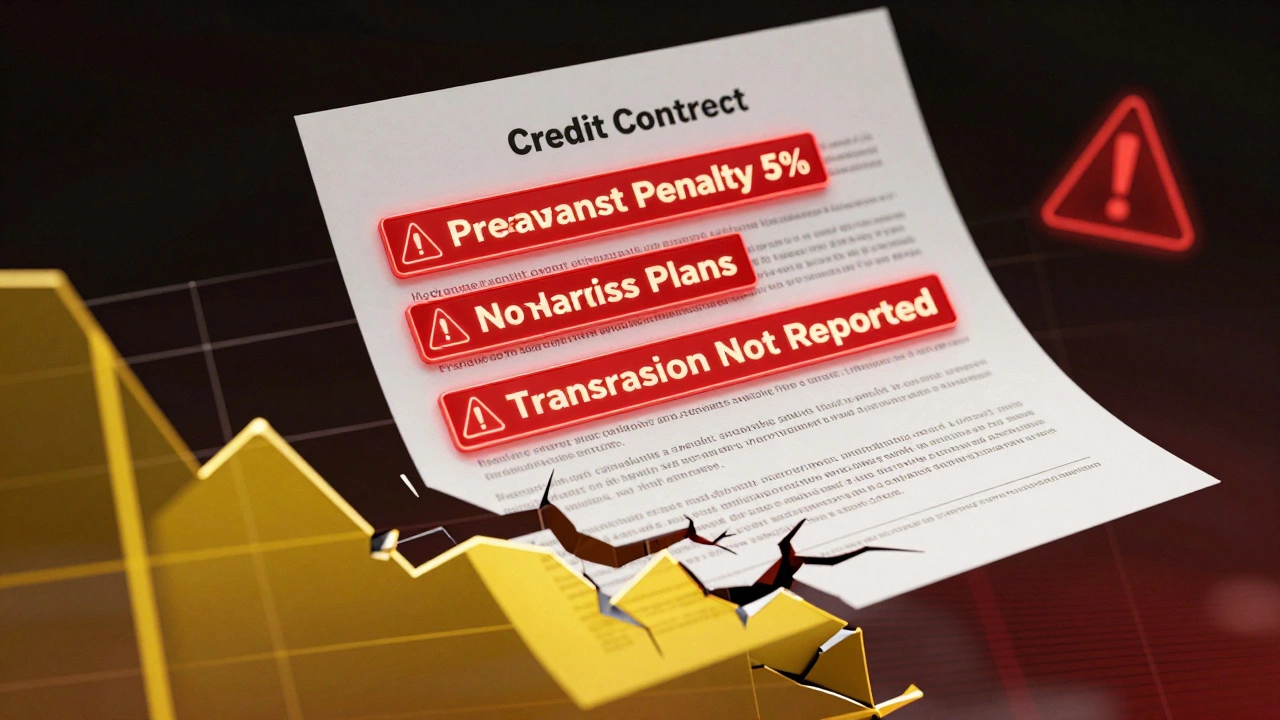
Most lenders let you pay off your loan early without penalty. Upstart doesn’t. Their loan agreements include a clause that allows them to charge a fee if you pay off your loan before the term ends. It’s not always obvious - you have to dig into the loan servicing documents to find it. For some borrowers, that fee is as high as 5% of the remaining balance.
Why does this matter? Because if you get a raise, inherit money, or win a small lottery, you can’t just pay off the loan and be done. You’re penalized for being financially responsible. This isn’t common in the industry. Most banks and credit unions let you pay early for free. Upstart’s model relies on you paying every single payment on time - for the full term.
Soft Credit Checks Are a Mirage
Upstart says it uses a “soft credit check” during the application process. That’s true - it doesn’t ding your score right away. But here’s the catch: if you’re approved and accept the loan, they run a hard inquiry anyway. And if you apply again after being denied? Another hard inquiry. Multiple hard inquiries in a short time can drop your credit score by 10 to 20 points. That’s enough to get you denied for a mortgage, car loan, or even an apartment.
Worse, Upstart doesn’t always tell you when a hard pull is coming. One borrower in Ohio applied three times over six weeks. Each time, she thought she was just checking rates. Each time, her credit score dropped. By the third time, she was denied for a car loan she’d been approved for months earlier.
Your Financial Data Is Used Against You
Upstart asks for way more than your credit score. They want access to your bank statements, employment history, education, and even your job title. They claim this helps them “predict your ability to repay.” But what they’re really doing is building a proprietary scoring model that’s not transparent. If you went to a less prestigious college, work in retail, or have a job with irregular hours, their algorithm may label you as higher risk - even if you have a steady income and zero debt.
This isn’t discrimination under the law. But it’s still unfair. A 2023 study by the Consumer Financial Protection Bureau found that Upstart’s algorithm denied qualified applicants at twice the rate of traditional lenders when they had similar incomes and credit histories. The difference? Upstart’s model penalizes non-traditional career paths.
Loan Terms Are Rigid - No Flexibility
Traditional lenders offer deferment, forbearance, or modified payment plans if you hit hard times. Upstart does not. If you lose your job, get sick, or have a family emergency, your only option is to pay - or go into default. And defaulting with Upstart has consequences that go beyond credit damage.
They sell your loan to third-party collection agencies within 60 days of a missed payment. Those agencies are aggressive. They call your workplace. They send letters to your home. And unlike banks, Upstart doesn’t report payment updates to credit bureaus once you’re in collections. That means even if you eventually pay the debt, your credit report won’t reflect it. You’re stuck with a negative mark that won’t go away.
They Don’t Help You Build Credit
Some lenders report positive payment history to all three credit bureaus. Upstart only reports to Experian and Equifax. TransUnion? Never. That means if you’re trying to rebuild your credit, you’re missing out on one-third of your credit profile. That’s a big deal if you’re applying for a mortgage or trying to qualify for a credit card later.
And if you miss a payment? Upstart reports it to all three bureaus. So you get the negative impact - but none of the positive. It’s a one-way street.
Customer Service Is a Black Hole
Upstart’s app is slick. Their website looks professional. But their customer service? Barely exists. There’s no phone number. No live chat. You can only reach them through email or a ticketing system. Response times average 72 hours. And even then, the answers are generic.
One borrower in Texas emailed about a billing error that cost him $400 in late fees. He sent six emails over 11 days. No one responded. He finally called the collections agency they sold his loan to - and they fixed it. Upstart never apologized. Never refunded the fees. Just sent a template: “We’re sorry for the inconvenience.”

What Happens If You Can’t Pay?
Let’s say you take a $15,000 loan at 28% APR. You’re making $3,200 a month. You think you can handle it. Then your car breaks down. Your hours are cut. You miss a payment.
After 30 days, Upstart reports you as delinquent. After 60 days, they sell your debt. The collector starts calling. After 90 days, you’re sued. In some states, they can garnish your wages. You lose your tax refund. Your credit score plummets. And you still owe the full balance - plus fees, penalties, and legal costs.
Upstart doesn’t offer hardship programs. They don’t negotiate. They don’t care if you’re trying. Their system is built to profit from defaults, not to help you succeed.
Is Upstart Right for You?
Upstart isn’t evil. It’s a business. And like any business, it’s designed to maximize profit - not to help you. If you have excellent credit, a stable job, and a clear plan to pay off the loan in under two years - maybe it’s okay. But if you’re using it to cover a gap in income, pay medical bills, or fix a financial emergency - you’re playing with fire.
There are better options: credit unions often offer lower rates with flexible terms. Nonprofits like Lending Circles can help you build credit without debt. Even a 0% intro APR credit card is safer than a 30% loan with no escape hatch.
Before you sign anything, ask yourself: What happens if I lose my job tomorrow? Can I afford this loan if I’m only making 70% of my current income? If the answer is no - walk away. Upstart will be waiting for you next month. But your credit score won’t be.
Does Upstart check my credit score?
Yes, but not in the way you might think. Upstart starts with a soft inquiry, which doesn’t affect your score. But if you accept a loan offer, they perform a hard inquiry - which does. And if you apply multiple times, each hard pull lowers your score further. They don’t warn you when this happens.
Can I pay off my Upstart loan early without penalty?
No. Upstart charges a prepayment penalty of up to 5% of your remaining balance if you pay off your loan early. This is buried in the loan agreement, not advertised on their website. Most other lenders allow early repayment for free.
Does Upstart report payments to all three credit bureaus?
No. Upstart only reports to Experian and Equifax. They do not report to TransUnion. This means even if you pay on time, you’re not building a complete credit history. But if you miss a payment, they report it to all three - creating a one-sided disadvantage.
What happens if I miss a payment on my Upstart loan?
After 30 days, your loan is marked as delinquent. After 60 days, Upstart sells your debt to a third-party collection agency. They’ll start calling you, sending letters, and may even sue you. Upstart doesn’t offer hardship programs or payment plans. Once sold, your payment history won’t be updated - even if you later pay the debt.
Is Upstart a good option for people with bad credit?
Not really. While Upstart markets itself as a solution for people with thin credit files, their high interest rates and rigid terms often make things worse. Borrowers with lower scores pay more in interest and face stricter penalties. Better options include credit unions, nonprofit lenders, or secured credit cards that help build credit without trapping you in debt.
Next Steps: What to Do Instead
If you need a personal loan but are worried about Upstart’s risks, here are three safer paths:
- Visit a local credit union. They often offer personal loans under 12% APR with flexible terms and real human support.
- Apply for a 0% intro APR credit card. If you can pay off the balance in 12-18 months, you pay $0 in interest.
- Use a nonprofit lender. Organizations like Lending Circles or local community development financial institutions (CDFIs) offer low-cost loans and financial coaching.
There’s no rush. Taking a few extra weeks to find the right lender can save you thousands - and protect your credit for years to come.