CD vs Savings Account Decision Tool
Your Financial Situation
Enter your details and click "Analyze Options" to see the recommendation.
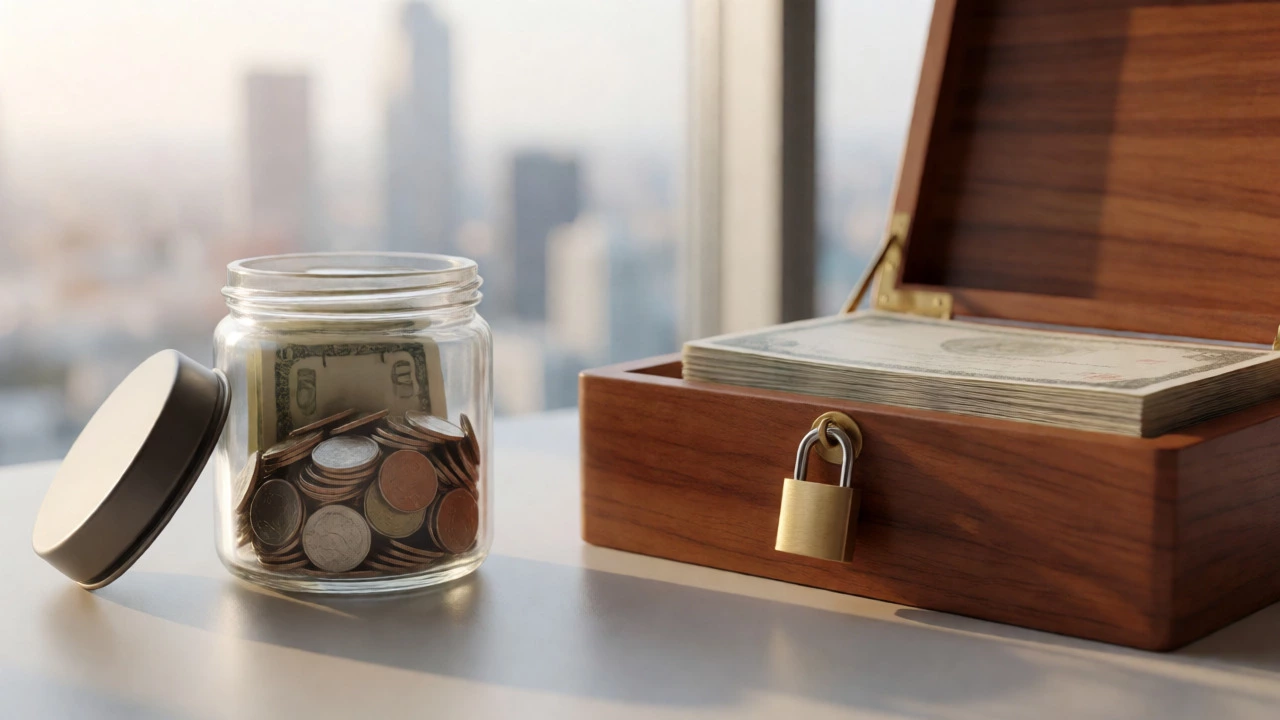
You have some extra cash sitting around and you want it to earn more than the pennies your current bank is giving you. You see two options everywhere: a Certificate of Deposit (CD) and a savings account. One locks your money away for a guaranteed rate; the other keeps it liquid but might pay less. It’s not just about which pays more today-it’s about when you’ll need the cash.
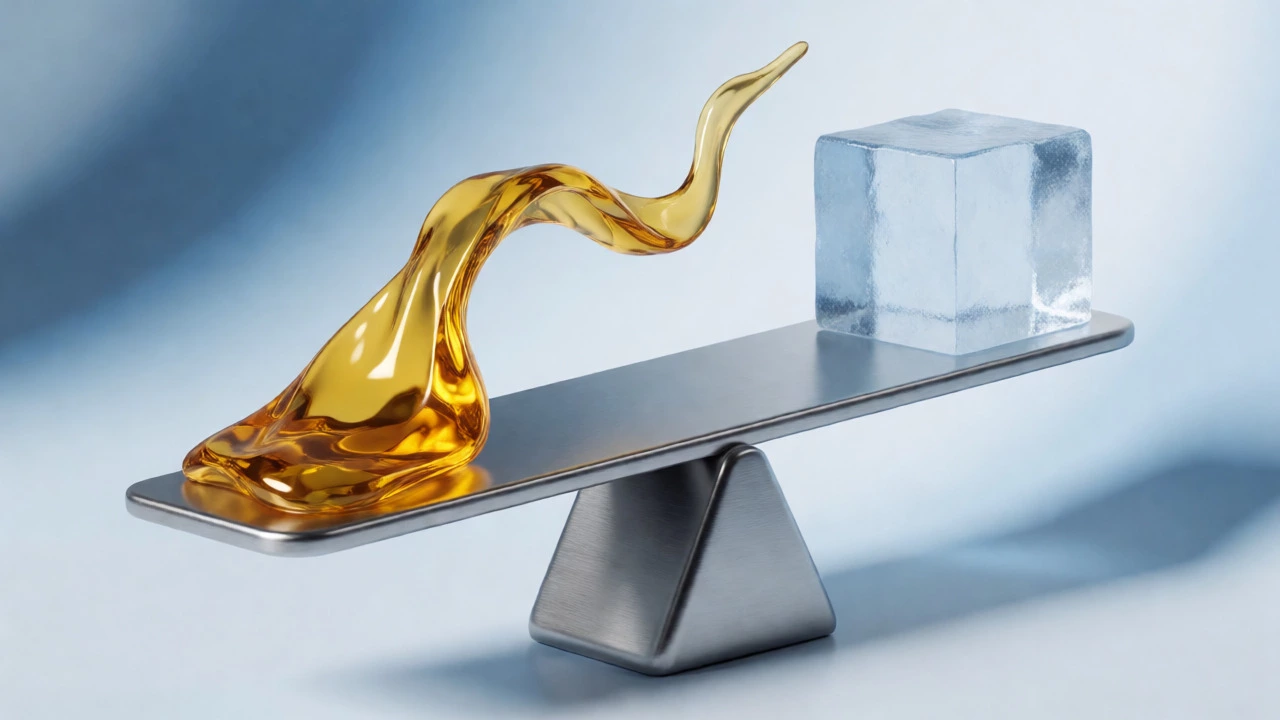
Here is the blunt truth: if you need the money within the next year, a savings account usually wins because of flexibility. If you won’t touch that cash for three to five years, a CD often beats a standard savings account by locking in a higher rate before central banks cut rates again. But "usually" and "often" aren't helpful enough. Let's break down exactly how these tools work, where they fail, and how to pick the right one for your specific situation in August 2026.
The Core Difference: Liquidity vs. Lock-In
Think of a Savings Account as a checking account’s smarter sibling. You can withdraw money whenever you want. There are no penalties. The trade-off? The interest rate fluctuates with the market. If the Federal Reserve cuts rates, your earnings drop immediately.
A Certificate of Deposit is a time-bound contract. You agree to leave your money with the bank for a set term-six months, one year, five years. In exchange, the bank guarantees a fixed annual percentage yield (APY). You cannot touch that principal without paying an early withdrawal penalty. This penalty can eat up several months of interest, sometimes even dipping into your original deposit.
This fundamental difference dictates who should use which product. Are you saving for a wedding next month? A savings account is your only real option. Are you building an emergency fund? Stick with savings. Are you setting aside money for a child’s college tuition due in four years? A CD makes sense.
How Interest Rates Work in Each Option
In 2026, we are seeing a shift from the high-rate environment of the early 2020s. When rates were peaking, CDs offered juicy returns. Now, as inflation cools and central banks look to normalize monetary policy, short-term rates are becoming volatile while long-term bonds offer stability.
High-Yield Savings Accounts (HYSA) track the federal funds rate closely. If the Fed holds steady, your HYSA rate stays steady. If they cut, your rate drops. You never know what you will earn next month. This uncertainty is the price you pay for access.
Conversely, CDs lock in the rate at the moment you open the account. Even if market rates plummet to 1% next year, your 5-year CD continues to pay the 4.5% you signed up for. This is called "yield protection." It is incredibly valuable if you believe interest rates are on a downward trajectory. However, if rates spike back up to 6%, you are stuck earning 4.5% while others get 6%. That is the opportunity cost.
When a Savings Account Wins
You should choose a savings account if any of these apply to you:
- Emergency Fund Storage: Financial experts generally recommend keeping 3-6 months of expenses in a liquid account. You never know when your car will break down or a medical bill will arrive. You cannot afford a penalty fee when you need cash urgently.
- Short-Term Goals: Saving for a vacation, a new laptop, or a holiday gift? These goals are typically under 12 months away. The hassle of opening a CD and risking penalties isn't worth the marginal gain.
- Uncertain Income: Freelancers or those with variable commissions benefit from the ability to top up their savings whenever a big check arrives. Most CDs require a lump-sum deposit upfront, though some allow additional deposits later.
- Rising Rate Environment: If you think rates will go up soon, a savings account lets you capture those higher yields immediately. A locked-in CD would force you to wait until maturity to reinvest at better rates.
When a CD Makes More Sense
CDs shine when you have clarity on your timeline and a desire for predictability:
- Fixed Expenses: Do you know you need $10,000 for a roof replacement in exactly two years? Buy a 2-year CD. You know exactly how much you will have on the day you need it. No guessing.
- Falling Rate Expectations: If economic indicators suggest the Fed will cut rates multiple times in the next 18 months, locking in a long-term CD now protects your income stream.
- Behavioral Discipline: Some people spend too easily. If having the money accessible tempts you to buy things you don't need, the "penalty barrier" of a CD acts as a useful psychological guardrail.
- Lump Sum Windfalls: Received a tax refund, inheritance, or bonus? If you won't need this chunk of cash soon, a CD ensures it grows at a guaranteed pace rather than sitting idle in a low-interest checking account.
Comparing Costs and Risks
Both products are insured by the FDIC (or NCUA for credit unions) up to $250,000 per depositor, per institution. So, safety-wise, they are nearly identical. The risks come from liquidity and opportunity cost.
| Feature | Savings Account | Certificate of Deposit (CD) |
|---|---|---|
| Access to Funds | Immediate. Usually limited to 6 withdrawals/month (Reg D relaxed, but banks may still enforce). | Locked until maturity. Early withdrawal triggers a penalty. |
| Interest Rate Type | Variable. Changes with market conditions. | Fixed. Stays the same for the entire term. |
| Minimum Deposit | Often $0 to $100. | Typically $500 to $2,500. Jumbo CDs require $100k+. |
| Best For | Emergency funds, short-term goals (<1 year), rising rates. | Specific future purchases (1-5 years), falling rates, disciplined savers. |
| Penalty Risk | None. | High. Can be 3-6 months' worth of interest. |

Strategic Moves: The Ladder Strategy
If you are torn between the two, consider a CD Ladder. Instead of putting all your money into one 5-year CD, split it into five equal parts. Buy a 1-year, 2-year, 3-year, 4-year, and 5-year CD simultaneously.
Every year, one CD matures. You then take that matured money and reinvest it into a new 5-year CD. Why do this? First, it gives you access to some cash every year (liquidity). Second, it averages out interest rates. If rates rise, your maturing CDs get reinvested at higher rates. If rates fall, you still have older CDs locked in at higher yields. It balances the best of both worlds.
Alternatively, use a hybrid approach. Keep your emergency fund (3-6 months of expenses) in a High-Yield Savings Account. Put any money you know you won't touch for 12+ months into CDs. This separates your "spendable" savings from your "growth" savings.
Common Pitfalls to Avoid
Don't let sales pitches confuse you. Here are traps people fall into:
- Ignoring the APY Calculation: Banks advertise "interest rate" but you earn based on Annual Percentage Yield (APY). APY includes compounding. Always compare APYs, not nominal rates.
- Overlooking Fees: While rare for HYSAs, some CDs have maintenance fees if you don't maintain a minimum balance. Read the fine print.
- Locking in Too Long: Never put money in a 5-year CD if there is a chance you might need it in 3 years. Life happens. Job loss, home repairs, family emergencies-these are unpredictable. Stay conservative with terms unless you are certain.
- Chasing the Highest Rate Blindly: Sometimes online banks offer slightly higher rates than brick-and-mortar institutions. Factor in convenience. If moving money takes 3 days via ACH transfer, is that extra 0.1% worth the hassle? Probably not for small amounts.
Final Verdict
There is no single "better" option. It depends entirely on your timeline and risk tolerance. If you value flexibility and fear missing out on rising rates, choose a High-Yield Savings Account. If you value certainty and want to protect against falling rates, choose a Certificate of Deposit.
For most people in 2026, a mixed portfolio works best. Keep your core emergency fund liquid in a savings account. Use CDs for specific, dated financial goals. This way, you aren't gambling on interest rate movements, and you aren't penalized for needing quick access to cash.
Can I lose money in a CD?
You cannot lose your principal investment if the bank fails, provided your deposit is under the FDIC insurance limit of $250,000. However, you can lose money relative to inflation if the CD's interest rate is lower than the inflation rate. Additionally, if you withdraw early, the penalty might exceed the interest earned, causing you to receive less than you deposited.
What happens if interest rates go up after I buy a CD?
Your CD rate remains fixed. You will continue to earn the lower rate you agreed upon, while new customers get the higher rate. This is known as opportunity cost. To mitigate this, investors often use CD ladders so that portions of their money become available to reinvest at new, higher rates periodically.
Is a high-yield savings account safer than a CD?
Both are equally safe regarding principal protection, assuming they are held at FDIC-insured banks. Both are insured up to $250,000 per depositor. The difference lies in liquidity risk, not credit risk. With a savings account, you can always access your money. With a CD, accessing it early costs money.
How much does a CD penalty usually cost?
Penalties vary by bank and term length. Common structures include losing 3 to 6 months' worth of interest. For example, if you have a 5-year CD and withdraw after 1 year, you might lose 6 months of interest. In some cases, if interest rates are very low, the penalty could technically eat into your principal, though this is rare in normal economic conditions.
Should I keep my emergency fund in a CD?
Generally, no. Emergency funds need to be accessible immediately without penalty. If you put your emergency fund in a CD and face a sudden job loss or medical bill, you might have to pay a penalty to access the cash. It is better to keep emergency funds in a High-Yield Savings Account where you can withdraw instantly via ATM or transfer.