
Bitcoin Millionaire Calculator
Investment Parameters
Your Millionaire Scenario
Enter your details and click calculate to see the math behind becoming a Bitcoin millionaire.
You’ve seen the headlines. A teenager buys Bitcoin is a decentralized digital currency that operates without a central authority. with their allowance and retires at twenty-five. Your friend’s cousin knows someone who turned five hundred dollars into five million during the last bull run. It feels like magic. But here’s the uncomfortable truth: for every story of overnight riches, there are thousands of people watching their savings evaporate in a market crash.
The question isn’t just whether Bitcoin can make you a millionaire. It’s whether you have the timing, capital, and stomach to survive the volatility required to get there. Let’s strip away the hype and look at the actual numbers, the historical context, and the realistic paths to significant wealth through cryptocurrency.
The Math of Becoming a Bitcoin Millionaire
To understand if this dream is achievable, we need to do some basic arithmetic. Becoming a millionaire means holding assets worth one million dollars (or your local currency equivalent). In the world of cryptocurrency is digital or virtual money secured by cryptography., this depends entirely on two variables: how much you invest initially and the price appreciation of the asset.
Let’s look at three scenarios based on current market realities as of mid-2026. Assume the price of Bitcoin stabilizes around $75,000 after its recent cycle peak.
| Initial Investment | Number of BTC Needed | Required Price Growth | Feasibility Rating |
|---|---|---|---|
| $1,000 | 13.33 BTC | 10x from entry | Very Low |
| $10,000 | 1.33 BTC | 10x from entry | Low |
| $100,000 | 0.133 BTC | 10x from entry | Moderate |
If you invested $1,000 when Bitcoin was trading at $20,000, you would need it to hit $200,000 for you to become a millionaire. That’s a tenfold increase. While possible in early cycles, such massive percentage gains become harder as the market cap grows. This is why early adopters had an easier time than latecomers. The window for "easy" millions is closing, but it hasn’t shut completely.
Timing Is Everything: The Bull and Bear Cycle
Bitcoin doesn’t move in straight lines. It moves in violent waves. Understanding these cycles is more important than picking the exact right day to buy. Historically, Bitcoin has experienced four-year cycles tied to the halving event is a programmed reduction in Bitcoin mining rewards by half.. These halvings occur roughly every 210,000 blocks, or about every four years.
Here’s how the pattern typically plays out:
- The Accumulation Phase: Prices stagnate or drop slowly after a crash. This is when smart investors buy because fear is high.
- The Halving: Supply issuance drops, creating scarcity pressure.
- The Bull Run: Demand outpaces supply, leading to exponential price increases. This is where most retail investors jump in.
- The Correction: Prices crash 50-80% from the peak, wiping out leveraged traders and emotional holders.
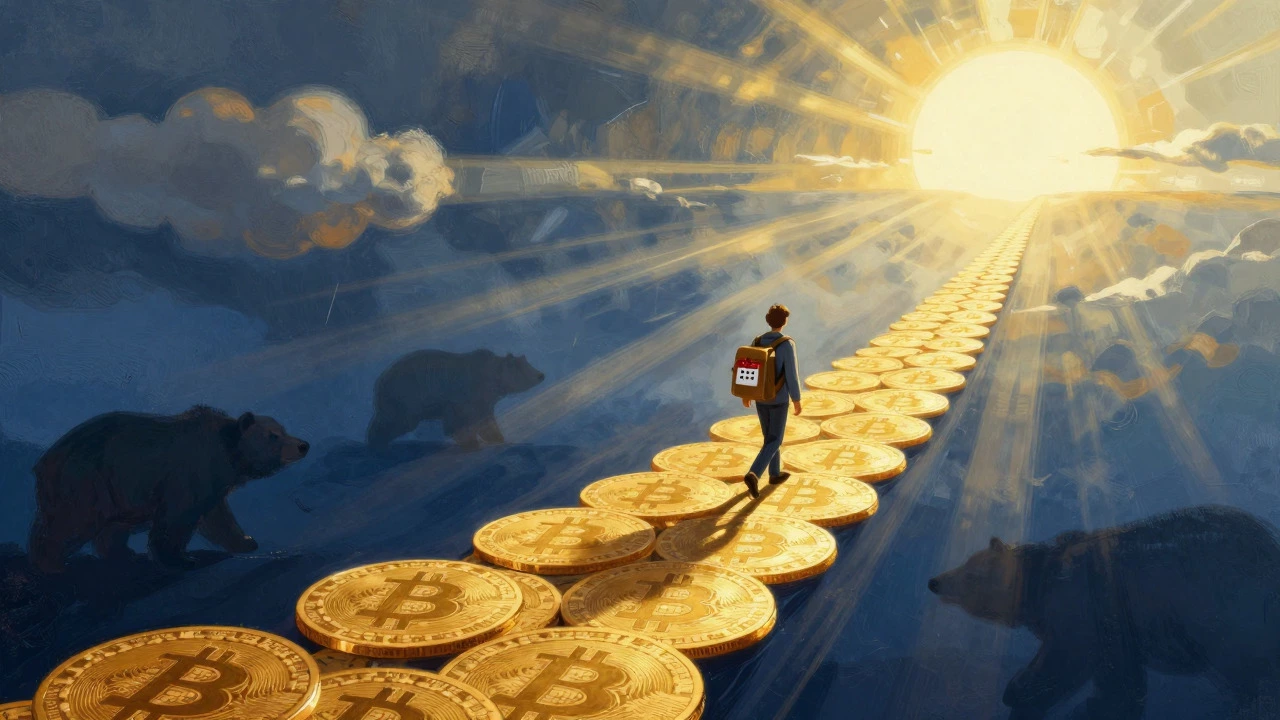
If you bought Bitcoin at the bottom of the 2022 bear market and held through the 2024-2025 bull run, you likely saw significant gains. But if you bought at the peak in late 2025, you might be sitting on paper losses today. Timing your entry relative to the cycle can mean the difference between doubling your money and losing half of it.
Risk Management: Protecting Your Capital
Becoming a millionaire isn’t just about making money; it’s about keeping it. Many crypto investors lose everything not because they picked the wrong coin, but because they failed to secure their assets. Security is a non-negotiable part of serious crypto investing is the practice of buying and holding digital currencies for long-term growth..
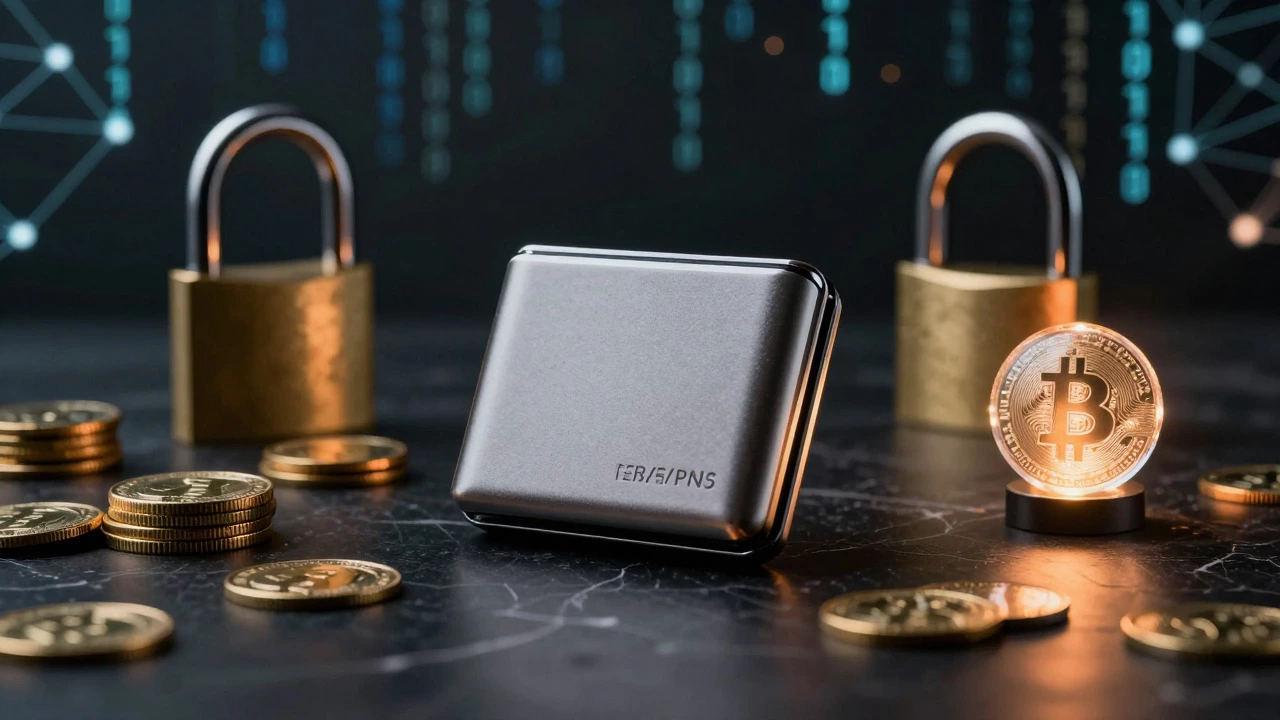
Exchanges are frequent targets for hackers. When an exchange goes bankrupt or gets stolen, users often lose access to their funds forever. To mitigate this risk, you should use a hardware wallet is a physical device that stores private keys offline.. Devices like Ledger or Trezor keep your Bitcoin safe from online threats. If you’re holding life-changing amounts, consider multi-signature wallets or cold storage solutions.
Diversification is another critical tool. Putting all your eggs in one basket is risky, even if that basket is Bitcoin. Consider allocating a portion of your portfolio to stablecoins or other established cryptocurrencies like Ethereum to balance volatility. However, remember that diversification also dilutes potential returns. There’s always a trade-off.
Tax Implications and Regulatory Hurdles
Let’s talk about the government. In many jurisdictions, including Ireland and the United States, profits from selling Bitcoin are subject to capital gains tax. If you sell Bitcoin for a profit, you owe taxes on that gain. Ignoring this can lead to hefty penalties later.
In Ireland, Revenue treats cryptoassets as chargeable assets. This means you pay Capital Acquisitions Tax (CAT) or Capital Gains Tax (CGT) depending on the transaction type. The annual exemption for CGT is €1,270. Anything above that is taxed at 33%. Keep detailed records of every transaction-buy dates, sell dates, prices, and fees. Using specialized crypto tax software can save you hours of headache and ensure compliance.
Regulatory changes can also impact prices. News of stricter regulations often causes short-term panic selling. Conversely, approval of Bitcoin ETFs or favorable legal rulings can trigger rallies. Stay informed about legislative developments in your country and globally.
Psychological Challenges: Staying the Course
The hardest part of becoming a Bitcoin millionaire isn’t technical; it’s psychological. Human beings are wired to fear loss and chase gains. This leads to two common mistakes:
- Panic Selling: When the market drops 30%, your heart races. You think it’s going to zero. You sell at the bottom, locking in losses.
- FOMO Buying: When everyone is talking about Bitcoin hitting new highs, you feel left out. You buy at the top, only to watch it correct shortly after.
Successful investors develop discipline. They create a plan before they invest and stick to it regardless of market noise. Dollar-cost averaging (DCA) helps smooth out volatility. By investing a fixed amount regularly, you buy more when prices are low and less when they are high. This removes emotion from the equation.
Patience is your greatest ally. Bitcoin has rewarded long-term holders consistently over decades. Short-term traders often underperform due to fees, taxes, and emotional errors. If you believe in the long-term value proposition of scarce digital assets, holding through the storms is essential.
Alternative Paths to Crypto Wealth
Buying and holding Bitcoin is the simplest path, but it’s not the only one. Some investors explore staking, lending, or yield farming to generate passive income. However, these strategies come with higher risks. Smart contract bugs, platform insolvencies, and impermanent loss can erode your principal.
Another approach is active trading. Technical analysis, chart patterns, and order flow data can help identify profitable trades. But professional trading requires skill, time, and experience. Most amateur traders lose money. Unless you treat it like a full-time job, sticking to long-term holding is usually safer.
Finally, consider earning Bitcoin directly. Freelancers and businesses increasingly accept crypto payments. Receiving salary or freelance income in Bitcoin allows you to accumulate coins without spending fiat currency. This method combines work ethic with investment potential.
Is It Still Possible Today?
Yes, but the definition of "possible" has changed. In 2010, you could buy thousands of Bitcoins for a pizza. Today, each coin costs tens of thousands of dollars. The barrier to entry is higher, requiring either larger initial capital or longer time horizons.
If you start small, consistency is key. Regular contributions over years can build substantial holdings. If you start large, risk management becomes paramount. Protect your downside while aiming for upside.
Remember, Bitcoin is volatile. It can double in a year or halve in a month. Only invest what you can afford to lose. Diversify across asset classes. Secure your holdings. Understand the taxes. And most importantly, stay calm when others panic.
How much Bitcoin do I need to be a millionaire?
The number of Bitcoin needed depends on its future price. If Bitcoin reaches $100,000, you would need 10 BTC. If it hits $50,000, you’d need 20 BTC. Currently, with prices fluctuating around $75,000, owning approximately 13.33 BTC would make you a millionaire. Calculate your target based on realistic price projections and your investment capacity.
What is the safest way to store Bitcoin?
The safest method is using a hardware wallet like Ledger or Trezor. These devices store your private keys offline, protecting them from hackers and malware. For extra security, enable multi-signature requirements and back up your recovery phrase in multiple secure locations. Avoid leaving large amounts on exchanges for extended periods.
Are there taxes on Bitcoin profits in Ireland?
Yes, Ireland charges Capital Gains Tax on Bitcoin profits at a rate of 33%. There is an annual exemption of €1,270. You must report disposals to Revenue and keep accurate records of transactions. Consult a tax advisor familiar with cryptoassets to ensure compliance and optimize your tax position.
Should I buy Bitcoin now or wait for a dip?
Timing the market perfectly is nearly impossible. Instead of waiting for a specific dip, consider dollar-cost averaging (DCA). Invest a fixed amount regularly regardless of price. This strategy reduces the impact of volatility and eliminates the stress of trying to predict market bottoms. Long-term results matter more than short-term fluctuations.
Can I lose all my money investing in Bitcoin?
While unlikely that Bitcoin itself will go to zero, you can lose all your money through poor practices. Leaving funds on insecure exchanges, falling for scams, using excessive leverage, or panic selling during crashes can wipe out your portfolio. Proper security, diversification, and emotional discipline are essential to preserving capital.