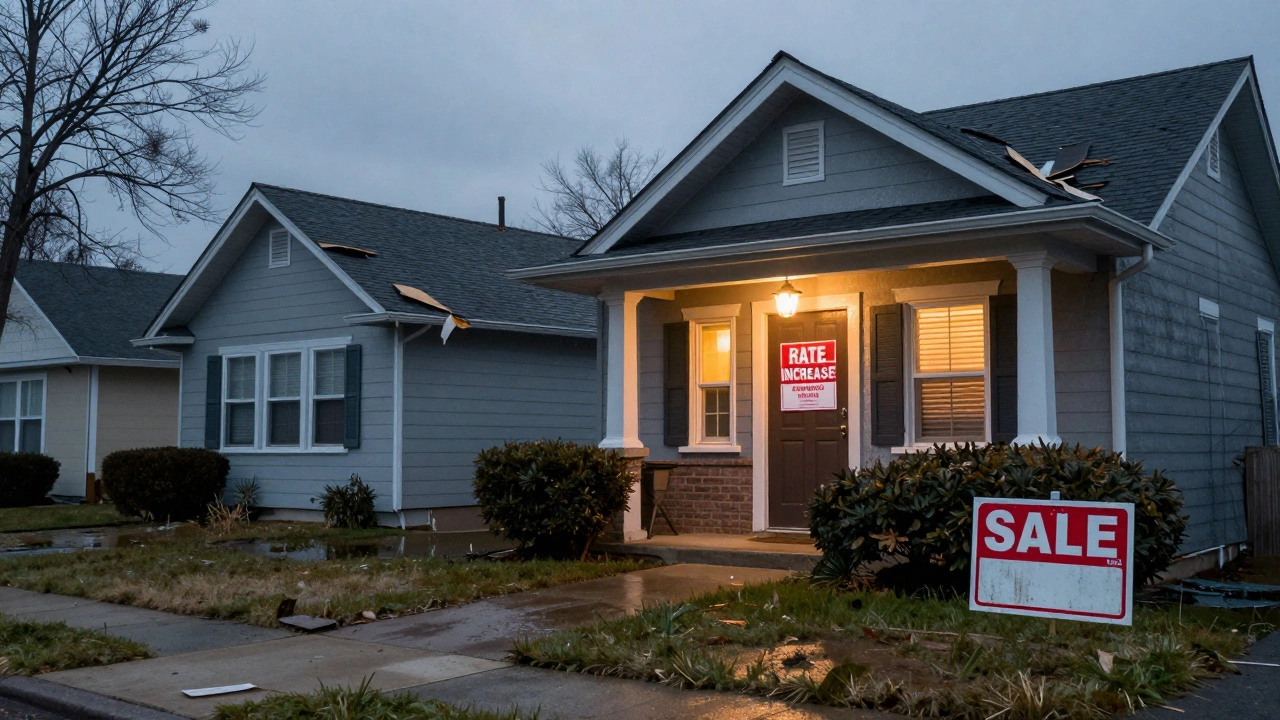
Your homeowners insurance bill just hit you like a punch in the gut. Last year it was $1,200. This year? $2,400. You didn’t file a claim. You didn’t add a pool. You didn’t even repaint the garage. So why did it double?
Claims History Is the Most Common Cause
Even if you didn’t file a claim yourself, your neighborhood might have. Insurance companies don’t just look at your house-they look at your zip code. If three homes on your street had water damage last year from a storm, or if there was a string of burglaries, your area gets flagged as high-risk. That drives up rates for everyone. A 2024 report from the Insurance Information Institute showed that claims frequency in certain regions increased by 47% over the past two years, mostly due to extreme weather. Your insurer isn’t punishing you. They’re adjusting for the whole block.Home Value Has Risen
If your home’s replacement cost went up, your premium will too. Construction costs haven’t dropped since 2022. Lumber, roofing materials, and labor are still 20-35% higher than pre-pandemic levels. If your home was appraised at $300,000 in 2022, it might be $380,000 now. Your insurance policy covers rebuilding-not market value. If you didn’t update your coverage, your insurer likely did it for you. That means your policy now assumes it’ll cost more to rebuild your house. And that cost gets passed to you in your premium.You Didn’t Re-Evaluate Your Deductible
Many people forget they can lower their premium by raising their deductible. But if you’ve been paying $500 a year and suddenly see a $2,500 deductible on your renewal notice, that’s a red flag. It doesn’t mean you’re being punished-it means your insurer is trying to reduce their payout risk. If you’ve been on the same $500 deductible for five years, your insurer may have decided to adjust it to match rising claims. You can fight back: call your agent and ask if you can increase your deductible to $1,500 or $2,500. That could cut your bill by 15-25%.Changes in Your Home’s Risk Profile
Did you install a wood-burning stove? Add a detached garage? Put in a swimming pool? Even small changes like replacing your roof with asphalt shingles instead of fire-resistant composite can trigger a rate hike. Insurance companies use automated systems to track property changes. They pull data from building permits, satellite images, and even neighborhood Facebook groups. If your roof is over 15 years old and your insurer just found out, they’ll assume it’s more likely to leak. Same with old wiring, no smoke detectors, or a basement that floods every spring. These aren’t just warnings-they’re risk multipliers.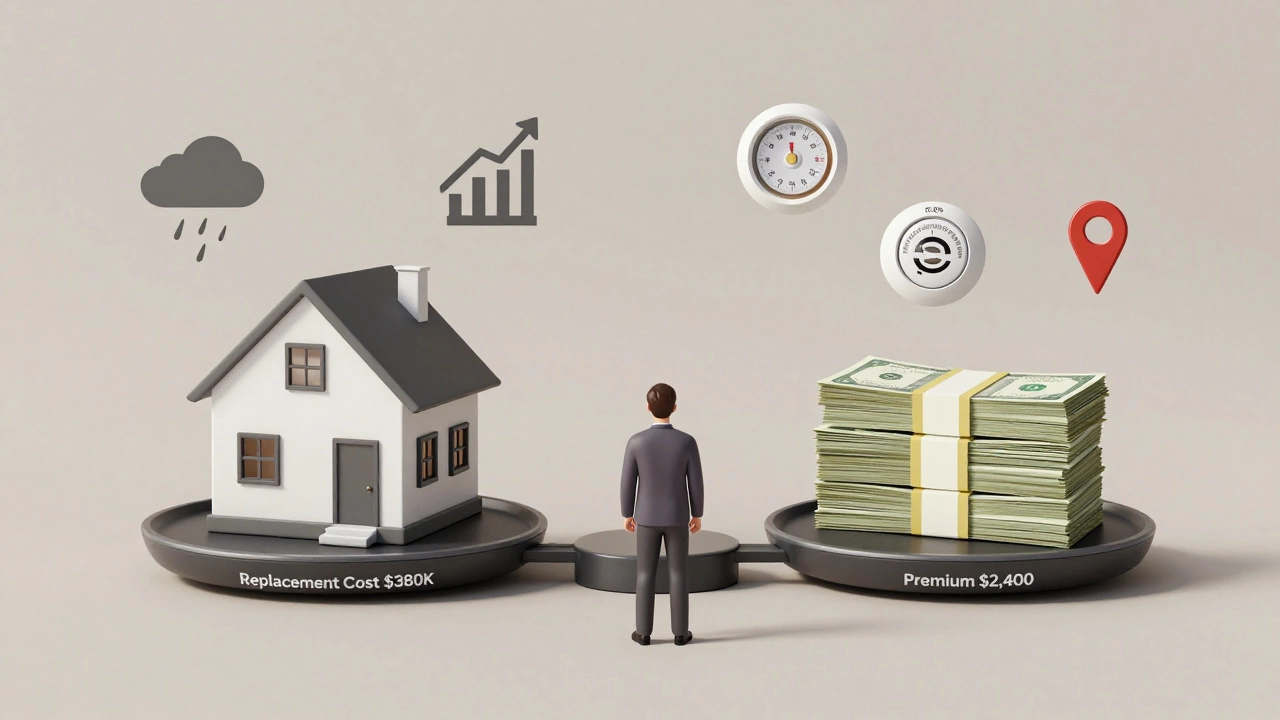
State or Regional Regulatory Changes
In states like Florida, Texas, and Louisiana, insurance companies have been pulling out of the market because of hurricane claims. That leaves fewer insurers competing for your business. Less competition = higher prices. In 2024, Florida’s average homeowners premium jumped 38% year-over-year. Some areas now have only one or two insurers willing to write policies. When that happens, regulators allow companies to raise rates to stay solvent. Check your state’s insurance department website. If they’ve approved a rate hike for your region, your insurer isn’t being greedy-they’re following the rules.Loss of Discounts
Did you get a discount for bundling home and auto insurance? Maybe you lost that discount because your auto policy switched providers. Did you stop paying for a security system? Did your smoke detectors expire? Many insurers offer 5-15% off if you have monitored alarms, storm shutters, or fire-resistant materials. If you didn’t renew your alarm subscription or your system stopped working, that discount vanished. Your premium didn’t double because of your house-it doubled because you lost a discount you didn’t realize you were getting.Insurer’s Overall Financial Strategy
Insurance companies are businesses. If they lost money on home claims last year, they need to make it back. In 2023, the industry paid out $85 billion in home insurance claims-the highest ever. That’s 22% more than 2021. To cover those losses, insurers raised rates across the board. Some companies raised prices by 10-20% just to break even. Others doubled them in high-risk zones. It’s not personal. It’s accounting. Your insurer may have doubled your rate because they’re trying to avoid bankruptcy, not because you’re a bad customer.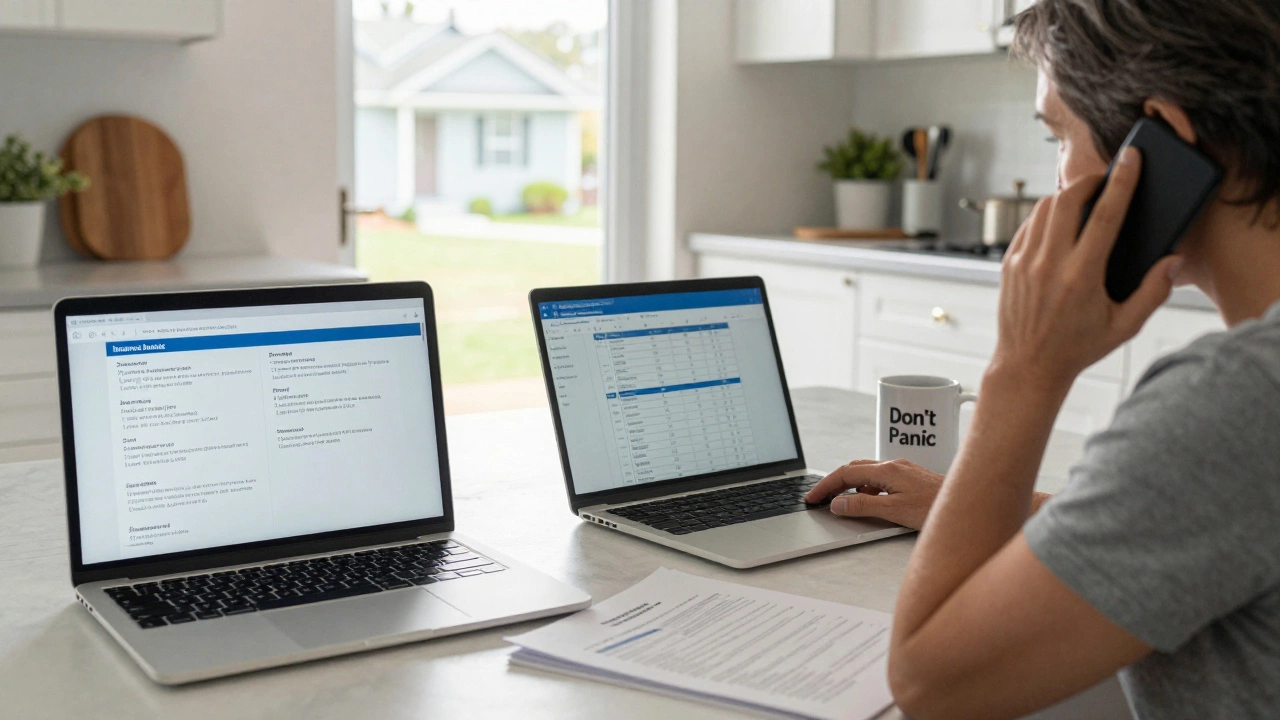
What to Do Next
Don’t panic. Don’t just pay it. Do this:- Call your agent and ask for a breakdown of the increase. Request a copy of your policy’s current replacement cost estimate.
- Compare your current coverage to last year’s. Did your deductible change? Did your coverage limits go up?
- Get at least two other quotes. Use the same coverage levels so you’re comparing apples to apples.
- Ask about discounts you might qualify for: alarm systems, hurricane straps, roof age, loyalty, or even paying in full instead of monthly.
- If your home is over 20 years old, consider a home inspection. Fixing old wiring, upgrading plumbing, or adding a sump pump can lower your rate.
Some people save $1,000+ just by switching insurers. Others save by increasing their deductible. A 2025 study by Bankrate found that 63% of homeowners who shopped around after a rate hike found a better deal within 30 days.
When to Consider Switching
If your insurer doubled your rate and you’ve done everything right-kept your home in good shape, didn’t file a claim, maintained your discounts-it’s time to look elsewhere. Not all insurers react the same way to the same risks. One company might see your old roof as a red flag. Another might give you a 10% discount for having it inspected. Don’t assume your current insurer is your only option. The market is crowded. There are over 1,200 home insurance providers in the U.S. You just need to find the one that sees your home the way you do.Don’t Let This Be the End
A doubled premium feels like a betrayal. But it’s not. It’s a signal. It’s telling you to pay attention. Your home’s value, your neighborhood’s risk, and the insurance market are all shifting. You don’t have to accept it. You just have to act. Get the facts. Compare your options. Fix what you can. And don’t wait until next year’s renewal to check again. Review your policy every 12 months. That’s the only way to stay ahead of the next surprise bill.Why did my homeowners insurance double if I didn’t file a claim?
Even if you didn’t file a claim, your neighborhood might have. Insurance companies raise rates based on regional claims trends, like storms, burglaries, or rising construction costs. If your area had multiple claims last year, your insurer adjusts rates for everyone in the zip code.
Can I fight a home insurance rate increase?
Yes. Request a detailed breakdown from your insurer. Check if your home’s replacement cost was updated. Ask about discounts you may have lost, like security systems or bundling. Then get quotes from at least two other companies. You can often lower your rate by increasing your deductible or fixing home risks like old wiring or a leaky roof.
Is it normal for home insurance to double in one year?
It’s not common, but it’s happening more often in high-risk areas. States like Florida, Texas, and Louisiana have seen premiums jump 30-50% in the past two years due to extreme weather and insurer exits. Nationally, the average increase is 5-10%. A doubling usually means a combination of factors: rising construction costs, regional claims, and loss of discounts.
Does my credit score affect my home insurance rate?
In most states, yes. Insurers use credit-based insurance scores to predict claim risk. A lower score can raise your premium by 20-40%. If your score dropped due to missed payments or high debt, that could explain part of the increase. Check your credit report and fix errors. Some states like California, Maryland, and Massachusetts ban this practice.
Should I switch home insurance companies if my rate doubled?
If you’ve maintained your home, didn’t file a claim, and still got a double increase, switching is smart. Different insurers assess risk differently. One might charge more for an old roof; another might give you a discount for a recent inspection. Get at least three quotes. Use the same coverage limits and deductible so you’re comparing fairly. Many people save $1,000 or more just by switching.