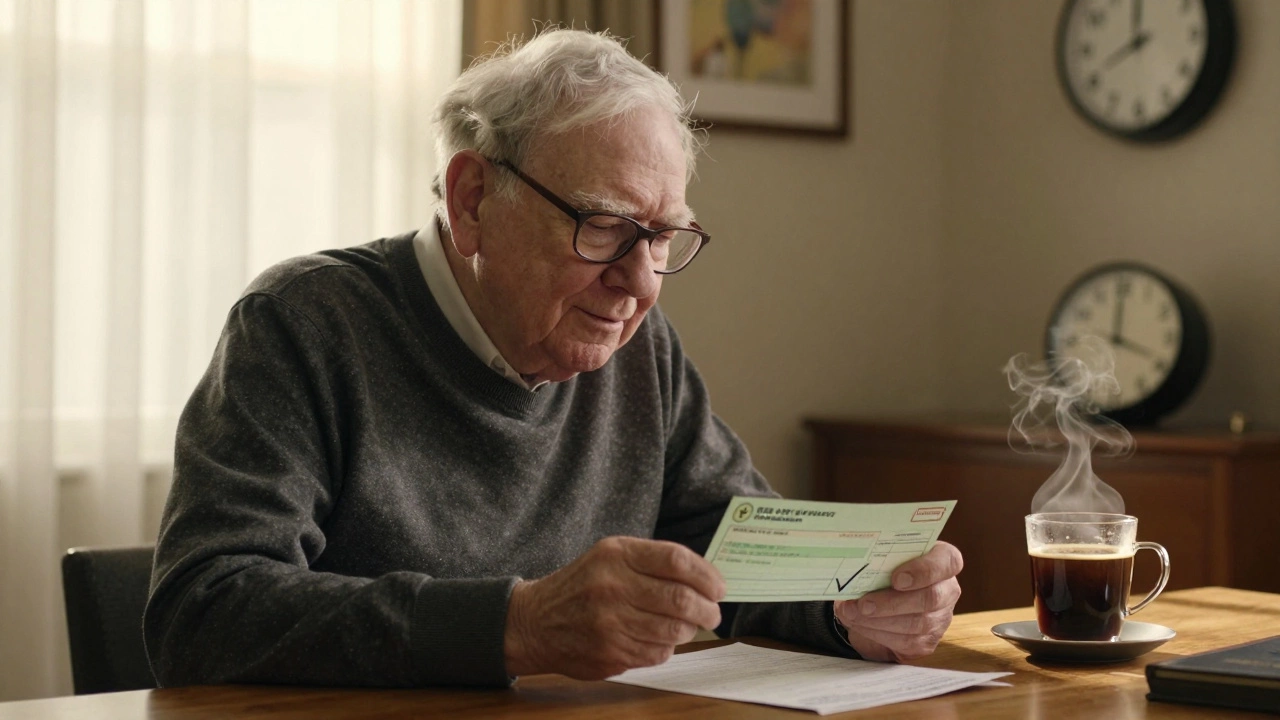
Compound Growth Calculator
How Early Savings Grow
See how much your savings can grow over time with compound growth. Warren Buffett says: "The best thing I did was to get up in the morning and have a long life." Time is your most powerful asset.
Your Investment Potential
Starting now, you can potentially grow your savings to:
Warren Buffett's Principle: "The best thing I did was to get up in the morning and have a long life." Time is your most powerful asset.
Warren Buffett doesn’t talk much about saving money in the way most people think of it-cutting out coffee runs or using coupons. He doesn’t preach budgeting apps or zero-based spending. What he does say about saving is deeper, simpler, and far more powerful. And if you’re trying to build real wealth, you need to hear it.
Save by not spending, not by scrimping
Buffett’s first rule about money? Save by not spending. Not by tracking every dollar. Not by living like a monk. But by making smart choices so you don’t need to save in the first place. He once said, "Do not save what is left after spending; instead spend what is left after saving." That flips the whole idea of saving on its head. Most people wait until the end of the month to see what’s left and call that savings. Buffett says: decide how much you save first, then live on the rest. This isn’t about deprivation. It’s about design. If you set aside 20% of your income before you even touch your paycheck-whether it’s into a retirement account, a brokerage fund, or just a separate bank account-you stop treating savings as an afterthought. You start treating it like a bill that must be paid. And that’s how wealth begins.Time is your best asset
Buffett started investing at age 11. He bought his first stock with $114.30. By age 20, he had $9,800. That’s not luck. It’s compound growth. And compound growth needs time. He’s said it over and over: "The best thing I did was to get up in the morning and have a long life." He’s not joking. The magic of compounding isn’t in the rate of return-it’s in the number of years. A dollar saved at age 25 and invested at 7% annual return becomes $10.60 by age 65. That same dollar saved at 35? Just $5.40. Half as much. Saving isn’t about how much you put in. It’s about how early you start. Even $50 a month, started young, can turn into hundreds of thousands. The biggest mistake people make? Waiting until they "have more" to start.Don’t save to buy stuff. Save to buy freedom.
Buffett lives in the same house he bought in 1958 for $31,500. He drives a modest car. He eats at McDonald’s. He doesn’t save to afford a bigger TV, a fancier vacation, or a luxury car. He saves to buy something no money can buy back: time and choice. He’s made billions, but his lifestyle hasn’t changed because his goal wasn’t consumption. It was autonomy. He doesn’t need a job. He doesn’t need to please anyone. He doesn’t have to answer to a boss. That’s the real power of saving. Most people save to buy things. Buffett saves to be free. And that’s why he doesn’t care if you save $100 or $10,000 a month. He cares if you’re building a life where you don’t have to trade your time for money.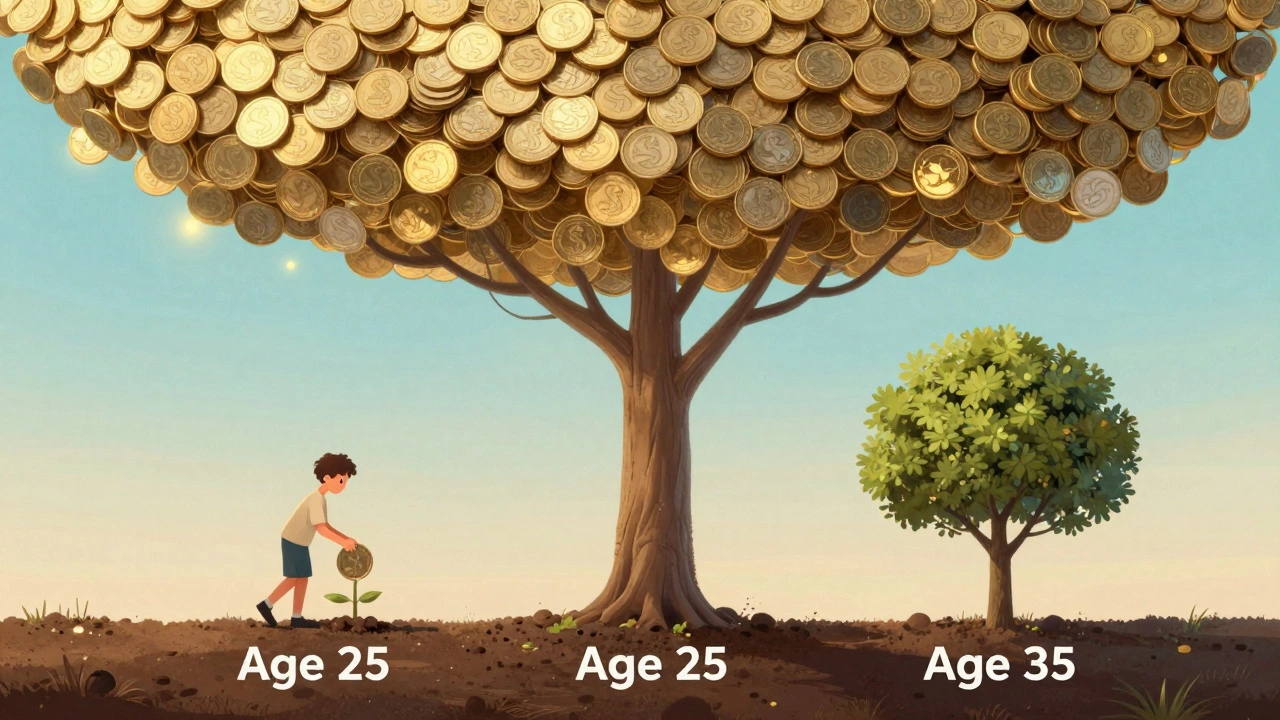
Save in assets that grow, not in accounts that sleep
Buffett doesn’t recommend keeping money in savings accounts. Not because they’re bad-but because they’re useless for building wealth. Inflation eats away at cash. A savings account earning 0.5% interest while inflation runs at 3%? You’re losing 2.5% a year. That’s not saving. That’s slow erosion. He advises putting your savings into productive assets-things that earn money over time. Stocks. Businesses. Real estate. Even if you start small, the goal is to make your money work for you, not sit still. He famously said: "Never bet against America." He’s not telling you to pick individual stocks. He’s saying: invest in the long-term growth of the economy. Index funds. Low-cost ETFs. The S&P 500. These aren’t speculative. They’re systematic. And they’ve delivered about 10% average annual returns over the last century. If you’re saving, don’t just park your money. Put it where it can grow.Save consistently. Not perfectly.
Buffett doesn’t believe in waiting for the "right time" to start saving. He doesn’t wait for a raise. He doesn’t wait for debt to be gone. He doesn’t wait for market conditions to improve. He saves. Every year. Every paycheck. No matter what. He’s invested through crashes, recessions, pandemics, and bubbles. He didn’t time the market. He timed his behavior. He kept putting money in. Even when everything looked bad. You don’t need to be rich to save like Buffett. You just need to be consistent. $100 a month. $200. $500. Doesn’t matter. What matters is that you do it every month. For 10 years. For 20. For 30. The difference between someone who saves $500 a month for 30 years and someone who saves $1,000 a month for 15 years? The first person ends up with more. Because time beats size.
Save with purpose, not guilt
Most advice about saving comes with shame: "You’re wasting money." "You’re not being responsible." "You’re not planning for the future." Buffett doesn’t do that. He doesn’t judge how you spend. He doesn’t care if you buy a new phone or go on vacation. He cares if you’re building something that lasts. Saving isn’t about restriction. It’s about intention. If you’re saving to retire early, to start a business, to never work again, or to help your kids-then your savings have meaning. And meaning drives consistency. Buffett saved because he wanted to own businesses. He didn’t save because he was afraid of money. He saved because he understood its power. And he wanted to control it, not be controlled by it.What to do today
You don’t need to become a billionaire to save like Warren Buffett. You just need to start thinking like him.- Set your savings as your first expense-not your last.
- Start now, even if it’s $25 a month.
- Invest your savings in low-cost index funds, not cash accounts.
- Don’t wait for the perfect moment. The perfect moment is today.
- Save to buy freedom, not stuff.
Buffett didn’t get rich because he saved every penny. He got rich because he saved early, saved consistently, and saved to build something that outlasted him. That’s the kind of saving that changes lives.