
Debt Consolidation Loan Estimator
Your Credit Profile
Loan Assessment
Recommendation:
Your credit score falls in the Fair range. You may qualify for a consolidation loan, but carefully compare the new APR with your current debts. Consider improving your score first by paying down credit card balances below 30% utilization.
Getting hit with a rejection letter after applying for a debt consolidation loan is one of the most stressful moments in personal finance. You’re looking for a way out of high-interest payments, and suddenly you’re told your credit isn’t good enough. The real question isn’t just what number lenders want to see, but how that number changes your interest rate and whether you can actually afford the monthly payment.
In 2026, the landscape for borrowing has shifted slightly due to persistent inflation adjustments and tighter lending standards across Europe and North America. While there is no single "magic number" that guarantees approval, understanding the tiers of credit scores helps you set realistic expectations. Generally, you need a FICO score of at least 670 to qualify for decent terms, but if you’re below 580, traditional banks will likely say no.
The Credit Score Tiers That Matter for Lenders
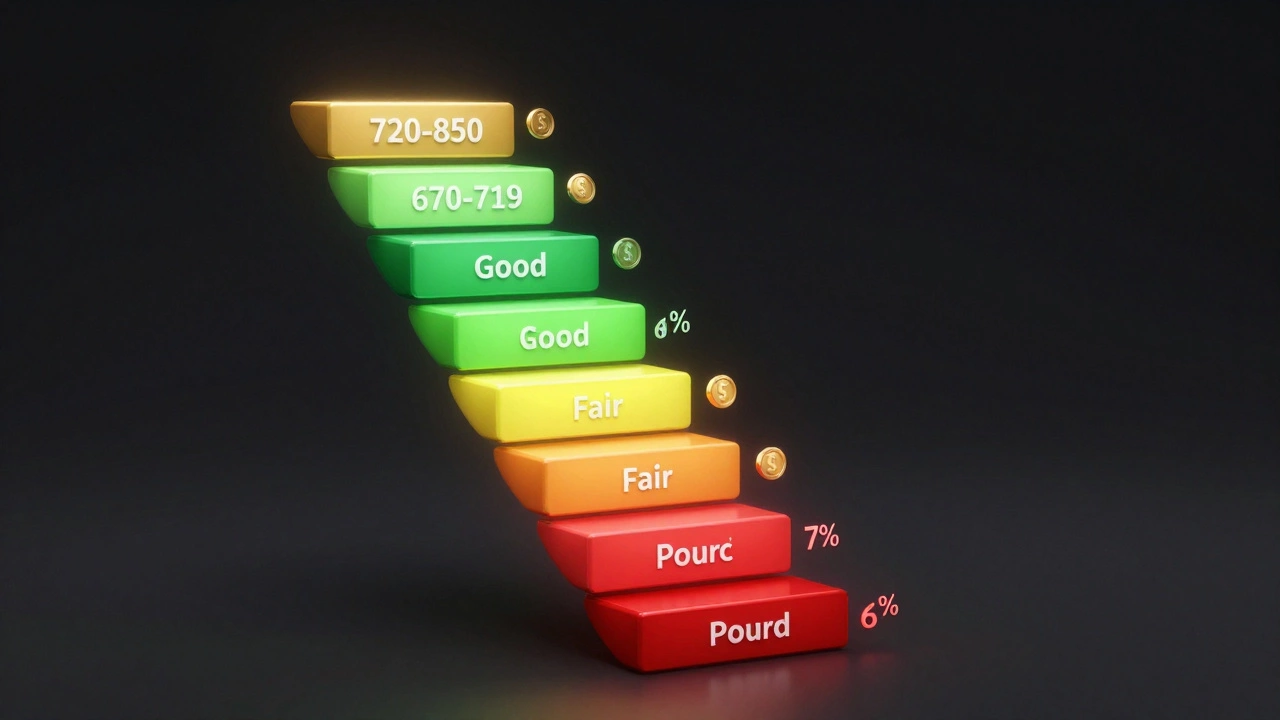
Lenders don't just look at your score as a pass/fail metric. They use it to determine your risk profile, which directly sets your Annual Percentage Rate (APR). Think of your credit score as a sliding scale where every point gained can save you thousands over the life of the loan.
| FICO Score Range | Rating Category | Approval Likelihood | Estimated APR Range (2026) |
|---|---|---|---|
| 720 - 850 | Excellent | Very High | 6% - 10% |
| 670 - 719 | Good | High | 10% - 15% |
| 580 - 669 | Fair | Moderate | 15% - 24% |
| 300 - 579 | Poor | Low / Very Low | 25% - 36%+ |
If you fall into the "Excellent" or "Good" categories, you are in a strong position. Lenders view you as low-risk, meaning they compete for your business by offering lower rates. However, if you are in the "Fair" range, you might still get approved, but the interest rate could be so high that consolidating doesn’t actually save you money compared to your current credit card balances. This is a critical calculation: if your new loan’s APR is higher than the weighted average of your existing debts, consolidation defeats its own purpose.
Why Your Score Isn't the Only Factor
A common mistake borrowers make is obsessing solely over their FICO score while ignoring other vital metrics. Lenders use a holistic underwriting process. Even with a perfect 800 score, you could be denied if other red flags appear on your report.
The three biggest factors alongside your score are:
- Debt-to-Income Ratio (DTI): This measures how much of your gross monthly income goes toward paying debts. Most lenders prefer a DTI below 36%. If you earn €4,000 a month and pay €1,500 in debts, your DTI is 37.5%, which might raise eyebrows even if your score is solid.
- Credit Utilization: This is the percentage of your available credit limit that you are currently using. High utilization suggests financial stress. Keeping this below 30% is ideal before applying for a consolidation loan.
- Employment History: Lenders want stability. Two years of consistent employment is often a baseline requirement. Frequent job hops or recent gaps in income can lead to denial regardless of your score.
For example, I once spoke with a client in Dublin who had a 740 score but was denied because his DTI was 45% due to student loans and a car payment. He needed to refinance those other debts first to lower his overall ratio before he could qualify for the consolidation loan he wanted.
Strategies to Boost Your Score Before Applying
If your score is hovering just below the threshold-say, 650 when you need 670-you don’t necessarily have to wait months. There are specific, actionable steps you can take to give your score a quick bump within 30 to 60 days.
- Purge High Balances: Credit utilization has a massive impact on your score. Pay down revolving balances (credit cards) to under 10% of their limits. This single move can add 20-30 points quickly.
- Check for Errors: Pull your credit report from all three major bureaus (Equifax, Experian, TransUnion). Dispute any inaccurate late payments or accounts that don’t belong to you. A successful dispute can remove negative marks instantly.
- Become an Authorized User: Ask a family member with excellent credit and a long-standing credit card history to add you as an authorized user. Their positive history may be reflected on your report, boosting your age of credit and lowering utilization.
- Avoid New Hard Inquiries: Every time you apply for credit, it triggers a hard inquiry, which temporarily dips your score by a few points. Stop shopping for credit until you are ready to submit your final application.
These tactics work best if you act immediately. Remember, credit reporting cycles usually update every 30 days, so timing your application right after a statement closing date can show lower balances to the lender.
Options When Your Credit Score Is Too Low
What happens if you have a score of 550 and need to consolidate debt now? Traditional unsecured personal loans are likely off the table. However, giving up isn’t the only option. You have several alternatives that cater to subprime borrowers.
Secured Personal Loans: If you have assets like a savings account, certificate of deposit (CD), or even home equity, you can use them as collateral. Because the lender has a safety net, they are more willing to offer lower rates to borrowers with poor credit. The risk? If you miss payments, you lose the asset.
Credit Union Loans: Credit unions are non-profit organizations focused on member welfare rather than maximizing profit. They often have more flexible underwriting criteria and are willing to look at the "whole person" rather than just a algorithmic score. Joining a local credit union in Ireland or your local area can open doors big banks slam shut.
Debt Management Plans (DMPs): If you cannot qualify for a loan, consider working with a nonprofit credit counseling agency. They negotiate with your creditors to lower interest rates and waive fees. You make one monthly payment to the agency, which distributes it to your creditors. This isn’t a loan, but it achieves the same goal: simplifying payments and reducing costs.
Co-signer Strategy: Finding someone with excellent credit to co-sign your loan can help you qualify for better rates. However, this puts their credit on the line. If you default, they are responsible. Use this option sparingly and only with trusted family members who understand the risks.

The Hidden Trap: Predatory Lending
When you are desperate for cash, predatory lenders target you with ads promising "guaranteed approval" or "no credit check." Be extremely cautious. These loans often come with APRs exceeding 300% and hidden fees that trap you in a cycle of debt worse than the one you started with.
Always read the fine print. Look for the APR, not just the monthly payment. A low monthly payment might mean a longer term, resulting in significantly more interest paid over time. If a lender pressures you to sign immediately without explaining the terms, walk away.
Calculating If Consolidation Makes Sense
Before you apply, do the math. Consolidation is only beneficial if it reduces your total cost of debt or lowers your monthly payment enough to improve your cash flow without extending the term excessively.
Use this simple formula:
New Monthly Payment < Current Total Minimum Payments
If your current minimums total €500, and the new loan offers a payment of €450 with a lower APR, it’s a win. But if the new payment is €450 with a *higher* APR because you extended the term from 3 years to 7 years, you might be saving monthly cash but losing thousands in interest. Always calculate the total interest paid over the life of the loan.
What is the absolute minimum credit score for a debt consolidation loan?
While some online lenders may approve applicants with scores as low as 580, these loans often come with very high interest rates (25%+). For a truly beneficial consolidation loan with competitive rates, aim for a score of at least 670. Below 580, you may need to explore secured loans or credit union options.
Can I get a consolidation loan with bad credit and no co-signer?
It is difficult but not impossible. Some online fintech lenders specialize in subprime lending. However, expect higher APRs and shorter repayment terms. Alternatively, a Debt Management Plan through a nonprofit credit counselor does not require a credit check and can help reduce interest rates without taking on new debt.
Does applying for a consolidation loan hurt my credit score?
Yes, initially. Each application triggers a "hard inquiry," which can drop your score by 5-10 points. However, if you use the loan to pay off multiple credit cards, your credit utilization will decrease, which can boost your score significantly over time. The net effect is usually positive if managed correctly.
How long does it take to get approved for a consolidation loan?
Online lenders often provide pre-approval decisions within minutes using soft inquiries. Once you formally apply, funding can happen within 1-3 business days. Traditional banks and credit unions may take 3-7 days due to more thorough manual underwriting processes.
Is a debt consolidation loan better than bankruptcy?
A consolidation loan is generally preferable if you can afford the monthly payments, as it avoids the severe, long-term damage bankruptcy causes to your credit report (which stays for 7-10 years). Bankruptcy should be considered a last resort when you have no realistic path to repaying your debts.