
Remortgage vs. Refinance Decision Calculator
Enter your current mortgage details and future plans to see which option fits best. This tool helps distinguish between simply switching rates (Remortgaging) and restructuring debt/accessing cash (Refinancing).
Recommendation
Recommended Action:
Why?
Financial Impact Estimate
You’re sitting at your kitchen table in Dublin, staring at a letter from your bank. Your current fixed-rate mortgage is about to expire, and the new variable rate they’re offering makes your stomach turn. You know you need to do something. Maybe you’ve heard friends talking about "refinancing" to save money, or perhaps you’re eyeing up a home renovation project and wondering if you can pull cash out of your property. This is where things get confusing for many Irish homeowners: Is remortgaging the same as refinancing?
The short answer? In everyday conversation, people often use them interchangeably. But technically, and more importantly, financially, they are not the same thing. Getting this distinction wrong could cost you thousands in fees or leave you with less cash than you expected. Let’s clear up the confusion so you can make the right move for your wallet.
What Exactly Is Remortgaging?
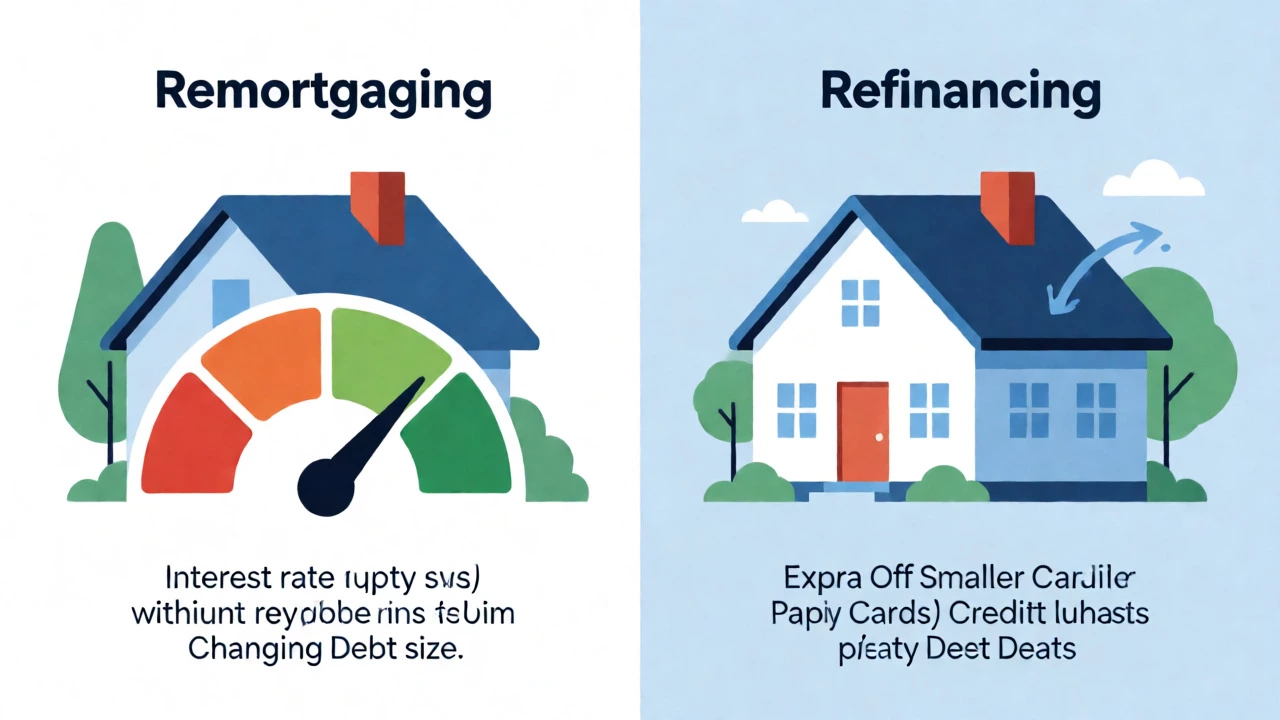
Remortgaging is the process of switching your existing mortgage deal to a new one, either with your current lender or a different one, without changing the total amount you owe significantly. Think of it as renewing your phone contract. You keep the same phone (your house), but you swap your plan (your interest rate and terms) to get better value.
Most people remortgage for two main reasons:
- To lower monthly payments: If your current rate has expired and reverted to a high Standard Variable Rate (SVR), moving to a new fixed rate can slash your bills.
- To lock in certainty: Fixed rates protect you from future interest rate hikes by the Central Bank.
In Ireland, when you remortgage, you usually stay with the same loan balance. If you owed €150,000 last month, you still owe roughly €150,000 today, minus whatever principal you paid down. The goal here is efficiency-getting a better price for the same debt.
So, What Is Refinancing?
Refinancing is a broader term that involves replacing an existing debt obligation with a new one under different terms, which may include borrowing more or less money. While remortgaging is a *type* of refinancing, refinancing isn’t always just a remortgage.
The key difference lies in the intent and the numbers. When you refinance, you might be restructuring your entire financial picture. For example, you might consolidate several debts into your mortgage, or you might extend your mortgage term from 20 years to 30 years to lower monthly costs, even if it means paying more interest over time.
| Feature | Remortgaging | Refinancing |
|---|---|---|
| Primary Goal | Better interest rate/terms | Restructure debt, access cash, or change terms |
| Loan Amount | Stays roughly the same | Can increase (equity release) or decrease (payoff) |
| Lender | Same or new lender | Usually new lender, sometimes same |
| Complexity | Low to Medium | Medium to High |
| Common Use Case | Switching from SVR to Fixed Rate | Consolidating credit card debt or funding renovations |
The Irish Context: Why Terminology Matters Here
If you’re reading this in Dublin, Cork, or Galway, you’ll notice that Irish banks like AIB, Bank of Ireland, and Permanent TSB often use these terms loosely in their marketing. However, the legal paperwork tells a different story.
When you sign up for a new deal with your current bank because your fixed period ended, they will call it a "rate change" or "renewal." Technically, this is remortgaging. No new deed of mortgage is typically registered if the amount hasn't changed. It’s a simple administrative update.
But if you go to a competitor bank to borrow an extra €20,000 on top of your existing balance to fix your roof, that is refinancing. Why? Because you are taking out a new loan secured against your property that differs in size from the old one. This triggers a full legal conveyance process. You’ll need a solicitor, new searches, and potentially stamp duty implications depending on how the funds are used.
Costs Involved: Where the Money Goes
Both processes come with fees, but the bill looks different for each.
For Remortgaging:
- Application Fee: Often waived by competitors trying to win your business, but your current bank might charge €250-€500.
- Valuation Fee: Usually free if staying with the same bank; €150-€300 if switching.
- Legal Fees: Minimal if no new title deeds are needed.
For Refinancing:
- Solicitor’s Fees: Expect to pay €800-€1,500 plus VAT because new legal documents must be drafted and registered.
- Searches: Local authority and land registry searches add another €100-€200.
- Early Repayment Charges (ERC): If you’re breaking a fixed rate early to refinance, this can hit hard. Check your contract!
Here’s a rule of thumb: If the savings from a remortgage don’t cover the setup costs within 18 months, think twice. With refinancing, you need to weigh the upfront legal costs against the long-term benefit of accessing equity or consolidating higher-interest debt.
When Should You Choose One Over the Other?
Let’s look at three common scenarios to help you decide.
Scenario 1: The Rate Hike Shock You’re nearing the end of a 3-year fixed rate. Interest rates have risen. You want stability. Action: Remortgage. Shop around for the best fixed rate. Keep the loan amount the same. Don’t complicate it with extra borrowing unless necessary.
Scenario 2: The Debt Consolidation Dream You have €10,000 in credit card debt at 18% APR and a mortgage at 4%. You want to lower your monthly outgoings. Action: Refinance. Apply for a larger mortgage that pays off the cards. Yes, you’ll pay interest for longer, but your monthly cash flow improves, and you simplify your life. Just be careful not to run up the credit cards again!
Scenario 3: The Home Extension You want to build a rear extension costing €50,000. You have enough equity in your home. Action: Refinance. You’re borrowing new capital. This requires a new valuation and likely a new lender if your current one doesn’t offer competitive construction loans.

How to Prepare for Either Process
Whether you’re remortgaging or refinancing, preparation is half the battle. Banks in Ireland are stricter now than they were ten years ago due to macroprudential rules set by the Central Bank.
- Clean Up Your Credit Report: Check your details on the Central Credit Register. Late payments on other loans can kill your application.
- Gather Income Proof: Have your P60s, payslips for the last 3-6 months, and bank statements ready. Self-employed individuals need tax returns going back two years.
- Know Your Equity: Calculate your Loan-to-Value (LTV). If you owe €100k on a €200k house, your LTV is 50%. Lower LTVs get better rates.
- Get Independent Advice: A mortgage broker can compare products across all lenders, not just your own bank’s shelf.
Common Pitfalls to Avoid
Don’t fall into these traps:
Ignoring Early Repayment Charges: Many people see a lower rate elsewhere and jump ship, only to find a 2% ERC wipes out their first year’s savings. Always calculate the break-even point.
Extending the Term Too Long: Refinancing to lower monthly payments by stretching the term to 35 years sounds nice, but you could end up paying double the total interest compared to a 20-year term. Do the math on total cost, not just monthly cost.
Assuming Automatic Renewal: If you do nothing when your fixed rate ends, you revert to the SVR, which is often 2-3% higher than market rates. Be proactive. Start shopping 6 months before expiry.
Understanding the difference between remortgaging and refinancing empowers you. It stops you from signing up for complex legal work when you just needed a rate tweak, and it ensures you get the right product when you actually need cash. Talk to a professional, check your numbers, and make sure your next move aligns with your actual goals, not just the buzzwords.
Is remortgaging cheaper than refinancing?
Generally, yes. Remortgaging usually involves fewer legal steps and lower fees because the loan amount doesn't change significantly. Refinancing often requires new legal documentation, searches, and registration, leading to higher upfront costs.
Can I remortgage to release equity?
Yes, but strictly speaking, once you borrow more than you currently owe, it becomes refinancing. Some brokers might still call it a remortgage, but legally and procedurally, it's treated as a new loan facility.
Do I need a solicitor for remortgaging?
If you stay with the same lender and the loan amount doesn't change, you often don't need a solicitor. If you switch lenders or borrow additional funds, a solicitor is required to handle the transfer of the mortgage deed.
Will remortgaging affect my credit score?
A soft search during initial quotes won't hurt your score. However, a full application involves a hard search. Multiple hard searches in a short period can temporarily lower your score, so apply strategically.
Is it worth refinancing to pay off credit cards?
It depends. Mortgage interest is lower than credit card interest, but you secure the debt against your home. Only do this if you commit to not using the credit cards again. Otherwise, you risk accumulating new debt while still owing the mortgage.