
Every year in Ireland, thousands of homeowners pay more than they need to for home insurance-just because they never looked elsewhere. It’s easy to assume your current provider is the best deal, especially if you’ve been with them for years. But here’s the truth: shop around for home insurance isn’t just a smart move-it’s one of the easiest ways to cut hundreds off your annual bill.
Why you’re probably overpaying right now
Most people stick with the same home insurance provider because it’s convenient. You got the quote when you bought your house, signed up online, and never thought about it again. But insurance companies don’t reward loyalty. They reward new customers. In 2025, data from the Central Bank of Ireland showed that customers who switched providers saved an average of €320 per year on their home insurance. Those who stayed with their original provider saw premiums rise by 8% on average-mostly because of inflation, claims trends, and rising repair costs. Meanwhile, new customers got discounts of up to 20% just to sign up. It’s not about being disloyal. It’s about being informed. Your insurer knows you’re unlikely to leave, so they don’t compete for your business. That’s why you’re paying more than someone who just signed up down the street.What changes when you shop around
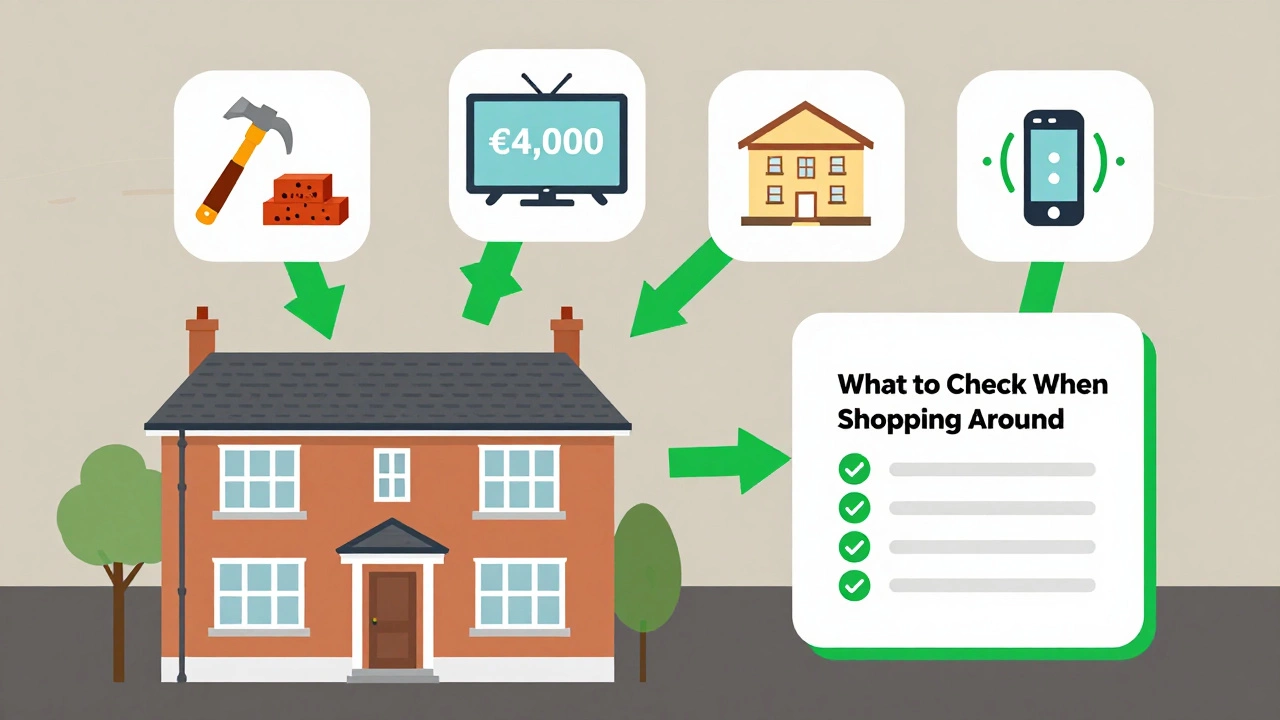
When you compare quotes, you’re not just looking at price. You’re checking what’s actually covered. Many policies sound similar but have big differences:- Rebuild cost vs. market value: Some insurers base your cover on how much your house would sell for. That’s wrong. You need coverage for the cost to rebuild it from scratch-materials, labor, permits. In Dublin, the average rebuild cost for a three-bedroom semi is now €320,000. If your policy only covers €250,000, you’re underinsured.
- Contents coverage: Are your electronics, jewelry, and tools included? Some policies cap items at €1,500 per piece. If you own a €4,000 TV, you’ll be out of pocket if it’s stolen.
- Alternative accommodation: If your home is damaged and you can’t live there, will they pay for a hotel? Not all do. Some limit it to 12 months. Others cap it at €5,000 total.
- Excess amounts: A cheaper premium might mean a €1,000 excess. That’s the amount you pay before the insurer steps in. If you have a small claim, you might end up paying more out of pocket than you saved.
How to shop around the right way
You don’t need to spend hours comparing 10 quotes. Here’s how to do it in under 30 minutes:- Know your numbers: Get your current policy details: rebuild cost, contents value, security features (alarms, locks), and claims history. You’ll need these for accurate quotes.
- Use one comparison site: Stick to one reputable site like MoneySuperMarket or ComparetheMarket.ie. Don’t waste time on five different ones-they all pull from the same insurers.
- Check direct quotes too: Some of the cheapest deals aren’t on comparison sites. Go straight to insurers like Allianz, AXA, or FBD. They often have exclusive online discounts.
- Look beyond price: Read the fine print. A €100 cheaper policy might exclude storm damage or have a 30-day waiting period for theft claims.
- Ask about multi-policy discounts: If you have car insurance with the same company, ask if bundling saves money. In 2025, bundling saved Irish homeowners an average of €140 per year.
When not to switch
It’s not always smart to switch. Here are three times to stay put:- You’ve made a claim in the last 12 months: Insurers who know you’ve claimed may charge more or refuse coverage. Wait at least 18 months before switching.
- Your home has unusual features: Old stone walls, thatched roofs, or listed buildings may need specialist insurers. Don’t risk getting a quote from a standard provider that won’t cover you properly.
- You’re in the middle of a renovation: If you’re building an extension or rewiring, your policy may need updates. Wait until it’s done to avoid coverage gaps.
Real savings: What people actually paid
Last year, a homeowner in Cork switched from a long-term provider to a new insurer. Her rebuild cost was €280,000, contents €45,000. Her old policy cost €890/year. The new one, with better coverage for electronics and storm damage, cost €580. She saved €310-and got higher limits on everything. Another family in Galway had been paying €1,100 for years. After comparing, they found a policy that included legal expenses and accidental damage to floors for €670. They also got a 10% discount for installing a smart alarm. These aren’t rare cases. They’re typical.
What happens if you don’t shop around
The longer you wait, the more you lose. Premiums keep rising. In 2025, home insurance inflation in Ireland hit 9.3%, the highest in five years. That’s because of:- Rising construction costs (up 14% since 2022)
- More flood and storm claims
- Insurance companies tightening underwriting
Bottom line: Do it every 12 to 18 months
You don’t need to switch every year. But you should compare quotes at least once every 12 to 18 months. Set a reminder on your phone. When your renewal date comes up, spend 20 minutes checking new deals. You’ll almost always find something better. It’s not complicated. It’s not risky. And it doesn’t take long. But it can save you hundreds-maybe even over a thousand-over the next few years.Don’t wait for your insurer to remind you. Take control. Shop around. Save money. Protect your home better.
Is it worth switching home insurance providers?
Yes, especially if you haven’t compared quotes in over a year. Most insurers raise prices for loyal customers while offering discounts to new ones. In Ireland, switching saved people an average of €320 in 2025. Even if you don’t change, seeing what’s available helps you spot if your current policy is falling behind.
Can I get home insurance if I’ve made a claim?
Yes, but it’s harder and more expensive. After a claim, insurers see you as higher risk. You’ll still find coverage, but expect higher premiums or higher excesses. Wait at least 18 months after a claim before switching-this gives your record time to improve and gives you better options.
What’s the difference between rebuild cost and market value?
Market value is what your house would sell for today. Rebuild cost is how much it would cost to demolish and rebuild it from the ground up, including materials, labor, and permits. Insurance should cover rebuild cost-not market value. If your policy is based on market value, you could be underinsured by 20-30%, especially in cities like Dublin where construction costs are high.
Do I need to insure my home for its full rebuild cost?
Yes. If you’re underinsured, insurers may only pay a portion of your claim. For example, if your rebuild cost is €300,000 but you’re insured for €200,000, you’re only 67% covered. If you have a €100,000 claim, they’ll only pay €67,000. You’d need to cover the rest yourself. Always get a professional rebuild cost estimate.
Can I bundle home and car insurance to save money?
Yes, and it’s one of the easiest ways to save. In 2025, Irish households that bundled home and car insurance saved an average of €140 per year. Some insurers offer even more if you pay annually instead of monthly. Just make sure the bundled policy still offers the coverage you need-don’t sacrifice quality for price.