
$100k Life Insurance Cost Estimator
Your Profile
Estimated Monthly Premium
You might be expecting a bill for hundreds of dollars. You’re not. For most healthy adults, getting $100,000 in life insurance costs less than your monthly streaming subscription or a tank of gas. In fact, many people pay between $5 and $30 a month for this coverage. But that number isn’t fixed. It swings wildly based on your age, health, and the type of policy you pick.
If you are trying to protect your family’s finances without breaking the bank, understanding these costs is crucial. A $100,000 policy is often the entry point for new parents, young professionals, or those with modest debts. It’s enough to cover final expenses, clear out a small car loan, or provide a temporary safety net for a spouse who doesn’t work outside the home. Let’s break down exactly what you will pay and why.
The Real Cost: Monthly Premium Estimates by Age
The single biggest factor driving your price is age. Insurance companies bet on statistics, and statistically, older people die sooner than younger people. So, as you get older, the risk-and your premium-goes up. Here is what a healthy non-smoker can expect to pay for a standard 20-year term life policy with a $100,000 death benefit in 2026.
| Age Group | Monthly Cost Range | Annual Cost |
|---|---|---|
| 20-24 years old | $5 - $10 | $60 - $120 |
| 25-29 years old | $8 - $15 | $96 - $180 |
| 30-34 years old | $10 - $20 | $120 - $240 |
| 35-39 years old | $15 - $25 | $180 - $300 |
| 40-44 years old | $20 - $35 | $240 - $420 |
| 45-49 years old | $30 - $50 | $360 - $600 |
| 50+ years old | $50 - $100+ | $600 - $1,200+ |
Notice how the price stays incredibly low until you hit your late 40s. If you are in your 20s or early 30s, locking in a rate now is one of the smartest financial moves you can make. You are essentially buying time at a discount. By the time you are 50, that same $100,000 coverage could cost double or triple what it does today.
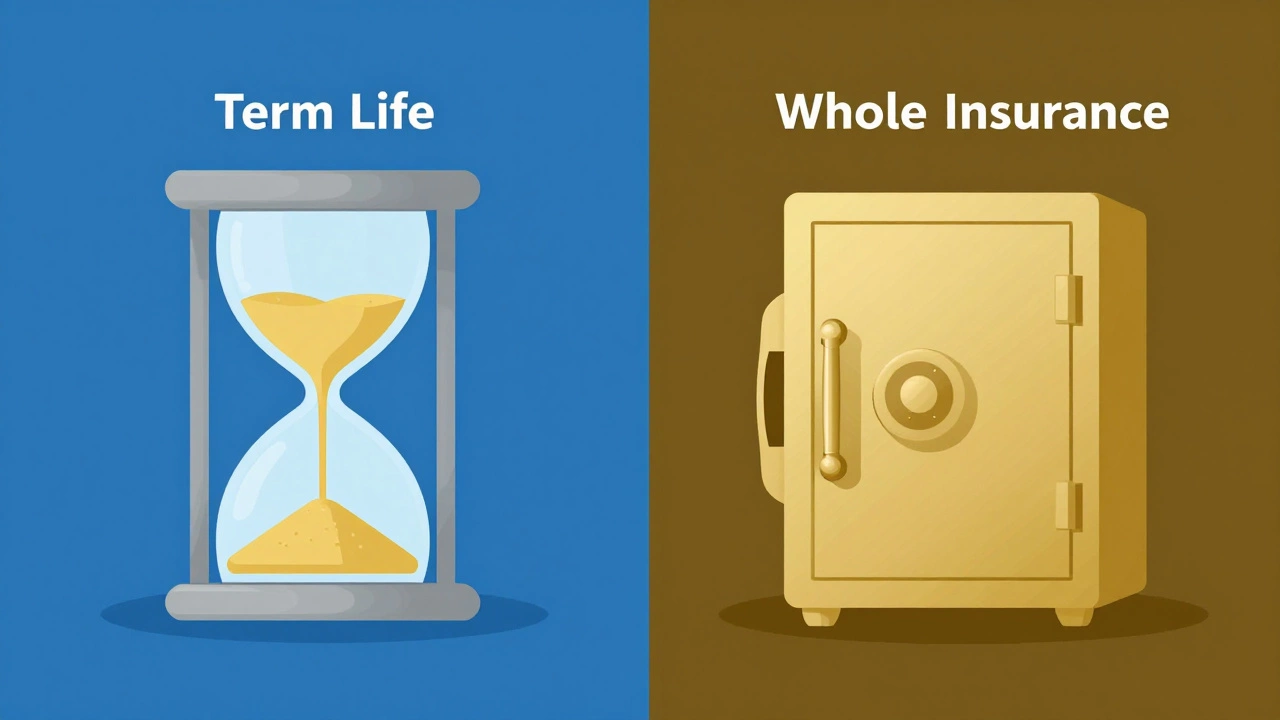
Term vs. Whole Life: Which One Are You Buying?
When people ask about the cost of life insurance, they usually mean Term Life Insurance, which is coverage that lasts for a specific period, like 10, 20, or 30 years. This is the cheapest option because it expires. If you outlive the term, the policy ends, and you get nothing back. But for most families, this is exactly what they need. You want coverage while your kids are young and your mortgage is high. Once the kids are grown and the house is paid off, you likely don’t need the money anymore.
Then there is Whole Life Insurance, which is permanent coverage that lasts until you die, no matter when that happens. Whole life policies include a cash value component that grows over time, acting like a savings account. However, this convenience comes at a steep price. A $100,000 whole life policy for a 30-year-old might cost $50 to $100 a month or more. That is five to ten times the cost of term life. Unless you have a specific estate planning need or maxed out all other tax-advantaged retirement accounts, whole life is rarely the best bang for your buck for average earners.
Health Factors That Spike Your Rate
Your age sets the baseline, but your health determines where you land within that range. Insurers classify applicants into risk tiers. The lower the tier, the cheaper the premium. Here is what underwriters look at:
- Body Mass Index (BMI): Extreme weight, either too high or too low, can signal health risks. A BMI between 18.5 and 25 is ideal for getting the best rates.
- Blood Pressure and Cholesterol: High readings here suggest heart disease risk. If your numbers are borderline, treating them before applying can save you hundreds of dollars a year.
- Smoking Status: This is the big one. Smokers pay significantly more-often two to three times the rate of non-smokers. Even vaping or occasional marijuana use can sometimes trigger higher "tobacco user" rates depending on the carrier.
- Family Medical History: If your parents or siblings died young from heart disease or cancer, insurers see you as higher risk. They may require additional tests or charge a slightly higher premium.
Most term life applications require a medical exam. An agent will visit your home to take blood pressure, height, weight, and collect blood and urine samples. Some companies offer "no-exam" policies, but be careful. These are convenient, but they are much more expensive because the insurer has less data about you. They also often have exclusions if you die within the first two years from natural causes.
Why $100,000 Might Not Be Enough (Or Too Much)
Before you sign up, ask yourself: Does $100,000 actually solve the problem? Life insurance is meant to replace income or pay off debts. If you earn $60,000 a year and pass away tomorrow, your family needs more than $100,000 to maintain their lifestyle. A common rule of thumb is to multiply your annual income by 10 to 15. For that $60,000 earner, that means $600,000 to $900,000 in coverage.
However, $100,000 makes sense in specific scenarios:
- Covering Final Expenses: Funerals, burial plots, and outstanding medical bills can easily run $10,000 to $20,000. A $100,000 policy covers this with plenty left over for small debts.
- Payoff Specific Debts: If you have a $15,000 car loan and $10,000 in credit card debt, this policy clears that slate so your heirs aren’t stuck with payments.
- Supplemental Coverage: Maybe you already have a group life policy through work that covers 1x your salary ($60,000). Adding a $100,000 private policy brings your total to $160,000, which might be sufficient for your current needs.
On the flip side, if you have no dependents, no significant debt, and a partner who earns enough to support the household alone, you might not need any life insurance at all. Don’t buy it just because you can afford it. Buy it because someone else would suffer financially if you vanished.

Hidden Costs and Policy Features
The monthly premium is the main cost, but there are nuances. First, check for riders. A rider is an add-on feature. Common ones include:
- Waiver of Premium: If you become disabled and can’t work, the insurer pays your premiums for you. This is worth adding if you rely on your job to keep the policy active.
- Accidental Death Rider: Pays double if you die in an accident. Usually cheap, but often unnecessary if your base coverage is adequate.
- Child Term Rider: Covers your children. Often included for free or a low fee, but remember that child life insurance payouts are small and rarely needed unless there are special circumstances.
Also, watch out for level vs. graded benefits. Level benefit policies pay the full amount immediately upon death. Graded benefit policies (common in no-exam plans) might only pay a return of premiums plus interest if you die within the first few years from illness. Always read the fine print on when the full death benefit kicks in.
How to Get the Lowest Rate Possible
You don’t have to accept the first quote you see. Life insurance shopping is competitive. Here is how to hack the system:
- Get Multiple Quotes: Use online aggregators or talk to independent agents who represent multiple carriers. Rates vary wildly between companies for the exact same profile.
- Improve Your Health Before Applying: If you can wait 3-6 months, lose weight, quit smoking, or get your blood pressure under control. Even small improvements can drop you into a better risk class.
- Lock in a Long Term: A 20-year or 30-year term locks in your rate for decades. Yes, the monthly payment is slightly higher than a 10-year term, but it protects you from skyrocketing rates as you age. Plus, you can convert many term policies to permanent insurance later without a new exam.
- Apply Early: As mentioned, age is the biggest driver. Applying at 30 instead of 35 saves you thousands over the life of the policy.
Remember, the goal is to transfer risk efficiently. You want to pay the minimum necessary to ensure your loved ones are protected. For a $100,000 policy, that minimum is shockingly low for most healthy people. Take advantage of that affordability while you can.
Is $100,000 in life insurance enough for a family?
It depends on your debts and income. $100,000 is generally enough to cover final funeral expenses (around $10,000-$15,000), pay off smaller debts like cars or credit cards, and provide a short-term buffer for a surviving spouse. However, if you are the primary breadwinner with a mortgage and young children, $100,000 is likely insufficient. Most financial advisors recommend coverage equal to 10-15 times your annual income to truly replace lost wages.
Do I need a medical exam for $100,000 life insurance?
Not always, but it helps you save money. Traditional term life policies require a brief medical exam (blood draw, urine sample, height/weight/blood pressure) conducted by a nurse at your home. This allows insurers to offer the lowest rates because they have verified your health status. No-exam policies exist but cost significantly more and may have waiting periods before full benefits apply.
Will my life insurance go up in price later?
With level-term life insurance, your premium stays the same for the entire duration of the term (e.g., 20 years). If you choose a renewable term policy, the price will increase every year as you get older. To avoid rising costs, lock in a long-term level-rate policy when you are young and healthy.
Can I get life insurance if I have bad health?
Yes, but it will be more expensive. People with conditions like diabetes, heart disease, or obesity can still get approved for term life, but they may fall into a "substandard" or "rated" class, meaning premiums are 25% to 100% higher. If you cannot qualify for traditional term life, guaranteed issue whole life policies are available, but they are very costly and have low face values.
Is term life or whole life better for a $100,000 policy?
For most people seeking basic protection, term life is the better choice. It offers the highest coverage for the lowest cost. Whole life insurance is permanent and builds cash value, but it is much more expensive. Unless you have a specific need for permanent coverage (like estate taxes or a dependent with special needs who will require care forever), term life provides better financial efficiency.