
Equity Release Interest Calculator
See How Your Debt Grows Over Time
Enter your loan details to see how compound interest affects your equity release. Remember: you don't pay monthly, but your debt grows.
When you hear the phrase "equity release," your first thought might be: "Can I get cash from my house without selling it?" The answer is yes. But the big question most people ask right after that is: Do I pay interest on equity release? And the truth is, you absolutely do - but not in the way you might expect.
How equity release actually works
Equity release lets homeowners aged 55 or older unlock money tied up in their home. You don’t have to move out. You don’t have to make monthly payments. But you’re still borrowing money. And borrowing always comes with a cost: interest. There are two main types of equity release in Ireland and the UK: lifetime mortgages and a type of loan secured against your home that lasts for the rest of your life, and home reversion and a plan where you sell part or all of your home in exchange for a lump sum or regular payments. Most people choose lifetime mortgages - they’re simpler, more flexible, and make up over 90% of all equity release deals. With a lifetime mortgage, you keep full ownership of your home. The lender gives you cash, and you owe them back - plus interest - when you die, move into long-term care, or sell the property.Yes, you pay interest - but it compounds
Unlike a regular mortgage where you pay down the loan each month, with a lifetime mortgage, interest builds up over time. This is called compound interest. That means you’re not just paying interest on the original amount you borrowed. You’re paying interest on the interest that’s already been added. Let’s say you take out €80,000 at an annual interest rate of 5.5%. In the first year, you owe €4,400 in interest. That gets added to your debt. In year two, you owe interest on €84,400 - not just €80,000. After 10 years, your debt could be over €130,000 - even if you never paid a single euro. This isn’t a trick. It’s how the product is designed. But it catches people off guard. Many assume they’ll pay back small amounts over time. They don’t realize the debt can grow faster than their home’s value.What’s the average interest rate?
As of early 2026, interest rates on lifetime mortgages range from 5.2% to 7.8%. The exact rate depends on your age, the value of your home, and how much you’re borrowing. Older homeowners usually get better rates. Why? Because the lender expects to get their money back sooner. For example:- A 70-year-old homeowner might get 5.4% on €100,000
- A 65-year-old might pay 6.1% for the same amount
- A 60-year-old could face 6.9% or higher
There’s no monthly payment - but the debt grows
One of the biggest selling points of equity release is that you don’t have to make monthly payments. That’s true. But here’s what no one tells you: not paying means the debt grows. Think of it like a balloon. Every year, the balloon gets bigger. If you live 20 years after taking out the loan, your debt could double - or triple. A €120,000 loan at 6% interest could balloon to €385,000 in two decades. That’s why financial advisers always warn: equity release is not free money. It’s a long-term loan with compounding costs. And when the time comes to repay - usually after your death - your estate pays it back from the sale of the home.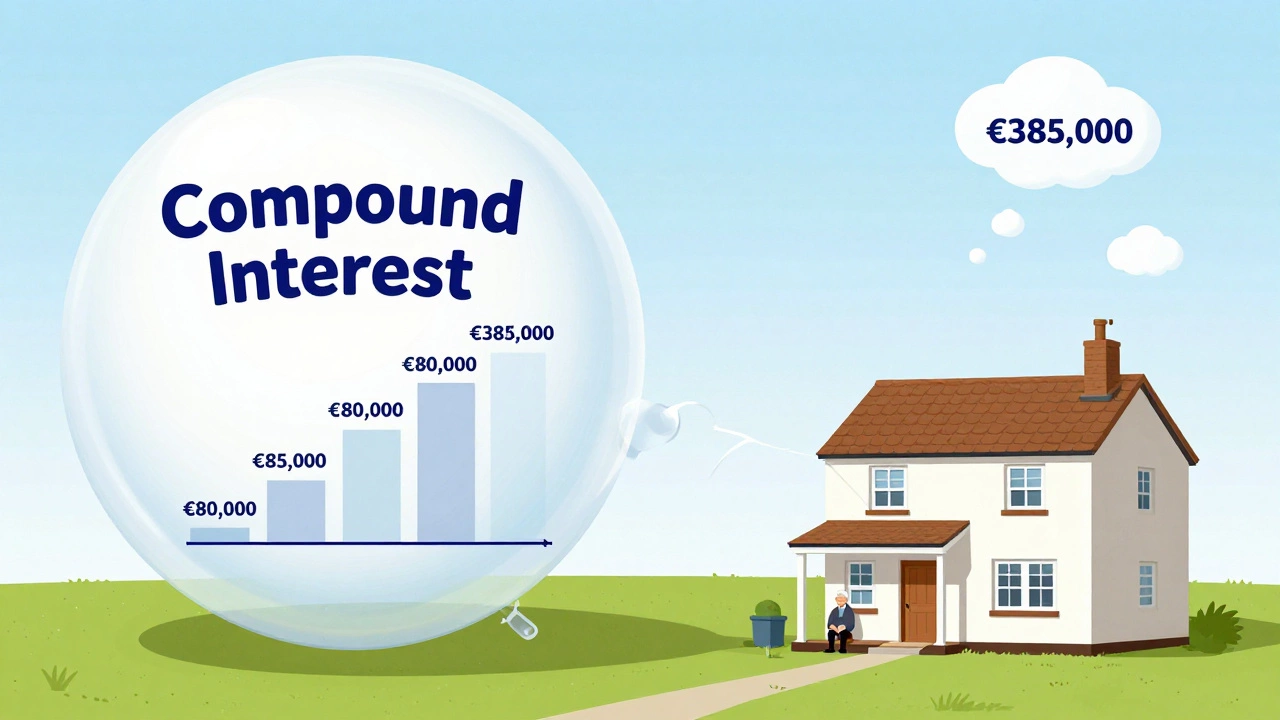
What happens if your home isn’t worth enough?
In Ireland and the UK, all regulated equity release products include a no-negative-equity guarantee and a legal promise that you or your estate will never owe more than the value of your home. This is non-negotiable. If your home sells for €250,000 but you owe €300,000, the lender eats the difference. This protection exists because of strict rules from the Equity Release Council and similar Irish financial watchdogs. It’s one of the few consumer safeguards in this market. But here’s the catch: that guarantee doesn’t stop your heirs from losing everything. If the home sells for less than the debt, they get nothing. Even if the home sells for more, the lender takes its cut first.Can you avoid paying interest?
Technically, yes - but only if you never take out equity release. If you do, interest is baked in. Some providers let you pay interest voluntarily. You can choose to pay monthly interest to stop it from compounding. This keeps your debt stable. For example:- Without payments: €100,000 at 6% grows to €180,000 in 10 years
- With monthly interest payments: €100,000 stays €100,000
Who should avoid equity release?
Not everyone should consider this. Here are red flags:- You’re under 55 - you don’t qualify
- You plan to move soon - you’ll pay early repayment fees
- You have other debts with lower interest - pay those first
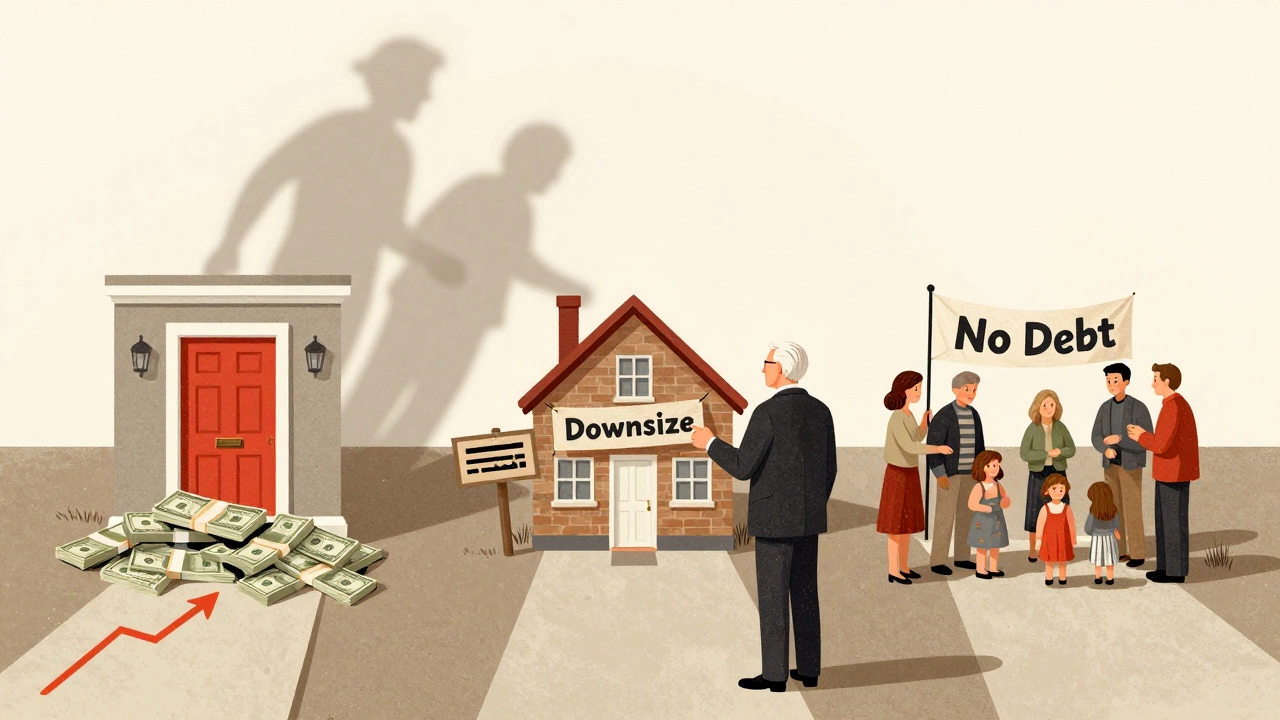
- You want to leave your home to your kids - equity release can wipe that out
- You’re in poor health - you might die soon, and your family gets stuck with a messy sale
Alternatives to consider
Before signing anything, ask yourself: is there another way?- Sell and downsize: Sell your current home, buy a smaller one, and pocket the difference. No interest. No debt.
- Family loan: Borrow from a child or relative with no interest or low interest. It’s informal, but it works.
- State support: In Ireland, you may qualify for the Household Benefits Package or Fuel Allowance - free money that doesn’t need repaying.
- Part-time work: Even €500/month extra can cover bills without touching your home.
What to do next
If you’re seriously considering equity release:- Get a free, impartial consultation from a Financial Conduct Authority (FCA) and the regulatory body in the UK that oversees financial services-regulated adviser. They’re legally required to act in your best interest.
- Ask for quotes from at least three providers. Rates vary wildly.
- Run the numbers. Use an online equity release calculator to see how your debt grows over 5, 10, and 20 years.
- Talk to your family. They’ll be the ones dealing with the fallout.
- Read the fine print. Watch for exit fees, early repayment penalties, and guaranteed minimum values.
Do I have to pay interest on equity release?
Yes, you do. With lifetime mortgages, interest is charged on the amount you borrow and compounds over time. You don’t make monthly payments, but the interest adds up, and your debt grows. The longer you live, the more you owe. Home reversion plans don’t charge interest, but you give up ownership of part of your home.
Can I avoid paying interest on equity release?
You can avoid compounding interest by choosing a lifetime mortgage with voluntary interest payments. If you pay the monthly interest as it accrues, your original loan amount stays the same. This prevents your debt from ballooning. Most lenders allow this, but it’s not automatic - you have to ask for it.
Is equity release the same as a reverse mortgage?
Yes, in most cases. "Reverse mortgage" is the term used in the US and Canada. In Ireland and the UK, it’s called a lifetime mortgage. The structure is nearly identical: you borrow against your home’s value, don’t make monthly payments, and repay when you die or move out. The rules and protections are slightly different, but the core idea is the same.
What happens if my home loses value?
If your home loses value and sells for less than your debt, you or your estate won’t owe the difference. All regulated equity release products include a no-negative-equity guarantee. The lender absorbs the loss. But your family still gets nothing if the home doesn’t cover the full debt.
Can I still leave my home to my children?
It depends. If your home sells for more than the debt, your heirs get the leftover money. But if the debt grows too large - which it often does - there may be nothing left. Many families are surprised to find their inheritance wiped out. Planning ahead with interest payments or downsizing can help protect your legacy.