
Bitcoin Capital Gains Calculator
Enter your transaction details below to estimate your taxable gain or loss. Remember, taxes are typically triggered only when you sell, trade, or spend Bitcoin.
Transaction Details
Enter your transaction details to see your estimated tax impact.
Estimated Result
You bought some Bitcoin when it was cheap, held onto it through the wild swings, and now you’re sitting on a nice pile of profit. Or maybe you just traded one coin for another. Either way, that little voice in your head is asking: do I have to pay taxes on this?
The short answer is yes-but not necessarily right now, and not always in the way you think. The IRS doesn’t care about your feelings regarding market volatility; they care about taxable events. Whether you live in the US, UK, or Ireland, the core principle remains similar: if you realize a gain, the government wants a slice.
Quick Summary
- Taxes trigger on sales: You generally only owe tax when you sell Bitcoin for fiat currency (like USD or EUR), not when you hold it.
- Spending counts as selling: Buying a coffee with Bitcoin is a taxable event because you disposed of the asset.
- Cost basis matters: Your tax bill depends on how much you paid for the Bitcoin versus what you sold it for.
- Record-keeping is non-negotiable: Without clear records of purchase dates and prices, you might overpay taxes or face audits.
What Actually Triggers a Tax Event?
Many new investors assume that seeing their portfolio value jump from $5,000 to $15,000 means they owe money to the taxman immediately. It doesn’t work that way. Unrealized gains-where you still hold the coin-are typically not taxed until you convert them into something else. This concept applies across most major jurisdictions, including the United States, the United Kingdom, and Ireland.
A taxable event occurs when you dispose of your Bitcoin. This includes:
- Selling for cash: Converting Bitcoin into dollars, euros, or pounds.
- Trading for other crypto: Swapping Bitcoin for Ethereum or Solana is treated as selling the Bitcoin and buying the new coin simultaneously.
- Using it to buy goods: If you use Bitcoin to buy a laptop, you are technically selling the Bitcoin at its current market rate to make the purchase.
- Earning it: If you received Bitcoin as payment for services or mining rewards, that income is taxed at its fair market value on the day you received it.
If you simply moved Bitcoin from one exchange to your personal hardware wallet, that’s usually not a taxable event. It’s like moving money from your checking account to your savings account. The asset hasn’t changed hands; you’ve just changed where you keep it.
Capital Gains vs. Income: Which Bucket Does Your Bitcoin Fall Into?
How you classify your activity determines your tax rate. For most individual investors, Bitcoin transactions fall under Capital Gains Tax. This tax applies to the profit you make when you sell an asset for more than you paid for it.
However, if you trade frequently enough to be considered a "trader" rather than an investor, or if you earn Bitcoin through work, it might be classified as ordinary income. In the US, for example, short-term capital gains (assets held for less than a year) are taxed at your regular income tax rate, which can be significantly higher than long-term rates. Long-term capital gains (held for over a year) often enjoy preferential treatment.
In Ireland, where I’m based, the distinction is slightly different. We don’t have a separate capital gains tax for individuals in the same way the US does; instead, profits from disposing of assets are subject to Capital Acquisition Tax or Income Tax depending on the nature of the holding. For most casual holders, it’s treated as a capital disposal, currently taxed at 33%. But if you’re running a business accepting crypto, it becomes part of your trading income.
Calculating Your Bill: Cost Basis and FIFO
To figure out how much tax you owe, you need two numbers: the sale price and the cost basis. The cost basis is essentially what you paid for the Bitcoin, including any fees associated with the purchase.
Imagine you bought 1 BTC for $20,000 in January. In November, you sell it for $40,000. Your gross proceeds are $40,000. Subtract the $20,000 cost basis, and you have a $20,000 capital gain. That $20,000 is the amount subject to tax.
But what if you bought Bitcoin multiple times at different prices? Say you bought 0.5 BTC at $10,000 and another 0.5 BTC at $30,000. Now you hold 1 BTC with an average cost basis of $20,000. If you sell 0.5 BTC later, which lot did you sell? Did you sell the expensive one or the cheap one?
Most tax authorities default to FIFO (First-In, First-Out). This assumes you sold the oldest coins first. However, many jurisdictions allow Specific Identification, letting you choose exactly which units you sold. This gives you control over your tax liability. Selling high-cost-basis coins first reduces your immediate tax bill. Always check your local rules before assuming you can pick and choose.
| Scenario | Bought Lot 1 | Bought Lot 2 | Sold Amount | Gain Calculation |
|---|---|---|---|---|
| FIFO Method | 1 BTC @ $10k | 1 BTC @ $30k | 1 BTC @ $40k | $40k - $10k = $30k Gain |
| Specific ID (High Cost) | 1 BTC @ $10k | 1 BTC @ $30k | 1 BTC @ $40k | $40k - $30k = $10k Gain |

The Hidden Trap: Spending Bitcoin
This catches people off guard every time. You have a friend who loves their new electric car and wants to pay for it in Bitcoin. They transfer 0.1 BTC to the dealership. They think, "I didn't sell anything, I just spent my crypto." Wrong.
When you spend Bitcoin, you are legally disposing of it. You must calculate the fair market value of that Bitcoin in your local currency at the exact moment of the transaction. If you bought that 0.1 BTC for $2,000 years ago, and today it’s worth $6,000, you just realized a $4,000 capital gain. You owe tax on that $4,000, even though you never touched a dollar bank account.
This makes small purchases tricky. Tracking the cost basis for every single cup of coffee bought with crypto can become a nightmare. Many experts recommend keeping a separate "spending pot" of Bitcoin purchased specifically for daily use, so you don’t accidentally liquidate your long-term holdings and trigger unexpected taxes.
International Nuances: US, UK, and Ireland
Since tax laws vary wildly by country, here’s a quick snapshot of how things look in three common regions as of late 2026.
United States: The IRS treats cryptocurrency as property. You report gains on Form 8949 and Schedule D. There is no special "crypto tax" category; it follows standard capital gains rules. If you mine crypto, it’s ordinary income upon receipt.
United Kingdom: HMRC views crypto as an asset, not currency. You pay Capital Gains Tax on disposals. Each person has an annual tax-free allowance (the Annual Exempt Amount). If your total gains for the year are below this threshold, you pay zero tax. Keep detailed records because HMRC is increasingly using data-matching powers to spot unreported trades.
Ireland: As mentioned earlier, there is no specific crypto tax regime. It falls under general tax law. Personal investors pay Capital Gains Tax at 33% on profits. However, there is a significant exemption for personal chattels (movable property), but crypto rarely qualifies as a chattel. Instead, it’s treated similarly to shares. If you are a trader, you pay Income Tax (up to 55% with USC and PRSI) plus potential Capital Gains implications. Always consult a local accountant because Irish Revenue Commissioners have been tightening scrutiny on digital assets recently.
Tools and Record Keeping
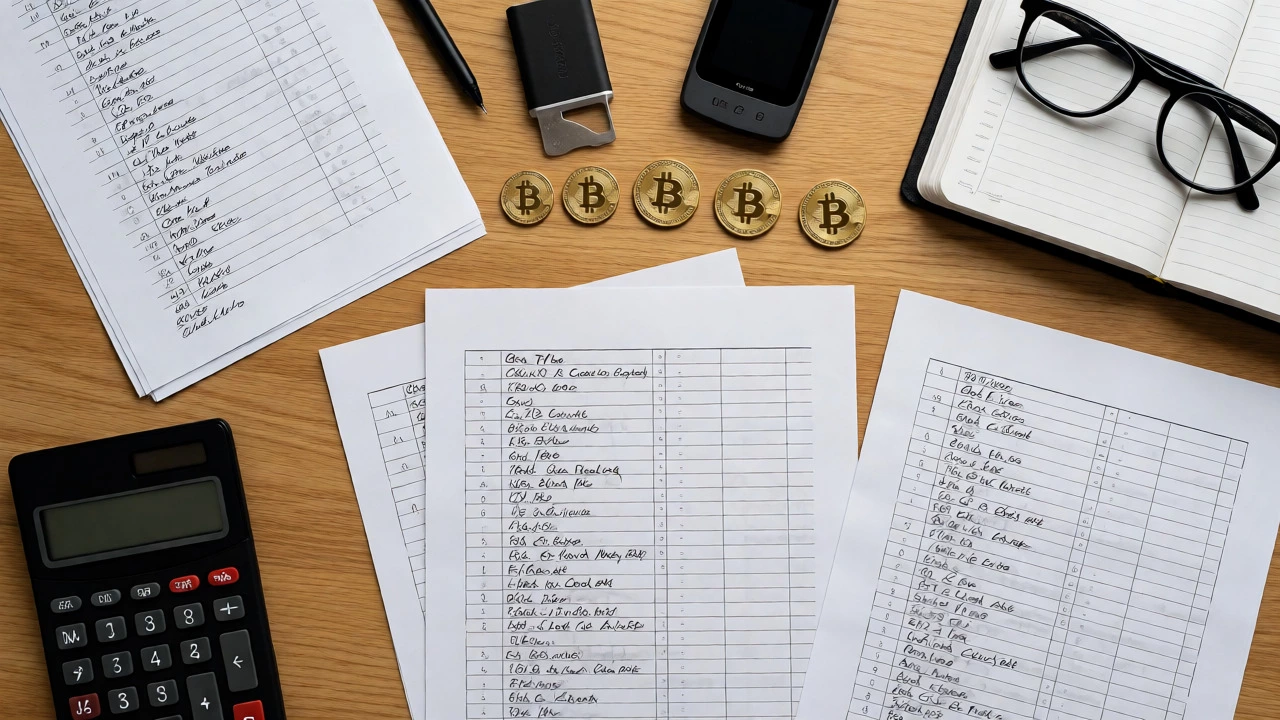
Trying to calculate this manually in Excel is possible but painful. One missed trade or wrong date can skew your entire year. Most serious investors use specialized software. Platforms like Koinly, CoinTracker, or Accointing connect directly to your exchanges via API keys. They import your history, apply FIFO or Specific ID logic, and generate tax reports formatted for your local authority.
Even if you use software, you need to verify the data. Check for missing deposits or withdrawals. Ensure staking rewards are categorized correctly as income. And remember, if you used a decentralized exchange (DEX) like Uniswap, ensure your wallet addresses are tracked properly, as these transactions don’t always sync automatically with centralized exchange logs.
Common Myths That Will Cost You Money
"I transferred Bitcoin between my own wallets, so I don’t need to report it." While transfers between your own wallets aren’t taxable events, they still need to be recorded to maintain an accurate cost basis trail. If you lose track of when you moved funds, you might end up double-counting or misidentifying lots.
"I lost money this year, so I don’t owe anything." If you had net losses, you might actually get a tax benefit. In many systems, capital losses can offset capital gains. In the US, you can even deduct up to $3,000 of net capital losses against ordinary income annually. Don’t ignore your losses-they have value.
"The government won’t notice small amounts." Exchanges are required to report user activity to tax authorities in many countries. In the US, the 1099-B form is becoming standard for larger exchanges. Assuming anonymity protects you from tax obligations is a risky gamble.
Next Steps for You
Don’t wait until April (or whatever your filing deadline is) to panic. Start now. Download your transaction history from every exchange you’ve ever used. Import it into a tracker. Identify your cost basis. Determine if you want to harvest losses before the year ends. If you sold at a loss recently, consider rebuying after 30 days to stay invested while locking in the tax benefit (watch out for wash sale rules if applicable in your jurisdiction).
And finally, talk to a professional. Crypto tax law is evolving rapidly. What was true in 2020 might not be fully accurate in 2026. A qualified tax advisor who understands digital assets can save you far more than they cost.
Frequently Asked Questions
Do I pay tax if I just hold Bitcoin?
No, generally you do not pay tax simply for holding Bitcoin. Taxes are triggered by a "disposal" or "sale," such as selling for cash, trading for another coin, or spending it. The increase in value while you hold it is called an unrealized gain and is typically not taxed until you realize it.
Is buying Bitcoin with credit card a taxable event?
Buying Bitcoin itself is not a taxable event. However, if you use a credit card, you might incur interest or fees that could affect your cost basis. More importantly, if you sell Bitcoin later to pay off the credit card debt, that sale is a taxable event.
What happens if I forget to report my crypto taxes?
Penalties vary by country but can include fines, interest on unpaid taxes, and potential audits. In the US, the IRS can impose accuracy-related penalties. It is always better to amend past returns if you discover errors, as voluntary disclosure is often viewed more favorably than being caught during an audit.
Can I deduct Bitcoin losses against my salary?
In the US, you can deduct up to $3,000 of net capital losses against ordinary income per year. Any excess losses carry forward to future years. Rules differ in the UK and Ireland, where capital losses can usually only offset capital gains, not employment income. Check your local regulations carefully.
Do I need to pay tax on Bitcoin gifts?
Giving Bitcoin as a gift is often not a taxable event for the giver in terms of income tax, but it may count toward gift tax limits depending on the amount and your country's laws. The recipient usually inherits the original cost basis. Selling the gifted Bitcoin later triggers the tax liability for the recipient.