
Student Loan Approval & Strategy Checker
Your Situation
Analysis Result
Enter your details and click Analyze to see why you might be denied and how to fix it.
You’ve picked the college. You’ve filled out the paperwork. You’re ready to start your journey. Then comes the email or letter that stops you cold: your loan application was denied. It feels like a door slamming shut right when you thought it was opening. But here is the good news-getting turned down for a student loan is rarely the end of the road. It is usually just a signal that you need to adjust your strategy.
Most people assume that if they are enrolled in school, they automatically qualify for money. That isn’t true. Lenders, whether they are the government or private banks, have strict rules. They want to know two things: Are you eligible? And can you pay this back? If the answer to either question is shaky, your application gets rejected. Understanding why this happens is the first step to fixing it.
The Difference Between Federal and Private Loans
To understand why you got denied, you first have to know who said no. The world of student borrowing is split into two very different camps: federal loans and private loans. They operate on completely different logic.
Federal Student Loans are loans provided by the U.S. Department of Education that offer fixed interest rates and flexible repayment options without requiring a credit check for most borrowers. These are your safety net. For most undergraduate students, there is no such thing as a "bad credit" denial for federal Direct Subsidized or Unsubsidized Loans. As long as you meet basic eligibility requirements, you get the money. The limits are based on your year in school and dependency status, not your bank account balance.
Private Student Loans are loans issued by banks, credit unions, and online lenders that rely heavily on the borrower's credit history and income to determine approval and interest rates. These lenders are businesses. They take on risk, so they protect themselves by checking your credit score, debt-to-income ratio, and sometimes even your employment history. This is where denials happen most often.
| Feature | Federal Loans | Private Loans |
|---|---|---|
| Credit Check Required? | No (for most undergraduates) | Yes, strictly enforced |
| Income Verification | No | Often required |
| Denial Reason | Ineligibility (SAP, enrollment) | Poor credit, low income |
| Interest Rates | Fixed by Congress | Variable or Fixed, market-driven |
Why Federal Loans Get Rejected
If you applied for federal aid and got denied, don’t panic. It’s almost never because you didn’t make enough money. It’s usually an administrative hurdle. Here are the most common culprits:
- Satisfactory Academic Progress (SAP): Schools must report to the Department of Education if you aren’t passing classes or progressing toward a degree at a reasonable pace. If your GPA drops too low or you fail too many credits, your aid freezes. This is the number one reason for sudden federal loan denials mid-semester.
- Enrollment Status Changes: Federal loans are tied to how many credits you take. If you drop from full-time (12+ credits) to part-time, your loan amount may be reduced, or you might lose eligibility for certain subsidized loans entirely.
- FASFA Errors or Incomplete Data: Did you forget to link your tax return? Did you use an old Social Security Number? Simple data entry errors can cause an automatic rejection until corrected.
- Borrower Defense Claims: If you previously attended a school that closed suddenly or engaged in fraudulent practices, you might have a "Borrower Defense to Repayment" claim pending. This can block new federal loans until resolved.
- Exhausted Lifetime Limits: There is a cap on how much federal money you can borrow over your life. Undergraduates can borrow up to $57,500 total. If you hit that ceiling, you cannot get more federal loans, period.
Why Private Loans Get Rejected
Private lenders care about risk. When they deny you, it’s usually because their algorithms see red flags. Here is what triggers those alarms:
- Low Credit Score: Most private lenders want a FICO score above 670. If you are under 650, you are likely to be denied outright or offered an interest rate so high it’s unusable.
- Lack of Credit History: Many students have thin files. No credit card, no car loan, nothing. Lenders call this "unestablished." Without data, they can’t predict if you’ll pay them back.
- High Debt-to-Income (DTI) Ratio: If you already have credit card debt or other loans, and your income (or your cosigner’s income) is low, the lender thinks you are overextended.
- No Cosigner: Let’s be honest: most students cannot get approved for a private loan alone. If you apply solo with limited income and average credit, you will likely be denied.
- Recent Delinquencies: Missed payments on other accounts within the last 12-24 months are a major strike against you.
How to Fix a Denial: Actionable Steps
Getting a "no" is frustrating, but it gives you clear direction. Here is how to turn that denial around.
If Your Federal Loan Was Denied
- Contact Your Financial Aid Office Immediately: Ask specifically *why* you were denied. Is it SAP? Is it a missing signature? Often, the fix is simple, like submitting a revised transcript or appealing your academic standing.
- Appeal Satisfactory Academic Progress: If you failed classes due to illness or family emergency, write a formal SAP appeal. Explain what happened, what changed, and how you plan to succeed now. Schools approve these appeals regularly if the story is credible.
- Check Your FAFSA Status: Log into fafsa.gov. Look for messages. If there is an error, correct it. Corrections can take 3-5 business days to process, so act fast.
If Your Private Loan Was Denied
- Add a Cosigner: This is the single most effective move. A parent, relative, or financially stable friend with good credit can instantly boost your approval chances. Their credit becomes your credit for this loan.
- Shop Around: Not all private lenders are the same. Some specialize in students with less-than-perfect credit. Use comparison sites to find lenders that accept lower scores, even if the rate is slightly higher.
- Reduce the Loan Amount: Asking for $10,000 might get denied, but asking for $5,000 might get approved. Lower the risk for the lender by covering some costs with savings or scholarships first.
- Build Credit First: If you have time before tuition is due, open a secured credit card. Use it for small purchases and pay it off in full every month. Even three months of perfect payment history can help.
Alternatives When Loans Say No
Sometimes, despite your best efforts, loans remain off the table. That doesn’t mean you can’t go to school. You just need to pivot your funding strategy.
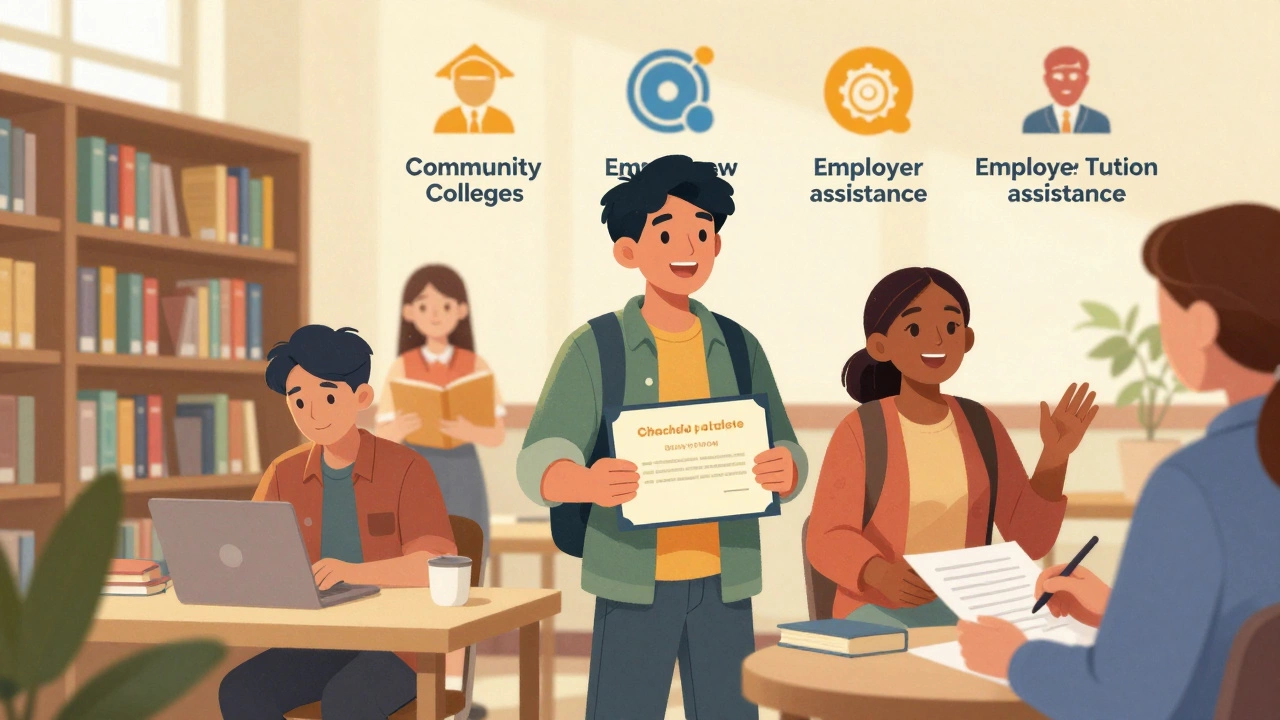
- Scholarships and Grants: These don’t need to be paid back. Search local community foundations, professional associations in your field, and your university’s specific grant programs. Don’t ignore small awards; $500 here and $500 there adds up.
- Work-Study Programs: Federal Work-Study allows you to work part-time jobs, often on campus, while you study. The earnings go directly to your education expenses. Check your award letter to see if you qualified.
- Employer Tuition Assistance: Do you have a job? Many companies offer tuition reimbursement for courses related to your role. It might not cover everything, but it covers something.
- Community College Transfer: Consider starting at a community college for two years. Tuition is significantly lower, reducing the amount you need to borrow later. You can transfer to a four-year university with the same degree outcome but less debt.
- Payment Plans: Some colleges allow you to pay tuition in monthly installments without interest. This isn’t free money, but it spreads the cost out so you don’t need a large lump-sum loan.
Common Mistakes to Avoid
When you are stressed about money, it’s easy to make decisions that hurt your future. Avoid these traps:
- Ignoring the Denial Letter: Always read the fine print. It tells you exactly why you were rejected and sometimes how to reapply. Ignoring it means you’ll make the same mistake next time.
- Applying to Too Many Lenders at Once: Each hard inquiry on your credit report can drop your score by a few points. Space out your applications. Research first, then apply strategically.
- Relying Solely on Private Loans: Always max out federal loans first. They have income-driven repayment plans and forgiveness options that private loans do not. Private loans should be the last resort, not the first choice.
- Falling Behind on Existing Payments: If you already have loans, keep paying them. Defaulting on one loan makes getting another nearly impossible.
Can I get a student loan if I have bad credit?
Yes, but mostly through federal loans. Federal Direct Loans do not check your credit score for most undergraduate students. For private loans, bad credit usually means you need a strong cosigner with excellent credit to get approved.
What happens if my student loan application is denied?
A denial means you are not eligible for that specific loan at this time. You should contact your financial aid office to understand the reason. You can then appeal the decision, add a cosigner, seek alternative funding like scholarships, or improve your credit before reapplying.
Does applying for multiple student loans hurt my credit score?
Yes. Each application typically results in a "hard inquiry" on your credit report, which can lower your score by a few points. To minimize damage, research lenders thoroughly and submit applications within a short window (usually 14-45 days), as scoring models may count multiple inquiries for the same purpose as a single event.
Can I appeal a private student loan denial?
Generally, no. Private lenders make final decisions based on their internal risk models. Unlike federal aid offices, they rarely reconsider a denial unless you provide new information, such as adding a cosigner or providing proof of increased income.
What is Satisfactory Academic Progress (SAP)?
SAP is a standard set by schools and the Department of Education to ensure students are making steady progress toward their degree. It usually requires maintaining a minimum GPA (often 2.0), completing a certain percentage of attempted credits, and finishing your degree within a maximum timeframe. Failing to meet SAP can result in loss of federal financial aid.